

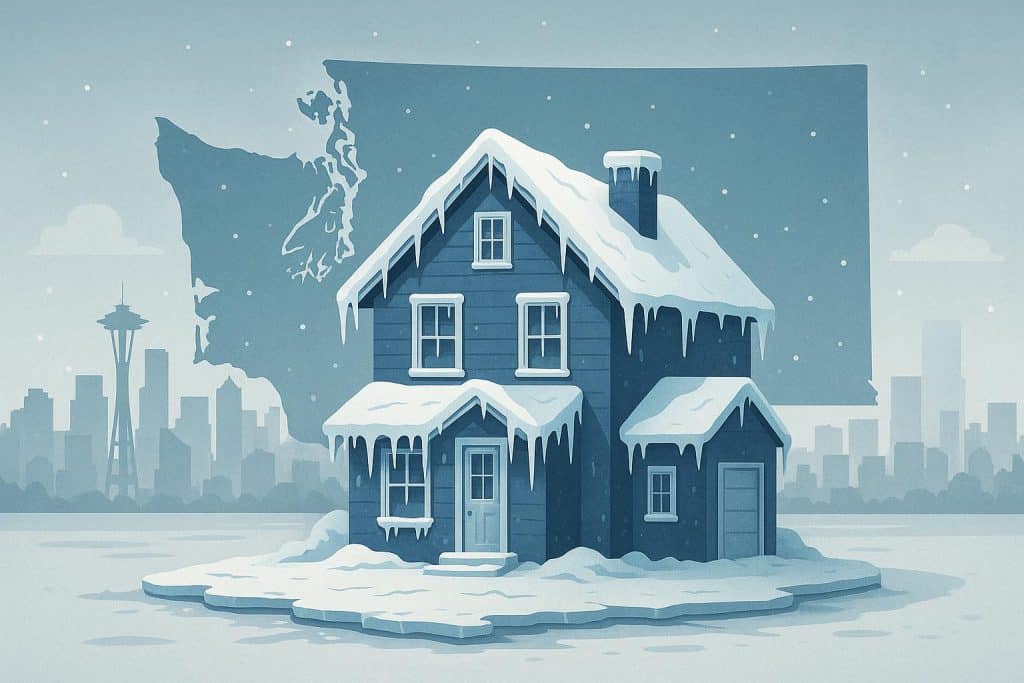
Washington state’s housing market is experiencing an unusual paradox in late 2025: inventory is climbing to levels not seen in years, yet fewer homes are actually changing hands. This “frozen” market phenomenon is creating both challenges and opportunities for buyers, sellers, and real estate professionals navigating one of the West Coast’s most dynamic housing landscapes.
The Current State of Washington’s Housing Market
As of November 2025, Washington’s housing market shows inventory up 27% year-over-year, with 18,791 homes on the market across 27 Pacific Northwest counties. However, closed sales have declined 4% during the same period, and the state’s median home price has fallen slightly to $640,000.
The most striking trend is what analysts are calling the “turnover crisis.” Seattle’s home-sale turnover has plunged to just 2% in 2025 from 3.2% in 2019, representing one of the steepest drops in the country. Even though more homes are listed for sale, far fewer transactions are actually completing.
Mortgage rates have provided some relief, with the average 30-year fixed rate at 6.17% at the end of October—the lowest in more than a year. Most economists predict rates will fall toward the 6% range through 2025, though they remain significantly higher than the sub-4% rates many homeowners locked in during the pandemic era.
This rate differential is a key driver of the market’s frozen state. Homeowners with 3% mortgages are reluctant to sell and take on a 6%+ rate, creating a “golden handcuffs” effect that constricts supply even as rising rates make buyers more cautious.
Regional Variations Across Washington State
Washington’s diverse real estate markets are experiencing varied conditions:
King County and Seattle Metro: King County’s median home price held steady at $887,300—the state’s highest. Seattle ranks as the fifth-most-expensive metro in the U.S., with a $723,500 median sale price and the third-lowest supply nationwide at just 1.6 months of inventory. Despite inventory increases, 40.2% of homes are going pending within the first 30 days, keeping the market in the “Strong” zone.
Snohomish County: Snohomish County reached a median home price of $739,500, even as listings surged 42%—one of Washington’s biggest year-over-year inventory jumps, representing a dramatic shift toward balance.
Pierce County and Beyond: The Tacoma area has emerged as a more affordable alternative to King County. Tacoma continues to see higher appreciation due to limited housing stock. Meanwhile, Grant County’s median home price increased 3.7% year-over-year to $354,308, while closed sales jumped 24.3% —one of the few areas showing robust transaction volume increases.
What’s Driving the Current Market Dynamics?
Several interconnected factors are shaping Washington’s housing landscape:
Employment and Economic Growth: Washington boasts a thriving job market in tech, aerospace, and green industries, with employment expected to grow 2-3% in 2025. This continued economic strength maintains underlying housing demand even as transaction volume stalls.
Buyer Caution: More home sales are falling apart, with 15% of pending U.S. home sales falling through in September—up from 13.6% a year earlier. In Seattle, cancellations increased from 8.8% to 9.5% as buyers grew more cautious about stretching budgets.
Price Outlook: Steady Growth, Not Dramatic Shifts
The consensus among analysts points to continued but modest price appreciation. Home prices are projected to rise at a slower pace compared to 2023 and 2024, with a 2.5-4% increase anticipated across most Washington markets.
The months of supply metric currently sits at 3.0 months statewide, up from 2.6 months in the previous quarter and 2.02 months a year ago. This improvement is nudging the market toward more balanced conditions, though it remains below the 5-6 months typically considered a neutral market.
Opportunities for Buyers in 2025-2026
Several factors are creating opportunities for Washington homebuyers:
Increased Negotiating Power: With homes sitting on the market longer, buyers have more room to negotiate. Seller concessions and the ability to include contract contingencies are becoming more common.
Reduced Competition: The frenzy has cooled significantly. In October 2025, 24.7% of homes in Washington sold above list price, down 2.2 points year-over-year, indicating less intense bidding wars.
More Time for Due Diligence: With median days on market at 36 days, up 8 days year-over-year, buyers have more time to conduct thorough property evaluations. This makes services like comprehensive home inspections in Seattle more valuable than ever, as buyers can take the time to understand a property’s true condition before committing.
Strategic Considerations for Sellers
Sellers need to adapt to shifting market dynamics:
Realistic Pricing: 36.7% of homes experienced price drops in October 2025, up from 32.0% in October 2024. Overpricing leads to extended days on market and eventual price reductions that can stigmatize a listing.
Property Condition Matters More: With buyers exercising more caution and including inspection contingencies, property condition has become increasingly important. Forward-thinking sellers are investing in pre-listing inspections to identify and address issues before listing, reducing the likelihood of deal-killing surprises during buyer due diligence.
In Washington’s older housing stock—particularly in established Seattle neighborhoods—issues like aging sewer lines, inadequate insulation, and outdated electrical systems are common. A professional home inspection service can uncover these concerns before they derail a transaction or leave a buyer with unexpected expenses.
Looking Ahead: What to Expect in 2026
Several trends are likely to shape Washington’s housing market in the coming year:
Continued Market Balancing: The increased inventory should help ease some pressure on buyers, while stabilizing prices will be beneficial for everyone Rockwell Institute. The market appears to be transitioning from extreme seller conditions toward more balance.
Modest Transaction Growth: With mortgage rates expected to remain in the 6.0-6.5% range and inventory growing, modest increases in home sales are anticipated compared to 2024.
Regional Divergence: Expect continued variation across Washington markets, with affordable submarkets like Tacoma and eastern Washington potentially seeing stronger activity than ultra-expensive markets like central Seattle and Bellevue.
Conclusion
Washington state’s housing market in late 2025 tells a complex story of transition. While inventory is improving and providing more options for buyers, the market hasn’t experienced the dramatic correction some predicted. Instead, it’s finding a new equilibrium characterized by more realistic pricing, longer marketing times, and greater negotiating flexibility.
For real estate professionals, this environment demands expertise and market knowledge. For buyers and sellers, it requires patience, realistic expectations, and the support of qualified professionals—from lenders to inspectors to agents—who understand local market nuances.
The “frozen” market won’t last forever. As mortgage rates stabilize and economic conditions evolve, transaction volume will eventually return to more normal levels. Those who understand current dynamics and position themselves strategically will be best prepared to capitalize on opportunities as they emerge in Washington’s ever-changing real estate landscape.