

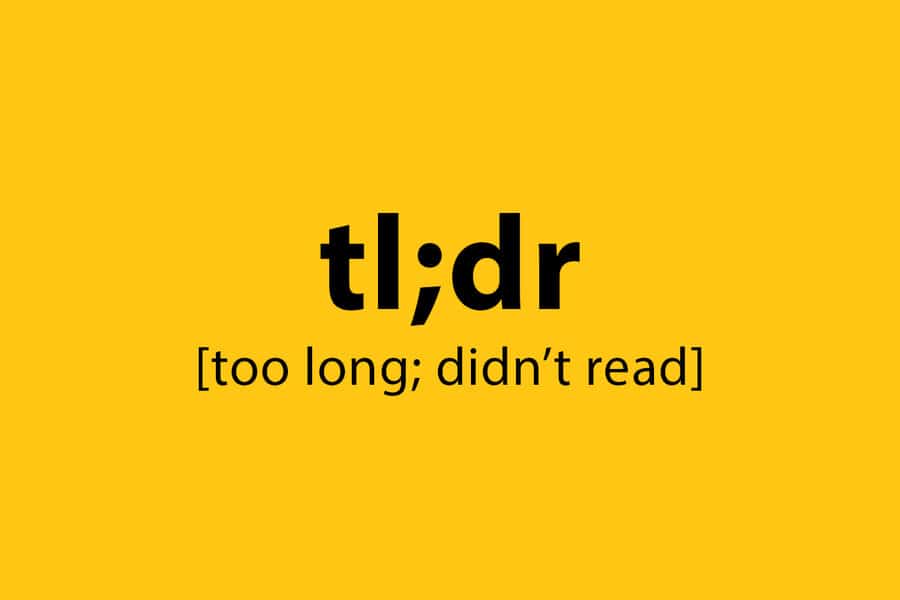
In the digital age, the proliferation of acronyms has become a hallmark of online communication, particularly on social media platforms. Among these, TL;DR stands out as a ubiquitous term that encapsulates the brevity and speed of modern discourse. For those unacquainted with this acronym, it represents a phenomenon that is both a linguistic shorthand and a cultural commentary on the information overload experienced by internet users.
The acronym TL;DR stands for “Too Long; Didn’t Read.” It is typically employed to denote a summary or a concise version of a longer piece of text. The usage of TL;DR is twofold: it can serve as a preface to a condensed summary following a lengthy post, or it can be used as a commentary, often humorously, to suggest that a text is excessively long or verbose for the context in which it is presented.
The advent of TL;DR speaks volumes about the cultural shift towards rapid consumption of information. In an era characterized by an overwhelming influx of data, individuals often find themselves inundated with content, leading to a diminished attention span and a preference for succinct communication. TL;DR reflects this trend, providing an efficient mechanism for distilling essential points from voluminous content.
The practical application of TL;DR is prevalent across various digital platforms, including forums, blogs, and social media. It serves as a tool for writers to offer readers a choice: delve into detailed content or opt for a brief overview. This flexibility is particularly beneficial in environments where users may not have the luxury of time to engage with extensive material.
In professional settings, the TL;DR approach can enhance communication by ensuring clarity and conciseness. It encourages individuals to distill their messages to their core elements, thus facilitating a more efficient exchange of ideas.
The emergence of acronyms like TL;DR is indicative of the broader evolution of online slang. As digital communication continues to evolve, so too does the lexicon that accompanies it. These linguistic innovations reflect changing communication patterns and offer insights into the priorities and values of contemporary society.
In summary, TL;DR is more than just an acronym; it is a reflection of the digital zeitgeist. It underscores the need for brevity in a world saturated with information and highlights the evolving nature of language in response to technological advancements. Understanding TL;DR and its applications can provide valuable insights into the dynamics of modern communication and the ongoing evolution of social media slang.
As the digital landscape continues to evolve, one can only anticipate the emergence of new terminologies that will further shape the way we communicate in the virtual realm.