

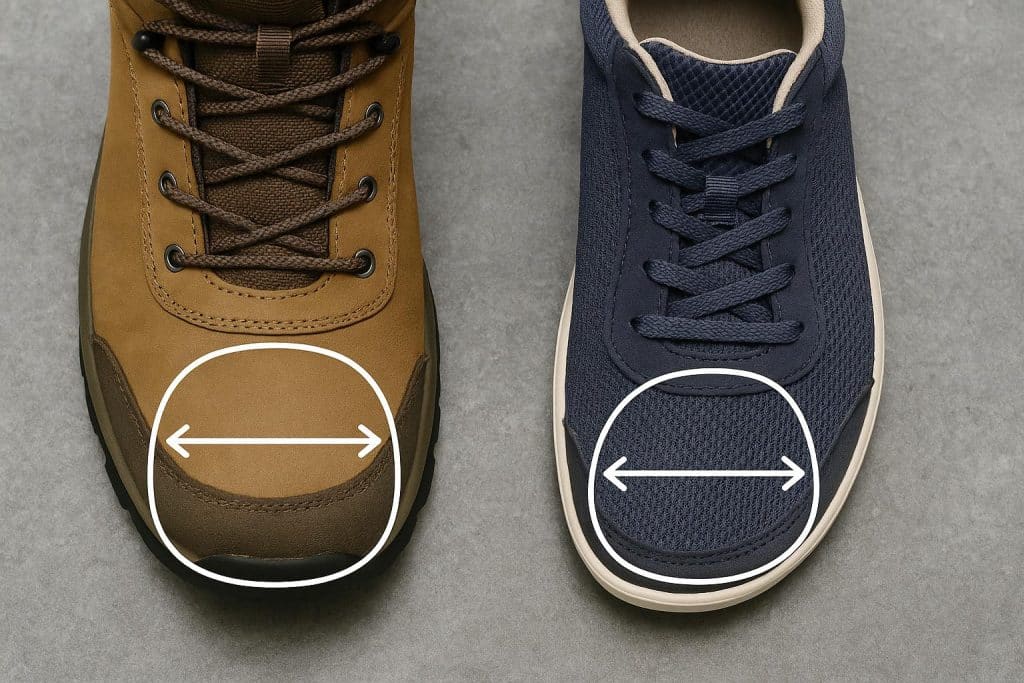
Most people judge walking shoes by cushioning, grip, colour, or brand. Toe box width rarely gets the same attention. That is a mistake.
The toe box is the front part of the shoe where your toes sit. If this area is too narrow, your toes get squeezed together. If it is too shallow, the top of the toes may rub. If it is too pointed, your foot may be forced into a shape it was never meant to hold.
For hikers and regular walkers, this small design detail can change everything. The right wide toe box walking shoes can reduce pressure, improve comfort, support balance, and make long walks feel less punishing.
What Is Toe Box Width?
Toe box width refers to how much space the front of the shoe gives your toes across the forefoot. A narrow toe box pushes the toes inward. A wider toe box gives them more room to spread naturally.
This does not mean the whole shoe should feel loose. A good walking shoe should still hold the heel and midfoot securely. The extra space should be where your foot actually needs it, mainly around the toes and ball of the foot.
Many people confuse shoe length with shoe width. They buy a bigger size when their toes feel cramped. That can create new problems. The shoe may become too long, the heel may slip, and the foot may slide forward while walking. A wide toe box solves the front-foot space issue more directly.
Why Your Toes Need Space
Your toes do more than fill the end of your shoes. They help with balance, push-off, grip, and stability.
When you walk, your foot spreads slightly as it carries your body weight. Your toes also help guide the final part of each step. If they are squeezed together, the foot cannot move as naturally. This may lead to rubbing, soreness, hot spots, and fatigue.
On short walks, you may ignore the discomfort. On longer walks or hikes, the problem becomes harder to escape. Small pressure points can turn into painful distractions.
A roomy toe box gives your toes enough space to do their job.
Why Hikers Should Care About Toe Box Width
Hiking places different demands on the feet compared with ordinary walking. The ground changes constantly. You may climb uphill, walk downhill, cross loose gravel, step over roots, move through mud, or walk across uneven stone.
On these surfaces, your feet need to adjust quickly. Cramped toes make that harder.
A wider toe box helps your toes spread and stabilise. This can make your footing feel more confident, especially on rough or sloped terrain. It also cuts down that trapped feeling in the forefoot.
For long hikes, wide toe box walking shoes can be especially useful because your feet often swell after hours of movement. A shoe that feels perfect at the start of a trail may feel tight halfway through if the toe area is too narrow.
Downhill Walking Makes Toe Pressure Worse
One of the clearest signs of a duff toe box is discomfort when walking downhill.
On descents, your foot naturally slides forward a bit in the shoe. If the front’s narrow or shallow, your toes jam against the upper or smack the end.This can lead to sore toes, bruised nails, black toenails, or pressure around the big toe and little toe.
Many hikers blame the slope, but the shoe fit is often the real issue.
A wider toe box gives the toes more room during forward movement. Combined with proper lacing and heel security, it can reduce the harsh pressure that often shows up on descents.
Everyday Walkers Benefit Too
Toe box width is not only important for hikers. Everyday walkers need it as well.
Think about a normal day. You may walk to work, stand in queues, move around shops, climb stairs, commute, walk the dog, run errands, or spend hours on hard floors. If your shoes squeeze your toes during all of that, your feet are under repeated stress.
A narrow toe box can cause rubbing around the little toe, pressure near bunions, nail discomfort, and soreness across the forefoot. It can also make the foot feel hotter and more restricted.
Wide toe box walking shoes help everyday walkers by reducing that constant compression. They allow the front of the foot to feel calmer across the day.
Foot Swelling Changes the Fit
Feet are not the same size all day. They can swell slightly after walking, standing, heat, travel, exercise, or long working hours.
If your shoes are already tight in the morning, they may feel uncomfortable by evening. This is especially true for hikers, travellers, older adults, people with wider feet, and anyone who spends long hours standing.
A wider toe box provides extra room for natural expansion. It does not mean the shoe should be oversized. It means the front of the shoe should not become a pressure chamber once your feet warm up and swell.
Narrow Toe Boxes Can Create Hidden Pain Points
Foot pain is not always dramatic at first. Sometimes it begins as a small red mark, a little rubbing, or mild soreness around one toe. Over time, that repeated pressure can become harder to ignore.
Common signs of a too-narrow toe box include:
- Little toe rubbing against the side of the shoe
- Big toe pressure or bunion irritation
- Toes feeling cramped or curled
- Hot spots during long walks
- Toenail discomfort
- Numbness or tingling in the forefoot
- Blisters between toes or near the front of the foot
If your feet feel relieved the moment you remove your shoes, the toe box may be part of the problem.
Wide Toe Box Does Not Mean Poor Support
Some people avoid wide toe box shoes because they think they will feel sloppy. That only happens when the entire shoe is too loose.
A proper wide toe box shoe gives room in the front while still supporting the rest of the foot. The heel should stay in place. The midfoot should feel secure. The sole should feel stable. The toes should have freedom without the foot sliding around.
This balance matters for both hiking and daily walking. Too much looseness can cause friction. Too much tightness creates pressure. The right fit sits between the two.
Who Should Consider Wide Toe Box Walking Shoes?
Wide toe box footwear may help if your toes feel squeezed in regular shoes, your feet are naturally wide, or you often develop blisters during walks.
It may also be useful for people with bunions, hammertoes, swollen feet, flat feet, high insteps, forefoot pain, or thick walking socks. Hikers who deal with downhill toe pain should also look carefully at toe box shape.
If you regularly size up just to get more room at the front, that is another sign. You may not need a longer shoe. You may need a better-shaped toe box.
How to Check Toe Box Fit
When trying shoes, stand up rather than judging fit while seated. Your foot spreads when it carries weight.
Check whether your toes can move slightly. They should not be crushed together. The widest part of your forefoot should not press hard against the shoe. The top of the toes should not rub against the upper.
Walk around for a few minutes. If you are buying hiking footwear, test them with the socks you actually plan to wear. Thick socks can change the fit more than people expect.
For hikers, it also helps to mimic downhill movement. If your toes hit the front while walking on a slope or stairs, the fit is not right.
The best wide toe box walking shoes should feel roomy at the front, steady under the arch, and secure at the heel.
What Else Matters Besides Toe Box Width?
Toe box width matters loads, but it ain’t the only thing to clock.
A cracking walking or hiking shoe needs cushioning, arch support, heel stability, breathable kit, and a tough outsole too. Trails demand serious grip; everyday strolls crave flex and all-day comfort.
Match the shoe to your jaunt—light walkers for pavements, parks, travel; hikers for rugged traction and protection. Wide toe box walkers shine when the whole boot’s built solid, not just the front.
Final Thoughts
Toe box width might seem a small detail, but your feet feel it with every step. When the front of the shoe’s too narrow, your toes can’t spread, balance, or move comfortably. Over time, that can lead to rubbing, soreness, blisters, nail pressure, and foot fatigue.
For hikers, a wide toe box can make climbs, descents, and uneven trails feel more manageable. For everyday walkers, it can make long days on your feet far more comfortable.
The right shoe should not force your toes into silence. It should give them space to work.
That is why wide toe box walking shoes matter. They are not just roomier. They are more respectful of how your feet actually move.