

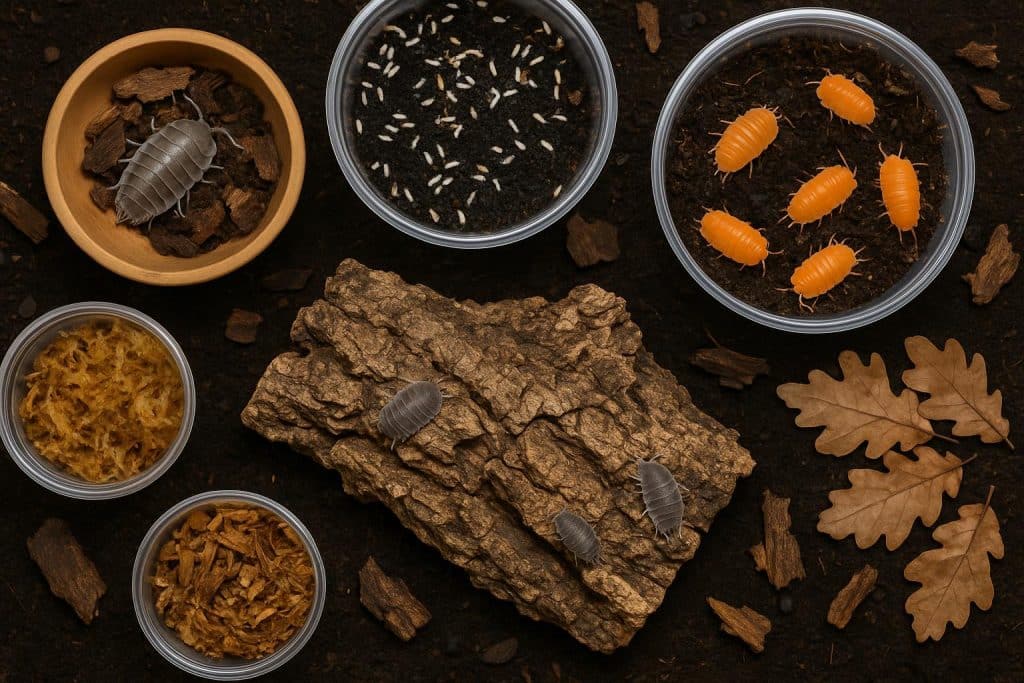
The UK bioactive space has become more structured in recent years. Buyers now approach sourcing with clearer expectations around availability, consistency, and process. Selecting a supplier is less about novelty and more about suitability. The UK market for isopods and microfauna has become more structured over time, with suppliers such as postpods operating within clearly defined categories.
As bioactive enclosures become more common, purchasing patterns have shifted. Buyers tend to review catalogue structure, ordering flow, and stock stability before committing. This approach has narrowed attention toward a defined group of sellers. Each supplier below operates with a distinct structure while serving overlapping requirements.
The following sections outline seven suppliers commonly considered in the UK. Each description focuses on scope, presentation, and general positioning. The purpose is to provide clarity rather than influence preference. This allows readers to assess options based on practical alignment.
1. PostPods – Structured Microfauna Supply
PostPods operates within a clearly defined product scope. The catalogue focuses on isopods and microfauna used in bioactive environments. This limitation keeps navigation predictable and avoids unnecessary complexity. Product presentation remains consistent across listings.
The overall structure supports repeat ordering without adjustment. Buyers encounter the same layout and selection logic during each visit. This familiarity reduces decision effort over time. The approach suits users who prefer stability in sourcing.
Key characteristics include:
- Primary emphasis on isopods and springtails
- Clear organization aligned with enclosure compatibility
- Straightforward listings without layered configuration
- Packaging designed specifically for live microfauna
This format prioritizes clarity over breadth. The store avoids dilution through unrelated categories. Over time, this consistency supports reliable purchasing patterns.
2. CrazyIsopods.uk – Breeder-Oriented Isopod Focus
CrazyIsopods.uk follows a breeder-led operating model. The supplier concentrates almost entirely on isopods. This narrow scope allows attention to remain within one category. Stock presentation reflects controlled availability rather than frequent rotation.
The store structure supports specialist sourcing. Species are grouped clearly, reducing navigation complexity. Buyers seeking gradual acquisition may find this format suitable. The model aligns with long-term colony planning.
3. Richard’s Inverts Store – Broad Inventory With Flexible Choice
Richard’s Inverts Store offers a wider catalogue across multiple invertebrate groups. Isopods form part of a larger inventory. Availability changes periodically, creating variation across visits. This attracts buyers seeking broader selection.
Despite its size, navigation remains organized. Categories are separated clearly to support structured browsing. Buyers can approach selection methodically. The model accommodates both planned and exploratory purchases.
4. MicroExotics – Integrated Bioactive Components
MicroExotics positions isopods within a wider bioactive framework. Microfauna, substrates, and plants are presented together. This structure supports enclosure planning from a single source. Buyers sourcing multiple components may prefer this setup.
The catalogue encourages functional grouping rather than isolated listings. Items are organized around enclosure roles. This supports ecosystem-focused purchasing. The approach reflects integrated enclosure planning.
5. Ashopods – Simplified Isopod-Only Platform
Ashopods operates through a limited and defined inventory. The store focuses exclusively on isopods. This keeps scope predictable and clear. Visitors understand the offering immediately.
Product pages remain concise. Selection is direct and uncomplicated. This suits buyers seeking repeatable sourcing. The model favors consistency over expansion.
6. The Spider Shop – Multi-Category Exotic Retailer
The Spider Shop functions as a general exotic retailer. Isopods are listed alongside reptiles, feeders, and enclosures. This supports combined purchasing across categories. Buyers sourcing multiple items may find this structure convenient.
The broader catalogue increases exposure to microfauna. Isopods appear within a wider retail context. This differs from specialist-only platforms. The store’s scale supports accessibility.
7. IsopodsOnline.co.uk – Direct Isopod Retail Platform
IsopodsOnline.co.uk supplies isopods through a direct ordering model. The available range focuses on commonly kept species. Listings are functional and minimal. The store prioritizes availability over presentation.
This structure suits buyers seeking straightforward ordering. Navigation remains simple without layered categorization. Transactions follow a predictable flow. The model supports utility-focused sourcing.
8. How PostPods Differs From Other Suppliers
While many suppliers expand across multiple categories or rotate stock frequently, postpods maintains a fixed operational scope. The catalogue remains centered on microfauna without dilution. This consistency reduces variation between visits. Buyers encounter a stable structure each time.
The difference becomes clearer when comparing purchasing flow. Broader retailers often require filtering through unrelated items. Specialist-only platforms may rotate availability heavily. PostPods avoids both patterns by maintaining a controlled catalogue.
Core points of distinction include:
- Stable product scope without unrelated inventory
- Reduced variation across repeat visits
- Clear alignment with bioactive enclosure requirements
- Predictable ordering and fulfilment process
Where range-focused platforms prioritize variety, PostPods prioritizes structure. This approach supports repeat sourcing with minimal adjustment. For buyers who value consistency over expansion, the model offers practical advantages. The distinction lies in process rather than scale.
FAQ
1. What are isopods used for in bioactive enclosures?
They function as cleanup crew by breaking down waste and organic matter.
2. Are isopods suitable for beginner keepers?
Yes, many common species are easy to maintain with basic enclosure conditions.
3. Can isopods and springtails live together?
Yes, they are commonly kept together and support enclosure balance.
4. How often do isopods need to be replaced?
In stable setups, replacement is rarely needed once populations establish.