

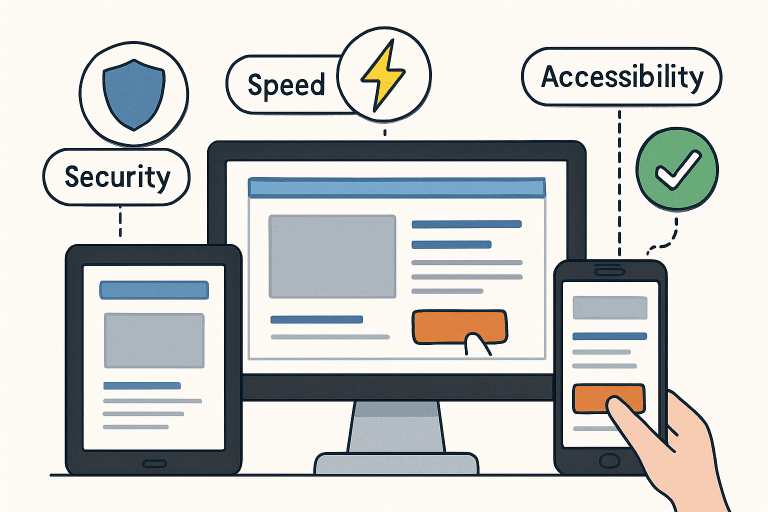
Key Takeaways
- Responsive design ensures optimal viewing across all devices, regardless of screen size or platform.
- Fast loading speeds increase engagement, reduce bounce rates, and improve user retention and SEO rankings.
- Robust security measures protect sensitive user data and enhance your reputation as a trustworthy business.
- Clear calls to action (CTAs) effectively guide users toward the actions most important to your business.
- High-quality content and SEO optimization improve visibility and credibility, driving sustainable organic traffic.
In today’s digital arena, businesses face intense competition for attention and credibility, making a powerful first impression online more critical than ever. An effective website isn’t just a placeholder or an online brochure—it is the linchpin for building trust and engaging your targeted audience. Your site serves as the virtual front door of your business, and visitors will judge your professionalism, reliability, and brand value within seconds of landing on your page. As digital trends evolve and consumer expectations grow, it’s crucial to ensure your website stays ahead of the curve with the features that matter most for usability, security, and long-term growth. Investing in expert web design lancaster pa can help you refine your digital strategy, position your brand above competitors, and capture the attention you need for sustainable success.
A modern website must do more than look good. It needs to deliver fast performance, strong security, intuitive navigation, and a seamless user experience to meet today’s user expectations. Falling short risks driving visitors to competitors, regardless of product quality.
The difference between a functional site and an exceptional one lies in including essential features from the start, understanding user intent, and adhering to search engine standards. Thoughtful design and smart functionality ensure long-term visibility, repeat business, and adaptability as technology and consumer behaviors evolve.
Staying current with web design best practices builds trust, improves accessibility, optimizes performance, and supports sustainable growth. Forbes emphasizes that site speed, responsive design, and accessibility directly impact customer satisfaction and conversion rates, making website upgrades essential for business success.
Responsive Design
With a vast majority of users now browsing via smartphones and tablets, making your website responsive is essential. Responsive design lets your site automatically adapt to different screen sizes, devices, and orientations, so every visitor experiences a seamless, visually appealing interface. Features like flexible layouts, scalable images, and adaptive navigation all contribute to this smoother usability. Responsive design is also crucial from an SEO perspective—major search engines like Google measure mobile-friendliness as a key ranking factor. By deploying responsive frameworks and continuously testing your site’s performance across devices, you ensure everyone receives the same high standard of interaction, fostering engagement and encouraging more extended visits.
Fast Loading Speeds
Website speed remains one of the most influential factors for user satisfaction and site effectiveness. If your site loads too slowly—even by just a second or two—users are likely to abandon your page before they’ve even interacted with your content. Research consistently shows a direct link between slow-loading pages and higher bounce rates, with some studies showing that even minor delays can significantly reduce conversions. To maintain optimal speed, focus on compressing images, enabling browser caching, and minimizing resource-heavy scripts or third-party plugins. Integrating advanced hosting solutions and content delivery networks (CDNs) will also help ensure your site serves content swiftly, regardless of where your users are located.
Robust Security Measures
Every visitor wants the assurance that their private information is protected when browsing or conducting transactions on your site. Implementing HTTPS via SSL certificates is the bare minimum security standard today, and it is especially critical for e-commerce or platforms handling sensitive data. Regularly updated software, firewalls, and security plugins work together to protect against unauthorized access, malware, and cyberattacks. Not only do these measures protect your users, but they also reduce the risk of data breaches that could harm your reputation and lead to legal consequences. Moreover, Google and other search engines favor secure sites, rewarding them with improved visibility in search results.
Clear Calls-to-Action (CTAs)
Effective websites make it easy for users to know exactly what to do next. Powerful CTAs direct visitors toward desired actions, such as signing up for a newsletter, making a purchase, or scheduling a consultation. For a deeper understanding of what makes a call to action effective, see this guide to call-to-action strategies. These CTAs need to be visually distinct, often using contrasting colors, bold text, or strategic page positioning to draw attention. Furthermore, the wording should leave nothing to ambiguity—a well-crafted CTA, like “Download Your Free Guide” or “Get Started Now,” clearly tells users what to expect. Continually A/B testing different placements, colors, and phrasing can help identify the most effective combinations for maximizing conversions and user engagement.
High-Quality Content and SEO Optimization
Publishing high-quality, relevant content is central to building authority in your field and encouraging site visitors to return. Engaging blog posts, informative articles, storytelling videos, and rich FAQs not only educate and inspire but also demonstrate your credibility to both human visitors and search engines. SEO optimization goes hand in hand with content excellence—this includes carefully researching and selecting keywords, writing compelling meta descriptions and titles, and organizing your site structure for logical navigation. Internal linking, optimized images, and structured data make it easier for search engines to crawl and index your site, further enhancing your ability to attract organic visitors and convert them into loyal customers.
Advanced Search Capabilities
As your website grows in size and complexity, finding the correct information swiftly becomes more critical. Advanced search features, such as predictive text, sorting options, and even voice-activated search, can dramatically improve usability. These functionalities help users zero in on relevant products, blog posts, or resources, increasing user satisfaction and minimizing frustration. Visitors are far more likely to return to sites where they can easily find what they need.
Accessibility and Inclusivity
Modern websites should be usable by everyone, regardless of ability. Building accessibility into your site ensures that people with a wide range of disabilities can engage with your content. To follow the Web Content Accessibility Guidelines (WCAG), incorporate features such as alt text for images, proper heading structure, captioned videos, and keyboard navigation support. Not only does this expand your audience and show social responsibility, but it also helps you meet legal accessibility requirements and avoid potential litigation.
Conclusion
Integrating these vital features into your website forms the backbone of user satisfaction, credibility, and ongoing growth. By prioritizing elements like responsive design, loading speed, stringent security, impactful CTAs, high-quality content, robust search options, and accessibility features, you ensure your website remains both relevant and valuable. The digital world is in constant flux, and regularly updating your site in line with evolving standards is fundamental to maintaining your competitive edge and solidifying your brand’s leadership in your industry.