

Samsung Electronics is one of the world’s largest chip manufacturers, producing semiconductors, memory, processors, and displays. Any instability in its production cycle can significantly affect the company and the global market. One critical factor causing such instability is worker strikes.
Strikes in Samsung’s manufacturing segment can drastically reduce output. This interruption leads to delays in customer deliveries, which is particularly problematic during times of high semiconductor demand. Amid the current global chip shortage, such delays can exacerbate the situation, driving up product prices and reducing Samsung’s competitiveness. For instance, in 2011, a strike in South Korea reduced smartphone display production, affecting contracts with major clients like Apple and Sony.
Production slowdowns or interruptions quickly impact the company’s shares, causing it to drop off the list of top gaining stocks. Investors, wary of increased risks and reduced profitability, start selling shares, potentially causing a market crash. In 2019, strikes at General Motors plants in the United States resulted in a 6% decline in the company’s share price within a few weeks. Samsung, as a key automotive chip manufacturer, could face similar effects from manufacturing disruptions.
Strikes also hurt long-term operating profits due to higher labor costs, compensation for downtime, and potential penalties for breaching contracts. Reduced production volumes lead to lost revenue. In 2018, a significant strike at Samsung factories resulted in a 20% drop in operating profit for the second quarter.
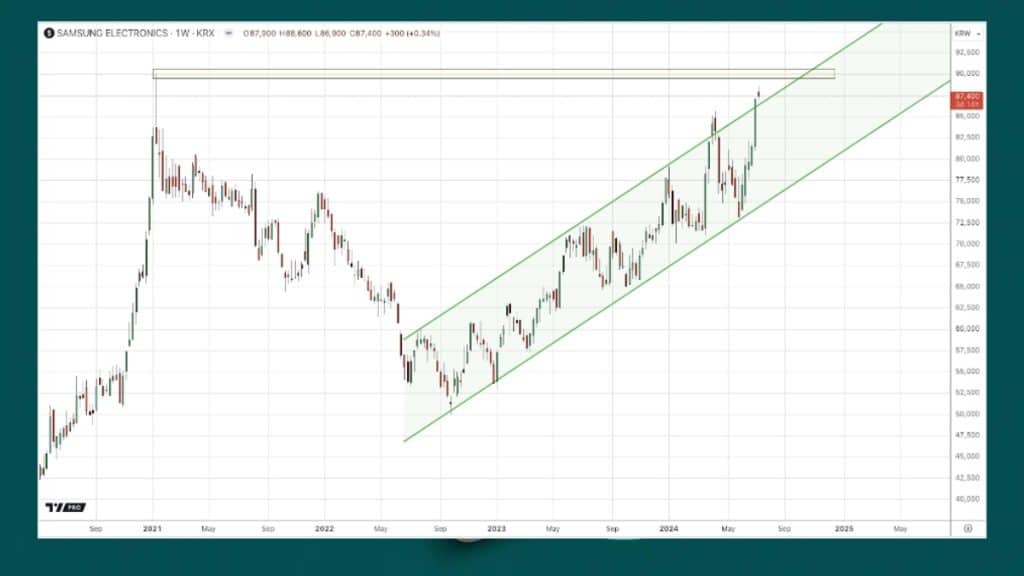
Trade unions often strike to improve working conditions, demanding better pay and working conditions due to the company’s colossal profitability. The main challenge lies in balancing employee demands with the company’s capabilities. For example, in 2015, Intel employees in Ireland struck for better wages and working conditions, causing short-term production shutdowns and delivery delays. In 2017, a strike at a TSMC factory in Taiwan reduced production capacity by 15% over a month, severely disrupting the supply chain. The impact of these events on stock prices can be easily observed using a free bar replay chart.
In June 2024, Samsung Electronics trade unions staged a one-day strike to improve pay and rest conditions. Failing to achieve their goals, they planned a three-day strike in July, involving about 5,000 workers at the Hwasong complex to disrupt chip manufacturing.
Trade unions represent 24% of Samsung’s South Korean workforce. The localized strike at one facility with only 6,450 of 30,000 union members participating isn’t expected to cause widespread memory chip production disruptions, especially with high automation levels. Samsung management stated the strike would not affect operations, though union representatives warned of issues processing 200 mm silicon wafers.
This situation highlights the ongoing importance of improving working conditions for large companies. To minimize the impact of strikes, companies must seek compromises and maintain open dialogue with employees and their representatives. Samsung’s management appears to be handling this effectively, with share prices nearing historic highs.