

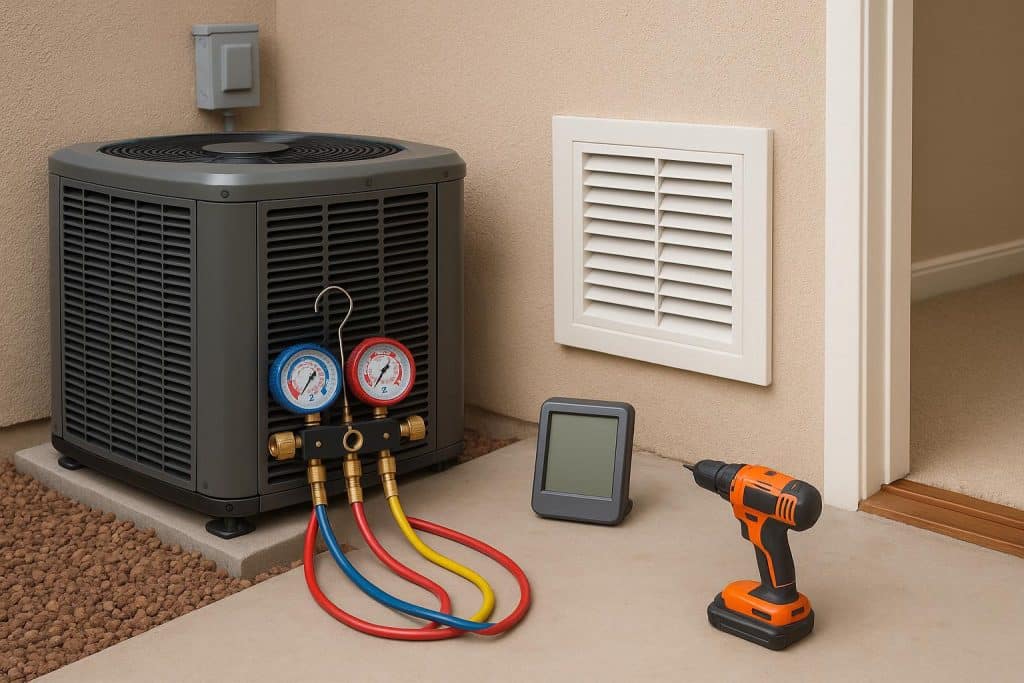
One of the most frustrating home problems is when the HVAC system appears to be working—air is coming out, the unit turns on and off, and the thermostat shows the set temperature—yet the house still feels uncomfortable. People describe it as clammy air, stubborn hot rooms, chilly floors, stale smells, or drafts that make the space feel uneven. In these situations, the issue is often not a single broken part but a mismatch between how the system delivers air and how the building behaves. HVAC contractors approach these calls by looking beyond “does it run” and focusing on why comfort isn’t meeting expectations. They measure how air moves, how moisture is controlled, and how the home’s layout and pressure dynamics affect what people actually feel day to day.
Why “Running” Isn’t Always Comfortable
- Airflow Delivery and the Hidden Imbalance Problem
A system can run normally while delivering the wrong amount of air to the wrong places. HVAC contractors often begin by checking airflow at registers, verifying that each room receives enough supply air, and confirming that returns allow air to circulate back to the equipment. A common comfort complaint comes from distant rooms that receive weak airflow, while rooms near the air handler feel over-conditioned. This imbalance can happen when ducts are undersized, flex duct runs sag or kink, dampers are set incorrectly, or supply trunks feed too many branches without proper distribution. Contractors also measure static pressure to see whether the blower is pushing against excessive resistance, which can reduce airflow and create noisy vents. Even small restrictions, such as a clogged filter or a blocked return grille, can shift comfort enough to make a room feel “off” without triggering an obvious fault. Correcting airflow delivery often immediately improves comfort because the system finally conditions the space evenly.
- Humidity Control and the “Clammy but Cold” Feeling
Humidity is one of the most common reasons comfort feels wrong, even when the temperature looks correct. A home can reach the thermostat setpoint quickly but still feel heavy or sticky if the system is not removing enough moisture. Contractors look for short cycling, improper blower speed, or refrigerant and coil issues that reduce dehumidification. They may also evaluate whether the home has become tighter due to renovations or new windows, which can trap moisture and reduce natural drying. An Air conditioning contractor will often test how the system performs on longer cycles because steady runtime can improve moisture removal and create a drier, more comfortable feel, even at a slightly higher temperature. Contractors also check drainage and condensate management, as partially blocked drain lines or a wet coil environment can contribute to musty odors and moisture issues. When humidity is stabilized, many comfort complaints disappear without changing the thermostat setting.
- Thermostat Placement, Sensors, and False Readings
Another reason comfort feels off is that the thermostat may not be measuring the space that matters most. If the thermostat sits in a hallway with little airflow, near a kitchen, in direct sunlight, or close to a drafty doorway, it can misread the home’s true average comfort. Contractors consider whether the thermostat is being influenced by localized heat sources or cold air infiltration, leading the system to shut off early while other rooms remain uncomfortable. They also evaluate whether remote sensors or zoning controls are present and correctly configured. Some systems appear to “work” but are responding to a sensor that does not represent occupied areas, especially in homes with additions, finished basements, or open-concept layouts. Contractors may recommend relocating the thermostat, adjusting sensor priorities, or changing how staging and fan operation respond to temperature changes. When control points reflect real living spaces, the system’s decisions align better with what people feel.
- Pressure Balance, Return Pathways, and Door Effects
Comfort can feel off when pressure balance is wrong, especially in bedrooms and offices where doors stay closed. A room with supply air needs a clear return pathway; otherwise, the room pressurizes, supply airflow drops, and uneven temperatures result, creating a stagnant feeling. Contractors look for signs such as whistling at door gaps, strong drafts when doors open, or temperature swings that happen mostly at night. They also evaluate whether returns are centralized and whether the home’s layout allows air to travel back to them. In some cases, exhaust fans, dryers, or range hoods depressurize the house and pull air from unwanted places, adding drafts, dust, or humidity that changes comfort. By improving return pathways, adding transfer options, or adjusting ventilation strategies, contractors can stabilize airflow circulation and make rooms feel more consistent without increasing system runtime.
- Duct Leakage, Insulation Gaps, and “Phantom” Losses
A system may deliver conditioned air, but if ducts leak into attics, crawlspaces, or wall cavities, comfort inside the home can still feel weak. Contractors consider duct leakage because it steals airflow before it reaches the rooms, making the system run longer while still leaving hot or cold spots. Leaks can also pull unfiltered air into returns, bringing dust, odors, and humidity that change how the home feels. Insulation gaps compound the problem because rooms above garages, near cantilevers, or under attic spaces may quickly lose conditioned air, creating persistent discomfort that appears like HVAC failure. Contractors inspect accessible duct runs, check for loose connections, and evaluate whether duct insulation is intact where it passes through unconditioned spaces. Addressing leakage and insulation issues often improves comfort more than swapping equipment, because it ensures the air the system produces actually reaches the living space at the intended temperature.
When a system works, but comfort feels off, HVAC contractors look beyond basic operation and focus on how air, moisture, and pressure behave inside the home. They consider airflow imbalance, humidity control, thermostat accuracy, return pathways, and hidden losses through duct leakage and insulation gaps. These factors often explain why the thermostat number looks right while the home still feels uncomfortable. By testing, measuring, and correcting delivery and control issues, contractors can restore comfort without unnecessary equipment replacement. The result is a home that feels stable and livable, where the HVAC system does more than run—it supports comfort in the spaces people actually use every day.