

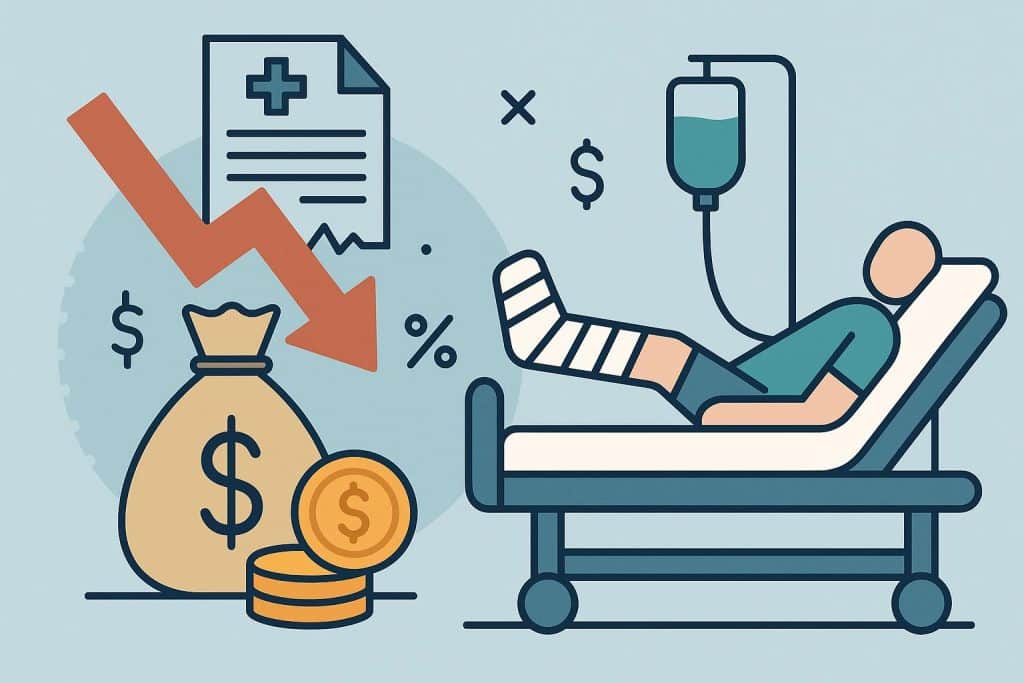
Most people think about medical emergencies in terms of hospital bills and insurance. But the financial impact of an illness or injury often goes way beyond just healthcare costs. What happens if you can’t work and your paycheck suddenly stops?
Even a short-term medical issue can disrupt your income while your everyday expenses keep coming. Rent or mortgage, utilities, groceries, and car payments won’t pause just because you’re recovering. If your time away from work lasts longer than you planned, the financial strain can add up fast.
The Immediate Financial Shock
When illness or injury keeps you out of work, the financial impact can hit right away. Missing a paycheck, or even getting a smaller one, can quickly strain your household budget. Some employers offer paid sick leave, but those benefits are usually limited and may not last through your whole recovery.
At the same time, medical expenses can pile up. Co-pays, prescriptions, follow-up visits, and therapy appointments can add up, even if you have good health insurance. Meanwhile, everyday bills keep coming. Mortgage or rent, utilities, car payments, insurance premiums, and groceries all still need to be covered.
In the first few weeks of a medical setback, many families use their savings to fill the gap. But if your time away from work lasts longer than you planned, that financial cushion can shrink quickly and create stress that lasts well beyond the initial diagnosis.
Short-Term Income Gaps: Where People Get Stuck
Once the initial shock fades, a lot of people realize that replacing lost income isn’t as easy as they thought. Employer benefits can vary widely from one workplace to another, and not everyone gets paid medical leave. Even when short-term disability is available, it usually only covers part of your income, often around 50 to 70 percent, and there’s usually a waiting period before payments begin. Understanding your disability income protection options can help you evaluate whether your current coverage is truly enough.
That gap can make things difficult. A smaller paycheck may still not be enough to cover your regular monthly bills, especially if your household budget is already tight. And if you don’t qualify for employer-sponsored benefits, unpaid leave can mean your family has to rely completely on savings.
Federal protections like FMLA let eligible employees keep their job while they recover, but they don’t guarantee continued income. That means a lot of people end up in a tricky spot—not fully covered, but not really ready to handle the financial hit either.
It’s in this gap between available benefits and real-life expenses that financial strain tends to build.
When Recovery Turns Into a Long-Term Issue
Not every illness or injury follows a predictable timeline. What starts as a temporary setback can sometimes turn into months or even years away from work. Complications, chronic conditions, or ongoing treatment can stretch recovery much longer than most people expect.
As time out of the workforce lengthens, the financial consequences often deepen. Savings that once felt sufficient may dwindle. Credit card balances can grow. Retirement contributions may pause, and in some cases, individuals dip into long-term investments to stay afloat. For households relying on two incomes, the loss of one can significantly alter long-term financial plans.
Extended time away from work can also affect career momentum. Missed promotions, lost advancement opportunities, or the challenge of reentering the workforce after a prolonged absence can have lasting effects beyond immediate income loss.
When recovery becomes long-term, the focus shifts from short-term budgeting to maintaining financial stability over the long haul. That’s a big adjustment, and many families aren’t fully prepared for it.
The Ripple Effect on Family Finances
When one person can’t work, the financial impact usually affects the whole household, not just that individual. It can reshape routines and long-term plans for everyone at home. A spouse or partner might need to adjust their work schedule to provide care or take on extra responsibilities. Sometimes, that means working fewer hours and bringing in less income, right when you need stability most.
Childcare arrangements may change. College savings contributions might pause. Plans for travel, home improvements, or major purchases can be delayed indefinitely. Even everyday budgeting decisions can feel more stressful when income is uncertain.
Beyond the numbers, financial strain can add emotional pressure to an already difficult situation. Managing recovery while worrying about bills or long-term goals can create additional stress for both the individual and their family.
Common Misconceptions About Income Protection
Many people think they’re financially protected just because they have health insurance. But health coverage is there to help pay medical bills, not to replace your lost income. If you can’t work, your insurance might cover your treatment, but it won’t pay your mortgage or buy your groceries.
Another common assumption is that workers’ compensation will help. In reality, workers’ comp usually only covers job-related injuries or illnesses, so many non-work-related medical conditions aren’t covered at all. For injuries that happen on the job, understanding how financial stability and medical benefits work after an occupational accident is essential to getting through recovery.
Some people rely on their emergency savings, thinking a few months’ expenses will be enough. While having a good emergency fund is important, recovery can take longer than you expect. Others think they’re too young or healthy to worry about losing income, but illness and injury can be unpredictable.
These misunderstandings often lead people to overestimate their financial safety net until they actually have to depend on it.
Practical Steps to Prepare
No one can predict a sudden illness or injury, but there are practical steps you can take to protect yourself financially. Start by checking your employer’s benefits to see what protection you really have. Find out if you get paid leave, short-term or long-term disability coverage, and how much of your income those benefits would actually replace. In some cases, you may also qualify for federal programs such as Social Security Disability Insurance (SSDI), which has its own rules and application process.
It also helps to know about waiting periods, eligibility requirements, and how long your benefits might last. These details can make a big difference during recovery.
Next, take a look at your emergency savings. Figure out how long your household could really cover essential expenses without a regular paycheck. If that number is lower than you’d like, setting small savings goals can help you build a stronger cushion over time.
Planning ahead doesn’t eliminate all risk, but it does give you greater clarity and confidence. When you understand your options before you need them, it’s much easier to handle uncertainty if it ever comes up.
The Paycheck You Hope You Never Lose
No one expects to face a serious illness or injury, and most people hope they never will. But the financial impact of being unable to work can happen fast and last longer than you might think. The real risk isn’t just the cost of medical care, but the loss of a steady income that keeps daily life on track.
Taking time to understand your benefits, look at your savings, and spot potential gaps can make a big difference. Even small changes, like building a stronger emergency fund or checking your income protection options, can improve your long-term stability.
The goal isn’t to prepare for the worst-case scenario out of fear, but to face uncertainty with awareness. The best time to figure out how you’d manage without a paycheck is before you ever have to find out the hard way.
About Amy Armstrong
Amy Armstrong is a writer focused on insurance, employee benefits, and personal finance. She creates educational content that helps readers better understand how income protection and workplace benefits work, so they can make more informed decisions when life doesn’t go as planned.