

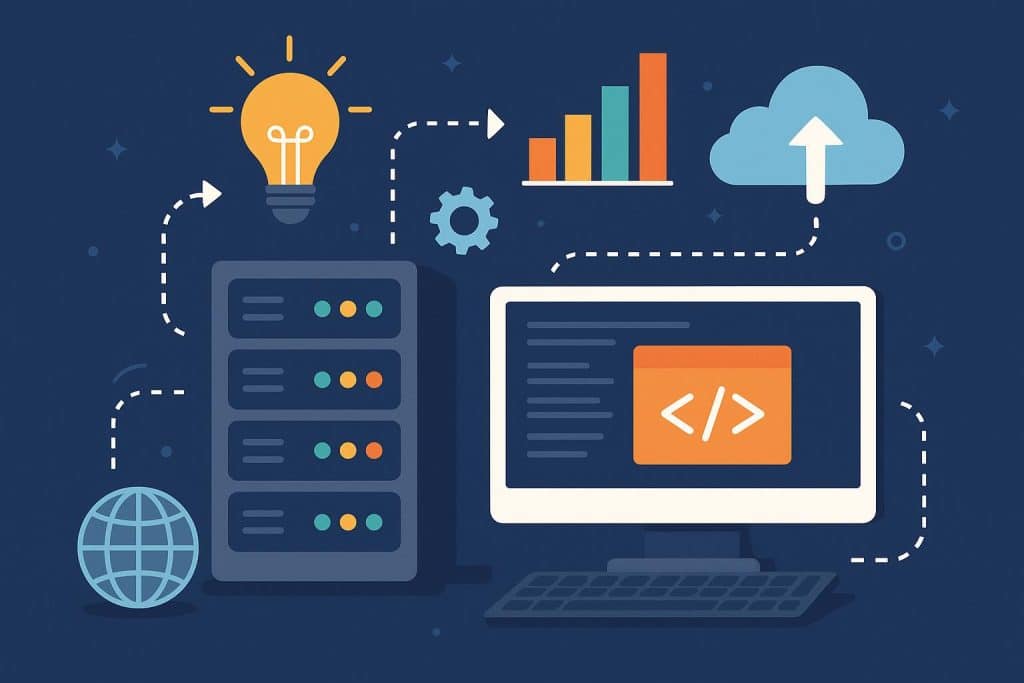
The web hosting industry has undergone a truly remarkable transformation in recent years, which has fundamentally changed the way businesses of all sizes establish and maintain their online presence. Traditional shared hosting that once led the market is quickly being replaced by advanced modern technologies. Performance expectations have surged dramatically, as users now demand rapid load times and flawless experiences across every device. Security threats have become significantly more sophisticated in recent years, which now requires the implementation of advanced protection mechanisms that can intelligently adapt and respond in real-time to emerging dangers. Environmental concerns and AI are transforming hosting operations. These converging factors, which encompass performance demands, security challenges, environmental sustainability concerns, and artificial intelligence advancements, collectively create an exciting and dynamic landscape where innovation happens at unprecedented speed, fundamentally reshaping the web hosting industry in ways that were previously unimaginable. Understanding these trends helps businesses succeed in digital markets.
The Shift Toward Cloud-Native Web Hosting Solutions
Cloud-native architectures represent one of the most significant paradigm shifts in hosting technology. Unlike traditional setups that rely on single physical servers, these solutions distribute resources across multiple interconnected systems. This approach delivers exceptional reliability because websites remain operational even when individual components fail. Businesses exploring webhosting options increasingly encounter cloud-native platforms that promise automatic scaling capabilities.
Container Technology and Microservices
Containerization has revolutionized application deployment by packaging software with all necessary dependencies. Docker and Kubernetes have become industry standards, providing consistent performance across both development and production environments. Microservices architecture, which has emerged as a transformative approach to software design, allows developers to build applications as collections of loosely coupled services, each running independently within its own isolated environment, thereby enabling greater flexibility, easier maintenance, and more efficient scaling capabilities.
Elastic Resource Allocation
Modern platforms automatically adjust computing resources based on traffic patterns, removing the need for manual intervention during busy periods. This elasticity ensures optimal performance while controlling costs, since businesses only pay for resources they actually use.
How Artificial Intelligence Is Transforming Server Management
Artificial intelligence has moved beyond experimental applications into production-ready hosting solutions. Machine learning algorithms now predict hardware failures before they occur, enabling proactive maintenance that prevents downtime. These systems analyze vast amounts of performance data to identify optimization opportunities that human administrators might miss. When exploring cutting-edge cloud computing approaches, the integration of AI becomes increasingly apparent across infrastructure management.
Predictive Analytics and Automated Responses
Smart monitoring tools constantly analyze server behavior patterns, identifying anomalies that signal potential problems before they escalate. Automated systems can implement fixes without human intervention, dramatically reducing response times. This proactive approach, which addresses potential issues before they escalate into serious problems, effectively minimizes service disruptions and maintains consistent performance levels across all systems.
Intelligent Customer Support Systems
AI-powered chatbots and support systems handle routine inquiries instantly, freeing human experts for complex technical challenges. Natural language processing enables these systems to understand customer needs accurately and provide relevant solutions. Understanding essential features for contemporary websites helps businesses leverage these support innovations effectively.
Sustainability and Green Data Centers Reshape the Industry
Environmental responsibility now serves as a competitive advantage in the hosting market. Forward-thinking providers, who recognize the growing importance of environmental stewardship in today's competitive marketplace, are investing heavily in renewable energy sources, highly efficient cooling systems that minimize power consumption, and comprehensive carbon-neutral operations designed to significantly reduce their overall ecological footprint. Major data centers now publish detailed sustainability reports. Key initiatives that are fundamentally transforming the data center and hosting industry, which continues to evolve in response to growing environmental concerns and increasing consumer demand for sustainable practices, include the following important developments:
- Solar and wind power installations directly connected to data facilities
- Advanced liquid cooling systems significantly reduce energy consumption.
- Heat recovery programs that redirect server warmth to nearby buildings
- Hardware recycling initiatives that minimize electronic waste
- Carbon offset programs for remaining emissions
These sustainability efforts, which demonstrate a strong commitment to ecological responsibility, align closely with corporate environmental policies and increasingly influence purchasing decisions across various industries.
Security Innovations Protecting Modern Websites
Cybersecurity threats evolve constantly, driving continuous innovation in protective technologies. Modern hosting platforms integrate sophisticated threat detection systems that identify malicious activity patterns across entire networks. Distributed denial-of-service protection has become standard, with intelligent filtering that distinguishes legitimate traffic from attacks. Zero-trust security models verify every access request regardless of origin, assuming no connection is inherently trustworthy. Encryption standards continue advancing, with quantum-resistant algorithms preparing infrastructure for future computational threats. Understanding emerging global trends in digital presence helps businesses appreciate how security innovations shape hosting decisions.
What to Look for When Choosing a Forward-Thinking Web Host
Selecting the right hosting provider for your business requires carefully evaluating multiple important factors that extend well beyond the basic specifications typically listed on comparison charts and marketing materials. Performance guarantees that are formally backed by comprehensive service level agreements effectively demonstrate the provider's confidence in their infrastructure while simultaneously protecting your critical business interests from potential service disruptions. Transparent pricing models that operate without hidden fees or unexpected surcharges enable businesses to engage in accurate budgeting, which is essential for financial planning, while simultaneously preventing the unexpected costs that can otherwise disrupt operations and strain organizational resources. The availability of technical support matters tremendously when evaluating hosting providers, particularly during critical incidents that require immediate assistance, since having access to knowledgeable professionals who can respond quickly to urgent issues can mean the difference between minimal disruption and prolonged downtime that damages your business operations. Scalability should support growth without disruptive platform migrations. Data center locations affect latency and may have regulatory implications depending on where customers reside. Finally, provider stability and financial health ensure long-term partnership viability, which protects your significant investment in hosting infrastructure while also safeguarding the countless hours you have spent carefully optimizing your digital presence for sustained success.