


Desktop 3D printing has crossed into the mainstream. The global 3D printing market is projected to exceed $48 billion in 2026, and desktop FDM and resin machines are no longer niche tools — they’re in garages, classrooms, dental offices, and design studios worldwide. Prices have dropped dramatically since 2020.
The problem? More progress means more choices, and more choices mean more confusion. Walk into any 3D printing forum today and you’ll find passionate arguments for half a dozen brands. Every manufacturer claims the best print quality, the fastest speeds, the most reliable hardware.
This guide cuts through that noise. It looks at the top 3D printer brands in 2026, evaluates them on the criteria that actually matter, and gives you a clear answer — because the best 3D printer brand in 2026 isn’t just the one with the flashiest specs. It’s the one that fits your workflow, your budget, and where you want to be a year from now.
What Makes a Great 3D Printer Brand? The Criteria That Actually Matter
Before comparing brands, you need a fair framework. These are the six factors that separate a great brand from a good one.
Print Quality and Consistency
A printer’s spec sheet will always list the best-case layer resolution. Real-world quality is something different. The best brands deliver consistent results across hundreds of prints — not just the first benchmark cube out of the box. Look for dimensional accuracy, smooth layer adhesion, and reliable multi-material handling. A machine that fails on print 50 is not a reliable machine, regardless of what the spec sheet says.
Build Volume and Product Range
Your needs will change. A brand that only sells one or two machines locks you in. The best brands offer a range — from compact beginner units to large-format professional machines — so you can upgrade within the same ecosystem without starting from scratch on software, firmware knowledge, and spare parts.
Software Ecosystem and Ease of Use
Slicers matter more than most buyers realize. A clunky, outdated slicer will slow you down and limit what you can do, even with great hardware. Brands that invest in their software — with regular updates, intuitive workflows, and cloud connectivity — deliver a meaningfully better experience. Open-source slicers (or compatibility with tools like PrusaSlicer and Orca Slicer) extend your options further.
Community Support and Resources
3D printing has a learning curve. The most valuable thing a brand can give a new user isn’t a better manual — it’s a community of millions who have already solved every problem you’re about to encounter. An active subreddit, a library of YouTube tutorials, and a robust official forum are worth more than most premium features.
Price-to-Performance Ratio
This is the one that matters most for the majority of buyers. Paying more doesn’t automatically mean printing better. A $350 machine that delivers 90% of the output of a $700 machine is, in practical terms, the superior buy for most use cases. The best brands in 2026 have made high-performance printing accessible — not reserved for those with premium budgets.
After-Sales Support and Warranty
What happens when something breaks? Spare parts availability, responsive customer service, and reasonable warranty terms are especially critical for schools and small businesses running machines hard. This is where established brands with deep distribution pull ahead of newer players.
Top 3D Printer Brands in 2026 — Compared
Here’s an honest look at the five brands most buyers are choosing between right now.
Creality
Founded in 2014, Creality is the brand that arguably put desktop 3D printing in the hands of everyday people. The Creality Ender Series — particularly the Ender-3 — became one of the best-selling FDM printers ever made, and the brand has never stopped building on that foundation. Today, Creality sells everything from sub-$200 beginner machines to the high-speed, multi-material Creality K2 Plus, covering more ground than any other manufacturer in the space.
Best-known products: Ender-3 V3 SE, Ender-3 V3 Plus, K1C, K2 Plus, Creality Halot Series (resin)
Best for: Beginners, educators, makers, and prosumers who want strong performance without overpaying
Strengths: Unmatched product range, the largest open-source modification ecosystem of any brand, Creality Print slicer with Creality Cloud integration, competitive pricing at every tier, and a global community numbering in the millions.
Weaknesses: The sheer size of the lineup can be overwhelming when you’re first trying to pick a model. Some budget units require more initial calibration than fully plug-and-play alternatives.
Bambu Lab
Bambu Lab arrived in 2022 and immediately shook the market. Founded by ex-DJI engineers, the company brought drone-industry precision to 3D printing — and it shows. The X1 Carbon and P1S print at speeds up to 500mm/s with remarkably little user setup. The Automatic Material System (AMS) handles multi-color printing more seamlessly than anything else at its price point.
Best-known products: X1 Carbon, P1S, P1P, A1 Mini
Best for: Users who want premium plug-and-play results and are willing to pay for the convenience
Strengths: Outstanding out-of-the-box print quality, industry-leading speed, and the polished Bambu Studio slicer.
Weaknesses: Bambu runs a largely closed ecosystem, which limits modding and third-party upgrades. Machines start at a higher price floor. The community and spare parts ecosystem is smaller and younger than Creality’s.
Prusa Research
Prusa is the brand that the maker community grew up on. Founded in Prague by Josef Průša, Prusa Research built its reputation on open-source hardware, transparent design, and some of the most meticulously documented machines in the industry. The MK4S remains one of the most reliable FDM printers ever tested, and PrusaSlicer is widely used even by owners of other brands’ machines.
Best-known products: Original Prusa MK4S, Prusa XL, Prusa Mini+, Original Prusa SL1S (resin)
Best for: Experienced makers, open-source purists, and buyers who prioritize long-term repairability above all else
Strengths: Excellent quality control, genuinely open hardware and software, strong documentation, and a loyal, technically sophisticated community.
Weaknesses: You pay a premium for the Prusa name — comparable specs are often available for less elsewhere. New model releases come slowly. Most machines ship from Europe, which means longer lead times and higher shipping costs for buyers in North America or Asia.
Anycubic
Anycubic has carved out a strong position in the budget resin segment. The Photon Mono series delivers surprisingly capable MSLA resin printing for well under $300, making it one of the most accessible entry points into high-detail printing for miniatures, jewelry prototyping, and dental applications. Their FDM lineup — the Kobra series — competes at the value end of the market.
Best-known products: Photon Mono M5S, Photon Mono X 6K, Kobra 3
Best for: Budget-conscious resin printing beginners, miniature painters, and hobbyists who need detail over size
Strengths: Very competitive entry-level pricing, strong resin lineup with large build plate options, and growing community support.
Weaknesses: Quality control can be inconsistent at scale. The software ecosystem and slicer trail behind Creality and Bambu. Prosumer options are limited, and after-sales support varies by region.
Elegoo
Elegoo is Anycubic’s closest competitor in the resin space, and on large-format resin printing specifically, it arguably leads the market. The Saturn series offers one of the best build-plate-to-price ratios available for tabletop gaming props, large figurines, and engineering prototypes. Their Neptune FDM line targets beginners looking for straightforward, low-cost machines.
Best-known products: Saturn 4 Ultra, Mars 5 Ultra, Neptune 4 Max
Best for: Resin enthusiasts who need a large build plate, tabletop gaming and prop-making communities, FDM beginners on a tight budget
Strengths: Best large-format resin value in the market, competitive pricing, and a community that’s growing quickly.
Weaknesses: The FDM lineup is still catching up. Software and slicer polish lag behind the category leaders. International after-sales support can be inconsistent.
Why Creality Stands Out in 2026
Creality doesn’t win because it’s the loudest brand in the room. It wins because no other manufacturer has managed to execute at this breadth, at this price, for this long.
The Widest Product Range — From $150 to Professional
A school district buying twelve classroom printers has completely different needs than a product designer running overnight prototyping jobs. Creality is the only brand that serves both without compromise. The Creality Ender-3 V3 SE starts around $150 and delivers results that would have been impressive in a $500 printer five years ago. The Creality K2 Plus sits at the professional end — a large-format, multi-material machine capable of printing with up to four filaments simultaneously. Between those two poles, there are machines for every budget, every material requirement, and every skill level. That range is a genuine competitive moat. No other brand comes close to covering the full spectrum.
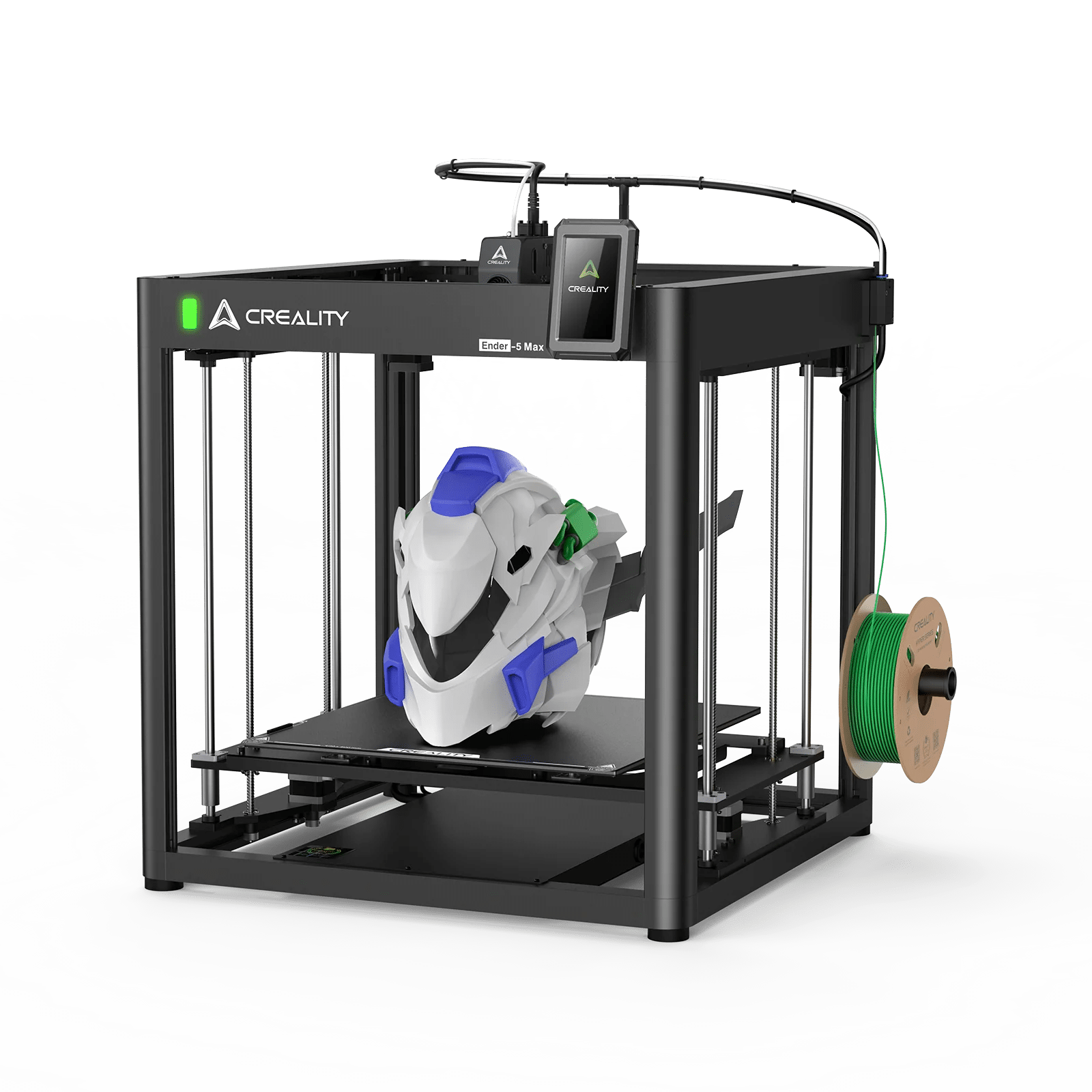
Open-Source DNA and the World’s Largest 3D Printing Community
Creality’s open-source firmware and shared hardware designs created a self-reinforcing ecosystem. Third-party developers have built thousands of mods, firmware modifications, and software tools specifically for Creality machines. When something breaks or needs calibrating, the answer is almost certainly already on YouTube, Reddit, or the Creality forum. That knowledge base has accumulated for a decade. A newer brand, however polished, cannot replicate it.
2026 Product Innovations
Creality enters 2026 with meaningful momentum on the hardware front. The K-series has pushed high-speed FDM printing — with the K1C capable of sustained 600mm/s speeds — into a price range that was previously reserved for industrial machines. Multi-material capability has expanded across the lineup. AI-assisted print monitoring, through Creality’s cloud platform, is reducing failed prints and helping users catch problems before they waste hours of material. These aren’t marketing features; they’re solving real problems that the 3D printing community has complained about for years.
Unmatched Price-to-Performance Leadership
The most direct comparison: the Creality K1C — a fully enclosed, high-speed CoreXY machine that prints at up to 600mm/s — runs significantly cheaper than a comparable Bambu Lab P1S. Both machines deliver fast, high-quality prints. Both handle engineering-grade filaments. But the Creality comes with an open ecosystem you can modify, a larger community, and a lower entry price. For makers and prosumers who want speed without the premium tax, that gap is decisive.
Which 3D Printer Brand Is Right for You?
The best 3D printer brand in 2026 depends on who you are and what you’re making. Here’s the short version.
Best Brand for Beginners
Creality. Start with the Creality SparkX i7. It’s affordable, well-documented, and backed by more beginner tutorials than any other printer on the market. When you make mistakes — and you will, everyone does — the community has already solved your problem.
Best Brand for Schools and Education
Creality. Budget goes further when machines cost $150–$250 per unit. Replacement parts are cheap and widely available. Teachers and students can find structured guides, lesson plans, and curriculum resources built around Creality hardware. For institutions buying in volume, the economics are hard to argue with.
Best Brand for Makers and Hobbyists
Creality. The open-source ecosystem is the deciding factor here. Makers want to modify, tinker, and push their hardware. No brand offers more community-built upgrades, firmware forks, and hardware modifications than Creality. Bambu Lab is worth considering if you prioritize speed and consistency over customization — but it’s a closed garden.
Best Brand for Professionals and Prosumers
Creality, with the Creality K2 Plus or K1C. These machines compete directly with Bambu’s premium tier in speed and print quality, but remain open and modifiable. For a professional studio that needs repeatable results, multi-material capability, and the flexibility to adapt the machine to specialized workflows, Creality’s upper tier delivers.
The Best 3D Printer Brand in 2026 Is the One That Grows With You
No single brand is perfect for everyone. Bambu Lab makes an excellent case for users who want simplicity above all else. Prusa remains the choice for open-source purists willing to pay for quality and transparency. Anycubic and Elegoo deliver real value in the resin segment.
But when you evaluate the full picture — product range, community, price-to-performance, software ecosystem, and long-term support — Creality is the best 3D printer brand in 2026 for the widest range of buyers. It’s the only brand where a complete beginner and a seasoned prosumer can both find exactly the right machine, supported by the same vast community, at a price that doesn’t demand compromise.
The 3D printing space moves fast. Creality has kept pace with it for over a decade, and the 2026 lineup is its strongest yet.
Ready to find your machine? Browse the full 2026 Creality lineup.