

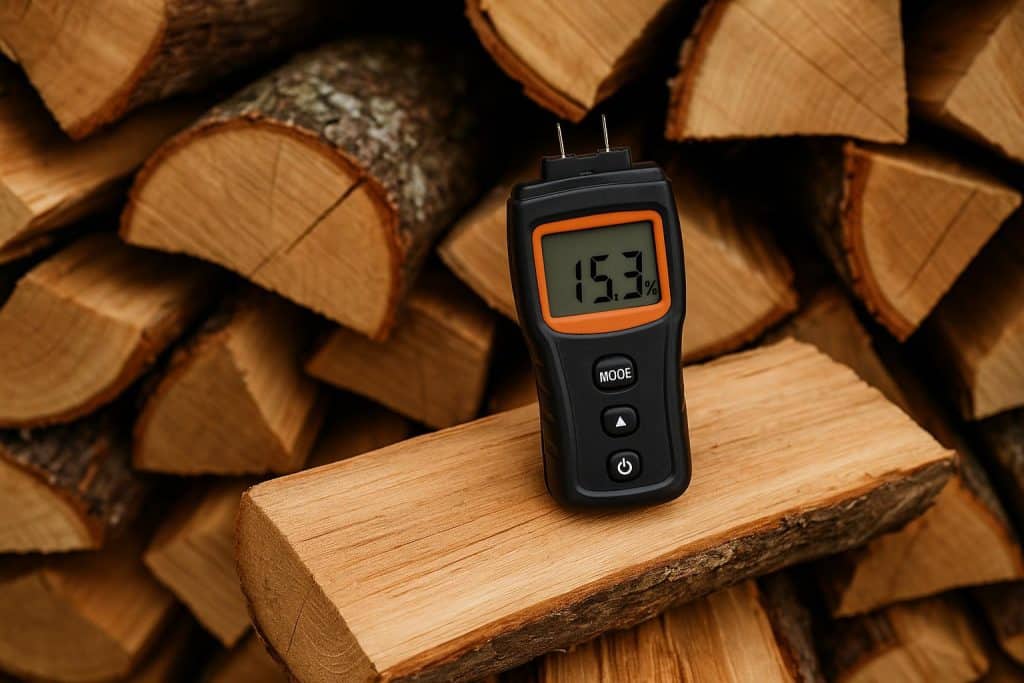
Learn to identify the optimum moisture content of firewood (under 20%). We review the best ways to measure and season your wood for 2026. See our top pro tips here!
A warm fire is a winter essential, but poorly seasoned logs can ruin the experience with excessive smoke and low heat. To avoid a hissing, smoldering mess, you must prioritize the optimum moisture content of firewood. Reaching this ‘golden number’ (typically under 20%) is the secret to turning a frustrating fire into a perfect, roaring hearth that saves you money and protects your home’s air quality
Why Does Firewood Moisture Matter?
In the world of domestic heating, firewood is not just “wood”; it is a fuel source that must be “cured” to perform correctly. The optimum moisture content for firewood is generally defined as 20% or less. When wood is freshly cut, often referred to as “green wood,” it can contain upwards of 50% to 60% water by weight
Burning green wood creates a cascade of problems. First, it is physically difficult to light and even harder to keep burning. Second, it is a waste of money; instead of the energy being used to heat your home, the fire’s energy is consumed by boiling the water trapped inside the cells of the wood. Third, and most dangerously, the resulting low-temperature combustion produces excessive smoke and chemical byproducts that lead to dangerous creosote buildup in your chimney. Understanding the “20% rule” is the secret to a perfect fire, a warmer home, and a safer environment.
What Is the Optimum Moisture Content?
The Standard: Below 20%
To achieve clean and efficient combustion, the industry standard is to ensure firewood has a moisture content below 20%. At this level, the wood is dry enough to ignite easily and burn hot enough to consume the gases released during combustion.
Why 20%? The Science of Efficiency
When you burn wood with high moisture, the fire must first evaporate that water before the wood fiber can actually burn. This process consumes a massive amount of thermal energy. Furthermore, the water vapor cools the fire, preventing it from reaching the temperatures required for “secondary combustion”—the stage where smoke and gases are burned off. This results in heavy smoke and the formation of creosote, a highly flammable, tar-like substance that sticks to chimney walls and is the leading cause of chimney fires
Quick Classification of Wood Dryness
- Green Wood (>50% moisture): Freshly felled timber. It feels heavy, the bark is tightly attached, and it will hiss and bubble when put on a fire. It is not ready for burning.
- Seasoned Wood (15%–25% moisture): Wood that has been cut, split, and stacked in a way that allows air to circulate for 6 to 12 months. This is the standard for most homeowners.
- Kiln-Dried Wood (10%–15% moisture): This is the premium choice. The wood is placed in a large industrial oven (kiln) to rapidly remove moisture. It is extremely dry, pest-free, and lights almost instantly.
Benefits of Choosing Firewood with Optimum Moisture
Choosing dry wood isn’t just a preference; it’s a necessity for several reasons:
- Cost Efficiency: Dry wood has a much higher BTU (British Thermal Unit) output. Because the fire isn’t wasting energy evaporating water, you get more heat per log. This means you will burn significantly fewer logs to maintain the same temperature, saving you money in the long run.
- Health & Environment: According to the EPA, burning dry wood reduces smoke and harmful emissions by up to 70%. Wet wood releases high levels of PM2.5 (fine particulate matter), which can irritate the lungs and contribute to smog.
- Maintenance: High-moisture wood creates thick, black smoke that deposits creosote in your flue. By using wood under 20%, you keep your chimney cleaner for longer, reducing the frequency of professional cleanings and extending the life of your wood stove or fireplace liner.
Practical Methods to Test Firewood Moisture Upon Purchase
When a delivery truck arrives at your home, you shouldn’t just take the seller’s word that the wood is “seasoned.” Here are four ways to verify:
1. Using a Moisture Meter
This is the only 100% accurate method. These devices are affordable and easy to use.
- The Pro Tip: Do not test the outside of the log. The exterior can dry out while the inside remains soaked. Split the log open and press the meter’s pins into the center of the fresh face, aligned with the grain.
2. The Sound Test
Take two logs and bang them together.
- Dry wood will produce a sharp, hollow “clink” or “ring,” similar to a baseball bat hitting a ball.
- Wet wood will produce a dull, heavy “thud.”
3. Visual Inspection (Cracks)
Look at the ends of the logs. As wood dries, it shrinks and begins to crack. These radial cracks, known as “checking” are a good sign that the wood has been seasoning for some time. Additionally, the bark on dry wood usually peels away easily.
4. Weight Check
Water is heavy. If you pick up two logs of the same species and size, the seasoned one will feel significantly lighter than the green one. If a small log feels like a heavy brick, it is likely full of water.
Key Considerations When Buying Firewood
5.1. Understand Measuring Units
Firewood is rarely sold by weight because of the moisture issue. Instead, it is sold by volume.
- Full Cord: A stack measuring 4ft x 4ft x 8ft ($128$ cubic feet)
- Face Cord: Usually a stack 4ft high and 8ft long, but only one log deep (about 1/3 of a full cord).
- Cubic Meters: The standard metric unit for wood volume
5.2. Wood Species (Hardwood vs. Softwood)
- Hardwoods (Oak, Ash, Maple, Hickory): Denser and provide a longer, steadier burn with more coals. Ideal for overnight heating.
- Softwood Logs (Pine, Fir, Cedar): Less dense and burn quickly. They are excellent for kindling to get a fire started, but they contain resins that can cause more spark “pops.”
5.3. Check for Mold and Pests
Avoid wood with visible white fungus, mushrooms, or large boreholes from beetles. This indicates the wood was stored in a damp environment and may be rotting. Rotting wood has lost its structural integrity and its heat value.
5.4. Ask About Seasoning Time
Ask the supplier specifically when the wood was split. Wood that was cut into rounds a year ago but only split last week will still be wet inside. Proper seasoning requires air to hit the split faces for at least 6 months.
5.5. Choosing a Reputable Supplier
A good supplier is your best defense against bad wood.
- Check Real Reviews: Look at Google Maps or local Facebook groups. Reliable sellers have a reputation for consistent volume and dryness.
- Transparency: A professional seller will not mind if you use a moisture meter on their wood before they unload it. If they refuse, it’s a red flag.
- Fair Pricing: If the price is $50–$100 cheaper than every other local supplier, they are likely selling “green” wood that hasn’t been processed or stored correctly.
Investing in firewood with a moisture content below 20% is an investment in heat, safety, and savings. By choosing professional kiln-dried options, you bypass the 12-month waiting game and ensure your fireplace operates at peak performance.
Ready for the perfect fire? Visit https://kiln-driedlogs.co.uk/ today to browse their range of premium kiln-dried hardwoods. Enjoy fast delivery and the peace of mind that comes with burning the best fuel available.