

A delayed shipment of a fifty-cent connector can stop a multimillion-dollar assembly line. When you source electronic components, you aren’t just buying parts. You’re tying your production schedule to someone else’s operational efficiency. Picking the right supplier takes more than just glancing at a catalog and checking unit prices. You need to know what happens when things go wrong, how they handle material shortages, and whether their quality control is actually applied on the floor. Finding a reliable partner means looking past the sales pitch and digging into the operational realities of their business.
Production Capabilities and Scaling
Every supplier looks good when you only need a few hundred units for a pilot run. The real test happens when demand spikes and you need to scale up fast. You want to know if they have the equipment and labor pool to handle unexpected volume. Ask about their shift structures and machine utilization rates. If a supplier is already running three shifts at full capacity, they don’t have room to absorb your emergency orders.
This is why auditing the actual production floor matters. When you evaluate a wire harness factory, look at the workflow. Check how they handle bottlenecks in crimping or routing stations.
You want to see:
- Organized workstations
- Clear work instructions
- Well-maintained tooling
If the facility looks chaotic during a planned visit, imagine what it looks like during a late Friday push to meet a shipping deadline. You should also look at their equipment maintenance logs. Machines that are constantly breaking down directly impact your lead times.
Quality Control and Testing Standards
Talk is cheap when it comes to quality. Most sales teams will hand you an ISO certificate and tell you everything is tested. You need to dig into their actual testing protocols. Do they do automated optical inspection? How about electrical testing for continuity, resistance, and hi-pot?
The standard of testing often depends on your industry, but looking at a supplier’s other clients tells you a lot. An established automotive wire harness manufacturer has to comply with strict standards like IATF 16949. They’re used to providing detailed Production Part Approval Process documentation. Even if you aren’t building cars, partnering with a supplier that operates at that level of rigor means you benefit from their strict internal controls. Ask to see their scrap rates and how they handle non-conforming materials. A good supplier tracks these metrics obsessively and uses them to improve their processes, rather than just throwing away bad parts and hiding the waste.
Prototyping and Engineering Support
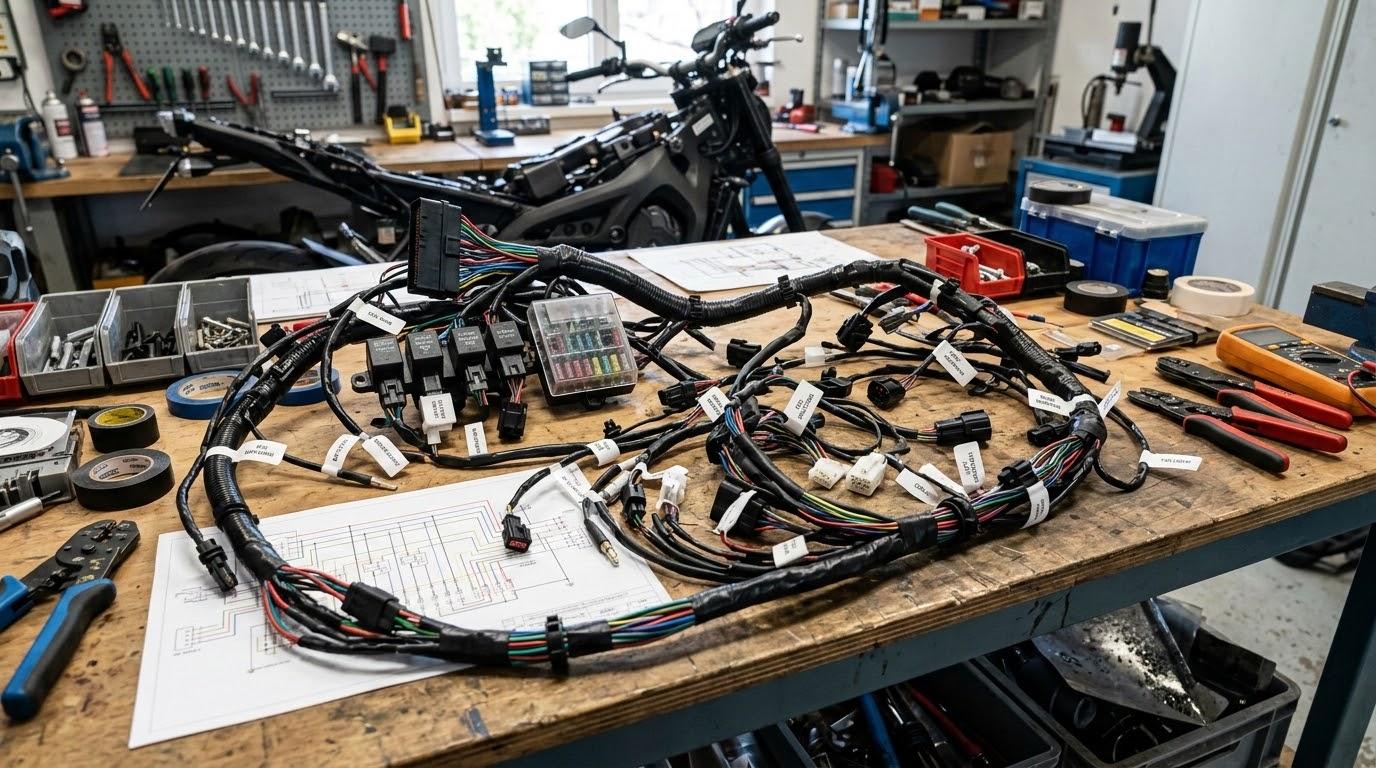
A build-to-print supplier just takes your drawing and makes it. That works fine for standard cables. For complex assemblies, you want a partner that provides real engineering feedback. Sometimes a drawing looks great in CAD but is a nightmare to assemble on the floor.
A supplier with solid engineering support will tell you when a specific connector is prone to supply chain delays and suggest a readily available alternative. They catch routing issues before you waste money on bad prototypes. Take a motorcycle wiring harness manufacturer as an example. They know their products have to survive heavy vibration, extreme weather, and tight space constraints. A good partner in that space will review your print and warn you if the specified insulation will degrade under engine heat. That kind of feedback prevents expensive warranty claims down the line. They should act as an extension of your own engineering team.
Material Sourcing and Supply Chain Visibility
Your supplier is only as reliable as their suppliers. The electronics market is notorious for sudden component shortages. You need to know where they source their copper wire, terminals, and housings. Ask them about their vendor management. Do they buy directly from component brands like Molex or TE Connectivity, or do they rely on gray market brokers when supplies get tight?
The gray market is flooded with counterfeit electronics and subpar knockoff connectors. If your supplier uses these to meet a deadline, those parts might fail in the field. Look for suppliers that maintain a healthy safety stock of critical raw materials. If they operate with a purely just-in-time model, any hiccup in global shipping delays your order. Find out how much visibility they have into their own supply chain. If they can’t tell you the lead times for their raw materials, they definitely can’t guarantee your delivery dates.
Communication and Logistics
Time zones and language barriers introduce massive friction to manufacturing. If your engineering team is and the supplier is 12 hours ahead, a simple technical clarification can take three days of email back and forth. This slows down prototyping and makes resolving quality issues incredibly frustrating.
You don’t necessarily have to source domestically, but you need an account manager who operates during your business hours. You also want a clear line of communication directly to their engineering team, not just a salesperson. Pay attention to how they handle logistics and shipping terms. Getting pallets of components cleared through customs adds lead time and cost. Make sure you understand who is responsible for the freight and tariffs. Ask about their experience shipping to your specific region and whether they have a logistics partner that can expedite parts if production falls behind schedule.
Tooling Costs and Ownership
Custom electronic components often require custom tooling. Injection molds for custom connectors, specialized crimping dies, or custom testing fixtures all cost money. You need to clarify upfront who pays for this tooling and who actually owns it.
Some suppliers subsidize the tooling cost to win your business, but they retain ownership. If you ever want to move your production to another vendor because of price hikes or quality issues, you can’t take the tools with you. You have to pay for new ones all over again. The best practice is to pay for the tooling outright and have a written agreement stating it belongs to your company. Ensure the supplier agrees to maintain the tools and clearly tags them as your property on their floor. Ask for pictures of your tools periodically to verify they are being stored properly.
Financial Stability of the Partner
This is the most overlooked part of supplier vetting. Setting up a new vendor requires a massive investment of time in tooling, auditing, and approvals. If that supplier runs out of cash and goes bankrupt six months later, you have to start the whole process over.
Ask for bank references and check their credit history. You want a partner that has the financial runway to invest in new equipment and hold inventory for you. A financially strapped supplier will cut corners on maintenance or buy cheaper raw materials to save a few pennies. Those decisions eventually show up as defects in your products. A strong balance sheet means they can weather economic downturns and continue supplying you without interruption. Don’t skip this step just because the sample parts looked good.