

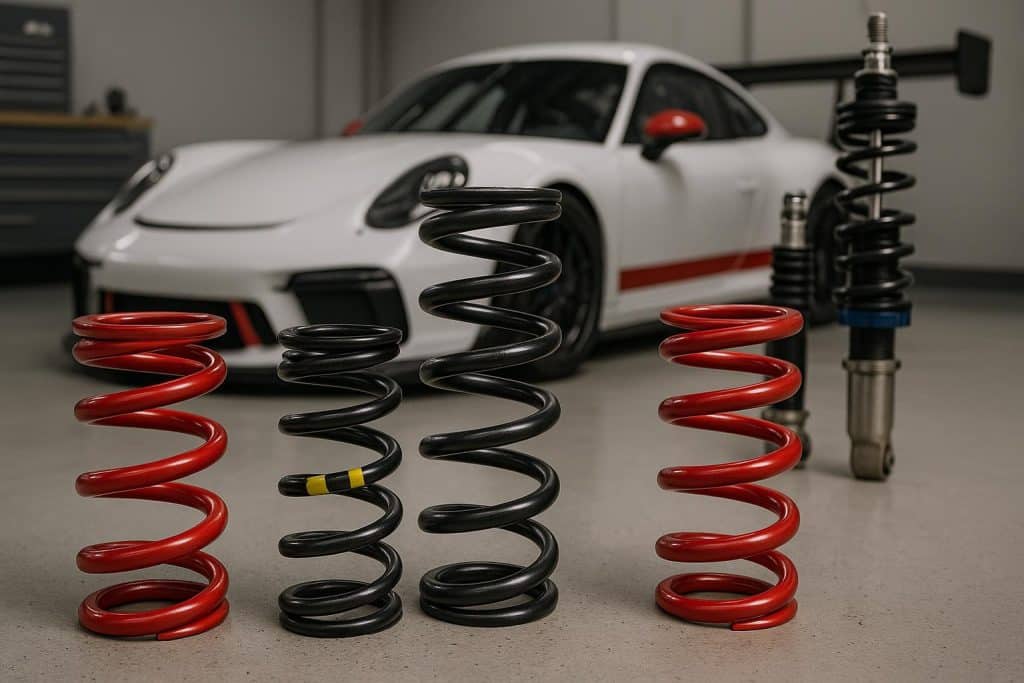
Precision in motorsport begins with components that translate driver intent into controlled motion. Suspension systems stand at the center of this relationship, where even minor adjustments can reshape vehicle behavior on track. Among these elements, springs influence grip, balance, and responsiveness in ways that define competitive performance.
Racing coil springs play a critical role in this equation, as their design directly affects how a car handles load transfer, cornering forces, and surface irregularities. Different racing disciplines demand specific spring characteristics to match track conditions and vehicle setup. Understanding these variations helps teams achieve consistency, speed, and control across diverse motorsport scenarios.
Linear Rate Springs for Predictable Handling
Linear rate springs maintain a constant stiffness throughout their compression range, which delivers a consistent response under varying loads. Drivers benefit from predictable handling characteristics, especially in circuit racing, where stability through corners is essential. This type suits vehicles that require precise tuning and repeatable performance across laps.
Engineers favor linear springs in professional racing categories due to their straightforward behavior. Adjustments to damping and ride height become easier when spring response remains uniform. Teams can fine-tune suspension geometry without compensating for changing spring rates, leading to sharper cornering and improved feedback.
Progressive Springs for Versatile Track Conditions
Progressive springs feature varying stiffness, starting softer and becoming firmer as compression increases. This design accommodates changing track conditions, such as uneven surfaces or mixed-speed sections. Drivers experience improved comfort during lighter loads while still gaining support during aggressive maneuvers.
Such springs are common in rally and endurance racing environments. Variable stiffness helps absorb bumps and maintain tire contact over rough terrain. Vehicles equipped with progressive springs achieve a balance between adaptability and control, which proves valuable in unpredictable racing conditions.
Materials and Construction Impact on Performance
Spring material plays a decisive role in durability and responsiveness. High-tensile steel remains a popular choice due to its strength and reliability under extreme stress. Lightweight alloys, on the other hand, reduce unsprung mass and enhance vehicle agility.
Manufacturing techniques influence how springs behave under repeated loads. Heat treatment processes improve fatigue resistance, which ensures consistent performance during extended racing sessions. Racing coil springs engineered with precision materials contribute to improved lap times and mechanical reliability.
Choose the Right Spring Based on Racing Demands
- Circuit racing setups demand firm springs with minimal body roll to maintain stability at high speeds. Linear springs are commonly selected for their predictable characteristics.
- Rally and off-road events require flexible suspension that adapts to uneven terrain. Progressive springs provide the necessary compliance and control.
- Drag racing applications focus on weight transfer during acceleration. Softer rear springs assist traction, while stiffer front springs maintain balance.
Importance of Buying from Trusted Sellers
Reliable performance begins with quality components sourced from reputable suppliers. Trusted sellers ensure that springs meet strict manufacturing standards and performance specifications. This assurance reduces the risk of premature failure and inconsistent handling.
Established vendors provide detailed product information, which helps teams select springs suited to specific racing needs. Access to expert guidance further enhances decision-making. Investing in dependable sources supports safety, performance, and long-term value.
So, precision in spring selection shapes how a racecar performs under pressure. Each type serves a distinct purpose aligned with specific racing demands. Thoughtful choices lead to better control, improved grip, and confident driving on every track.