

Trauma does not wait for words. It shows up in the body first.
A racing heart. Tight shoulders. A sudden wave of fear with no clear reason.
Many people understand their trauma story clearly. They know what happened. They know it is over. Still, their body reacts before the mind can step in. This can feel confusing and frustrating.
The reason is simple. The body learned something before language did. Sensory integration helps explain how that learning stays active, and how it slowly changes during trauma recovery.
The Body Learns Before the Mind Explains
During a threatening or overwhelming event, the body reacts instantly. There is no pause to think. The nervous system shifts into survival mode.
That response protects us in the moment. Later, it can linger.
A sound may feel too loud.
A touch may feel unsafe.
A crowded space may trigger panic.
These reactions do not mean danger is present. They mean the body remembers what once kept it alive. Trauma lives in this memory, not just in thoughts.
What Sensory Integration Means in Simple Terms
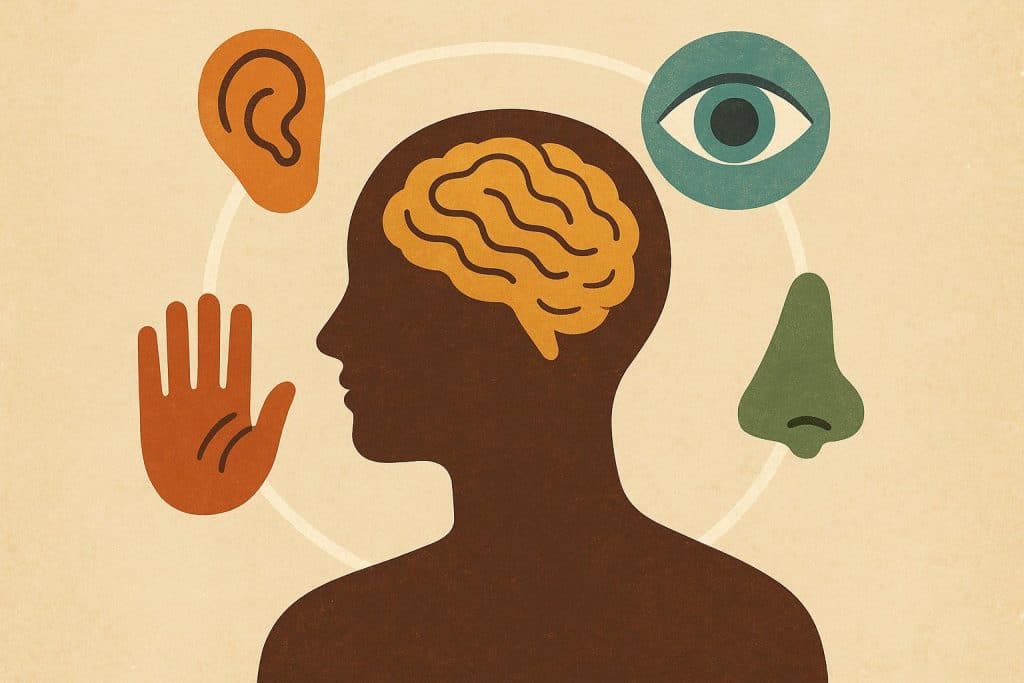
Sensory integration is how the brain understands information from the senses. It includes sound, light, touch, movement, smell, and body position.
When sensory integration works well, the body can tell what matters and what does not. Background noise stays in the background. Normal touch feels normal. Movement feels steady.
After trauma, this system can lose balance. The brain may struggle to filter input. Everything can feel intense, or nothing feels real at all.
Both responses are common. Both are protective.
Why Thinking Alone Does Not Calm the Body
People often try to talk themselves out of trauma reactions. They remind themselves they are safe. They repeat calming phrases.
Sometimes this helps. Often it does not.
The body reacts faster than thought. Sensory information reaches survival areas of the brain before logic does. Sensory integration plays a role in how those signals are read.
If the body senses danger, it responds first. Thinking comes later. This is not failure. It is biology.
Safety Is a Physical Experience
Feeling safe is not just an idea. The body has to sense it.
Trauma recovery often begins here. Not with insight, but with sensation.
Steady pressure.
Predictable movement.
Quiet or familiar sounds.
These experiences give the nervous system new information. They tell the body that this moment is different from the past.
Sensory integration supports this process by helping the brain organize input in a way that feels manageable.
Overwhelm and Numbness Come From the Same Place
Some trauma survivors feel everything too strongly. Others feel almost nothing at all.
One response floods the system. The other shuts it down.
Both come from the same goal. Protection.
When sensory integration struggles, the nervous system chooses the strategy that feels safest. Neither response is wrong. Both make sense in context.
Understanding this reduces shame. It replaces judgment with clarity.
Forcing Calm Often Backfires
Trying to push the body into relaxation rarely works. Forcing exposure or ignoring sensory needs can increase stress.
A gentler approach helps more.
Notice how your body reacts to light, sound, or movement. Pay attention without trying to change anything. Stay curious.
This kind of awareness builds trust. The nervous system responds better when it feels respected.
Sensory Integration Is Support, Not a Cure
Sensory integration does not erase trauma. It does not replace therapy or professional support.
What it does offer is a foundation. It helps the body feel more present and regulated. That support can make other healing work more accessible.
Progress happens slowly. There is no finish line.
Small Sensory Moments Matter
Sensory assistance doesn’t necessarily have to be intricate. In fact, the most effective ones are often those that are very simple and part of everyday life. A gentle and leisurely walk provides the body with a steady movement and rhythm. The feeling of feet touching the ground and the body moving through space can assist the nervous system in settling down.
A hot beverage can also provide a grounding effect. The heat in the hands and chest gives the person a sensation of being in the present which can be very soothing. Having the feet on the ground while sitting makes the body feel backed up and in the right direction. It gives a signal to the nervous system to know its position, particularly during moments of stress.
These tiny sensations provide the body with uniform and predictable input. Eventually, they may train the nervous system to discern safety again. What is effective will vary from person to person. The body is the guide.
Rebuilding Trust With the Body
Trauma can break trust with physical sensations. The body may feel unpredictable or unsafe.
Sensory integration helps rebuild that relationship. It starts with neutral or gentle sensations. Nothing intense. Nothing forced.
With time, the body learns that attention does not always mean danger.
A Trauma Informed View
A trauma informed approach respects pacing, choice, and individual experience. It avoids promises and quick fixes.
Educational resources like Practical Sanctuary focus on helping people understand trauma and self regulation without pressure. Sensory integration fits naturally into this framework. It offers understanding, not demands.
When the body reacts first, it is not being dramatic. It is being protective. Sensory integration helps translate those reactions. It shows why the body responds the way it does and how to meet it with care. Trauma recovery often starts here. Not with control, but with listening. Healing happens in small moments. Often, it begins before words ever arrive.