

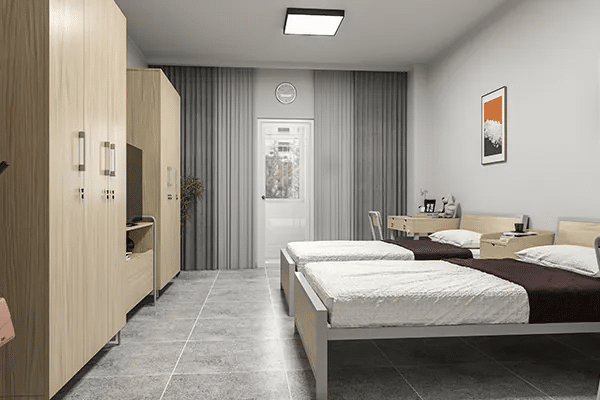
Equipping student housing and corporate dormitories demands a delicate balance between strict budgets and extreme durability. Poor procurement choices lead to costly replacements, while premium domestic options can exceed capital limits.
Partnering with established dorm furniture manufacturers in China offers a strategic solution. By leveraging a mature industrial ecosystem, institutions access unmatched cost efficiency, scalable production, and rigorous quality standards, ensuring projects are delivered on time and within budget.
Why Choose Chinese Dorm Furniture Manufacturers?
- Cost Advantages and Value for Money
The primary driver for international cooperation remains cost efficiency, rooted deeply in “economies of scale.” China remains the world’s largest furniture producer, exporter, and consumer market. In 2023, China led the globe with approximately $75 billion in furniture exports, a figure that dramatically overshadows the second-ranked nation, Germany, which recorded about $14.1 billion.
This sheer volume allows top-tier manufacturers to operate immense production bases, purchasing raw materials like steel and timber at bulk rates that smaller domestic competitors cannot match.
For a university outfitting 500 rooms, these savings are transformative. It enables the allocation of budget towards better amenities—such as scratch-resistant thermally fused laminates or heavier-gauge steel—for the same price as basic domestic alternatives.
The value proposition is straightforward: superior product longevity and higher specifications for every dollar invested.
- Mature Supply Chain and Stable Production Capacity
Reliability is the currency of large-scale projects. A delay in delivery can result in missed semester openings and revenue loss. Chinese college dorm furniture suppliers operate within highly developed industrial clusters, such as those in Guangdong and Zhejiang. These regions host thousands of factories supported by a dense network of sub-suppliers.
This vertical integration means every component, from fire-retardant textiles to heavy-duty fasteners, is sourced locally and quickly. Unlike fragmented supply chains where a missing part halts production, the Chinese ecosystem ensures continuity.
Coupled with a robust logistics infrastructure handling millions of containers annually, the risk of shortages is minimized, offering developers peace of mind that high-volume orders will be fulfilled on schedule.
- Advanced Manufacturing and Design Innovation
Chinese manufacturers also have invested heavily in advanced manufacturing technologies such as CNC machining, automated assembly lines, and AI-assisted quality inspection systems. These upgrades improve dimensional accuracy, structural consistency, and overall production efficiency.
Equally important is growing design capability. Many dorm furniture manufacturers now offer OEM and ODM services, enabling clients to tailor bed frames, desks, wardrobes, and storage solutions to specific room layouts or safety requirements.
Customization is especially valuable for institutions seeking to maximize space efficiency while maintaining standardized aesthetics across campuses or housing projects.
- One-Stop Project Support and Services
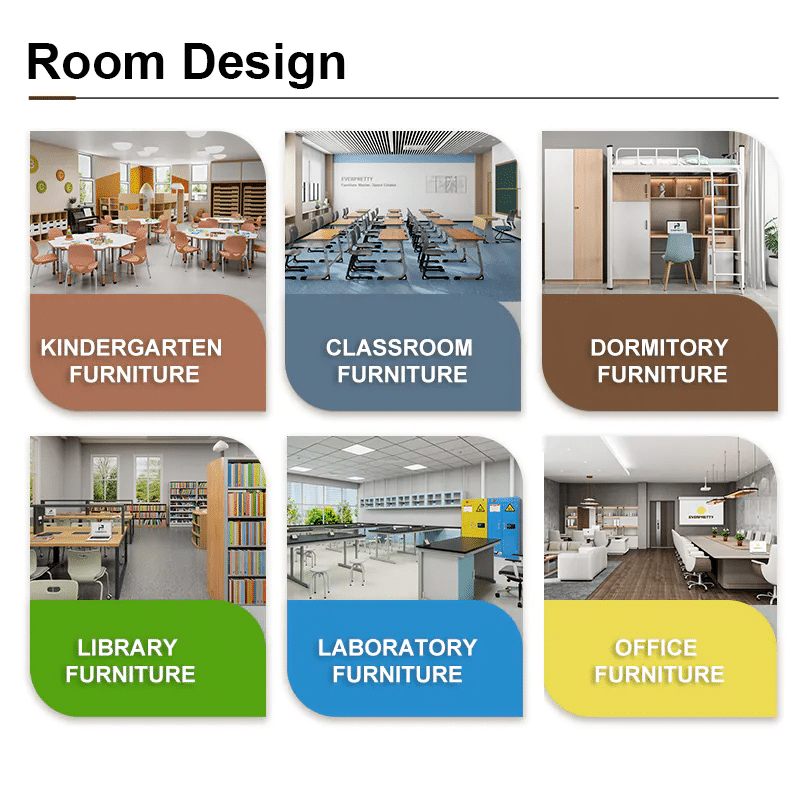
Beyond manufacturing, leading Chinese suppliers increasingly provide end-to-end project support. This includes layout planning, technical drawings, material selection guidance, prototyping, packaging optimization, and coordination with logistics providers.
For property developers and accommodation operators, working with a one-stop supplier reduces coordination complexity and minimizes the risk of miscommunication between multiple vendors. Centralized accountability also improves quality consistency and after-sales responsiveness throughout the project lifecycle.
How to Select the Right Chinese Dorm Room Furniture Manufacturers
While the benefits are compelling, the global market is vast. To ensure success, procurement teams must exercise rigorous due diligence to mitigate risks.
- Key Criteria for Selection
When evaluating partners, look for specific experience in the educational or hospitality sectors. They tend to have a clear understanding of the rough handling that dorm furniture often endures.
- Proven Track Record: Request references and case studies for projects of similar scale. Verification of past performance is essential.
- Design Capability: Can they interpret architectural drawings and provide detailed shop drawings? This ensures the final product fits the physical space perfectly.
- Certifications: Ensure the manufacturer complies with ISO 9001 (quality) and ISO 14001 (environmental) standards. Adherence to standards such as BIFMA for durability is a strong indicator of institutional quality.
- Mitigating Quality and Logistics Risks
To manage risks, implement a structured verification process.
- Request Prototypes: Demand a physical sample before mass production to inspect welding quality, edge banding, and hardware durability firsthand.
- Clarify Specifications: Ambiguity is the enemy of quality. Detailed material specifications—down to steel grade and laminate thickness—must be written explicitly into the contract.
- Quality Control (QC): Establish clear inspection terms. Reputable manufacturers welcome third-party inspections (e.g., SGS, Intertek) to verify that mass production matches the sample.
- Logistics Planning: Partners experienced in international trade can help navigate Incoterms (such as DDP) to ensure goods clear customs smoothly.
Chinese Dorm Furniture Manufacturer Recommendation
Meeting these rigorous criteria for quality and reliability, Topohut stands out as a premier choice. Located in Guangdong, they are a distinguished one-step dorm & hostel furniture solution provider with over 30 years of manufacturing excellence.
Trusted by more than 51,520 clients globally—including prestigious institutions like The University of Queensland and Sun Yat-sen University—they operate a massive 79,100 sqm facility that exports over 500 containers annually.
As an Alibaba 5-star supplier, Topohut delivers comprehensive OEM/ODM services, free 3D modeling, and rapid one-day sampling. Their diverse product range, covering everything from heavy-duty bunk beds to ergonomic study stations, meets rigorous international standards (such as ISO, CE, SGS, TUV, and BV).
With flexible logistics capabilities serving 68+ countries (via DDP, CIF, etc.), Topohut stands as one of the most reliable project partners for creating safe, durable, and stylish living environments.
Conclusion
In the competitive landscape of educational housing, value engineering is essential. Cooperating with dorm furniture manufacturers in China is a strategic necessity for projects aiming to maximize ROI.
By leveraging China’s mature supply chain and advanced technology, institutions can deliver high-quality living spaces. Success depends on the partner you choose. With a focus on durability and professional service, Topohut stands as a good partner to help you build better spaces.