

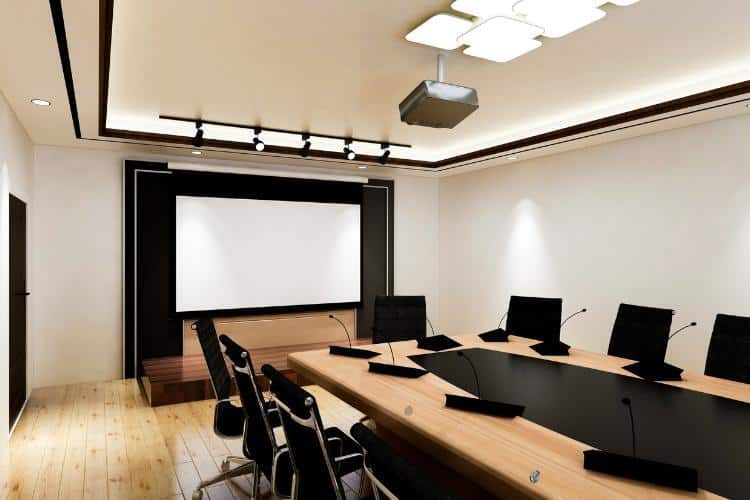
Not long ago, the corporate boardroom was a relatively static space. A large table, a projection screen, a speakerphone in the center, and perhaps a whiteboard on the wall. Meetings were formal, often infrequent, and largely confined to those physically present.
Today, that model no longer reflects how businesses operate. Distributed teams, hybrid work arrangements, global partnerships, and data-driven decision-making have transformed the boardroom into one of the most technologically complex spaces in the modern office.
As organizations place greater emphasis on agility, collaboration, and real-time communication, the boardroom has evolved from a ceremonial meeting space into a strategic technology hub. Understanding why this shift is happening and what it requires is essential for business leaders, IT managers, and operations teams planning their next phase of growth.
The Shift Toward Hybrid and Distributed Leadership
Executive leadership is no longer confined to a single building or even a single country. Board members may join meetings from different cities or continents, and senior stakeholders often dial in between travel schedules and other commitments.
This shift has forced organizations to rethink how meetings are conducted. A basic speakerphone and single camera no longer suffice. Instead, boardrooms must support high-definition video conferencing, intelligent audio capture, and seamless content sharing that works equally well for in-room participants and remote attendees.
The goal is parity. Remote participants should feel as engaged and visible as those seated at the table. That requires carefully designed microphone placement, echo cancellation, high-resolution displays, and camera systems that can track speakers naturally.
When the technology fails, meetings stall. Discussions become fragmented, and productivity drops. As a result, many companies now treat boardroom technology as mission-critical infrastructure rather than an afterthought.
From Presentation Spaces to Decision-Making Centers
Boardrooms have also become data environments. Leadership discussions increasingly focus on dashboards, real-time analytics, market updates, and operational reports. Instead of static slide decks, executives expect real-time data feeds displayed clearly and legibly from anywhere in the room.
This has led to widespread adoption of multi-display setups, large-format screens, and digital collaboration tools. The design challenge is not simply installing screens; it’s integrating them into a unified system that allows seamless switching between presenters, inputs, and platforms.
Professional-grade control systems simplify what would otherwise be complex. Organizations often work with experienced AV integrators to configure switching hardware, signal distribution, and user-friendly interfaces. Companies such as Creation Networks frequently support these projects, ensuring that enterprise environments function reliably under pressure.
The difference between a consumer-grade setup and a professionally integrated system becomes apparent when meetings involve sensitive financial reviews, investor presentations, or strategic planning sessions. In these contexts, reliability is not optional.
Security and Infrastructure Considerations
As boardrooms grow more connected, security becomes a central concern. Video conferencing platforms, wireless presentation tools, and network-connected displays can all pose entry points if not properly configured.
Executives routinely discuss confidential information, from acquisition plans to personnel decisions. That reality requires a secure AV infrastructure aligned with IT policies.
Signal routing hardware, control processors, and communication endpoints must align with broader cybersecurity frameworks. For example, professional AV components from manufacturers such as Extron are often used in enterprise boardrooms because they are engineered for controlled, secure environments.
Through partners like Creation Networks, organizations can source and integrate these systems within a structured IT architecture rather than relying on piecemeal consumer devices.
Enhancing Collaboration Without Increasing Complexity
One of the biggest misconceptions about technology-heavy boardrooms is that they must be complicated to operate. In practice, executive teams demand simplicity.
A well-designed boardroom allows participants to start meetings quickly, connect devices without friction, and transition between speakers smoothly. Touch-panel controls, automated source switching, and pre-configured meeting modes reduce delays and minimize the need for on-site technical support.
Achieving this balance requires thoughtful system design. Integrators analyze how the room will be used:
- Will executives frequently share content from personal laptops?
- Are hybrid meetings the norm or the exception?
- Does the organization require recording or live streaming capabilities?
By answering these questions early, businesses can avoid overbuilding systems or installing redundant tools. Creation Networks and similar providers often collaborate with IT and facilities teams to map out workflows before selecting hardware, ensuring that technology supports leadership objectives rather than distracting from them.
The Role of Acoustics and Room Design
Technology alone does not define a modern boardroom. Physical design plays an equally important role.
Poor acoustics can undermine even the most advanced conferencing system. Echo, reverberation, and uneven sound distribution create fatigue and frustration. That is why boardroom upgrades increasingly involve acoustic treatments, ceiling microphone arrays, and calibrated speaker systems.
Lighting also affects meeting quality. Properly balanced lighting ensures that video participants appear professional and visible on camera. Glare from windows or overhead fixtures can reduce display clarity, diminishing the effectiveness of visual presentations.
As organizations invest in boardroom renovations, AV planning is often integrated into architectural design rather than added later. This holistic approach reflects a broader recognition that executive communication depends on both physical and digital environments.
Supporting Global Communication and Investor Relations
Boardrooms now serve as broadcasting spaces as much as meeting rooms. Quarterly earnings calls, investor briefings, press announcements, and internal town halls often originate from these spaces.
This shift requires broadcast-quality audio capture, reliable streaming connections, and presentation systems capable of supporting multiple output formats. Even minor technical disruptions during a public-facing event can impact credibility.
To manage this complexity, companies frequently standardize their boardroom technology across multiple offices. Standardization simplifies training, maintenance, and scalability. It also ensures that leadership can conduct meetings from any major location with consistent performance.
When properly equipped, the boardroom becomes a strategic communication asset. It supports not only internal alignment but also external transparency and engagement.
Conclusion
Corporate boardrooms are no longer symbolic spaces reserved for occasional high-level meetings. They have become operational nerve centers where leadership teams collaborate across geographies, analyze live data, and communicate with global audiences.
This transformation reflects broader changes in how businesses function: faster decision cycles, distributed leadership, and a reliance on real-time information. To support these demands, organizations must treat boardroom technology as essential infrastructure rather than optional equipment.
By prioritizing thoughtful design, secure integration, and user-friendly control, companies can turn their boardrooms into effective technology hubs that strengthen communication at every level. As expectations continue to rise, the boardroom will remain a focal point of innovation within the modern enterprise.