

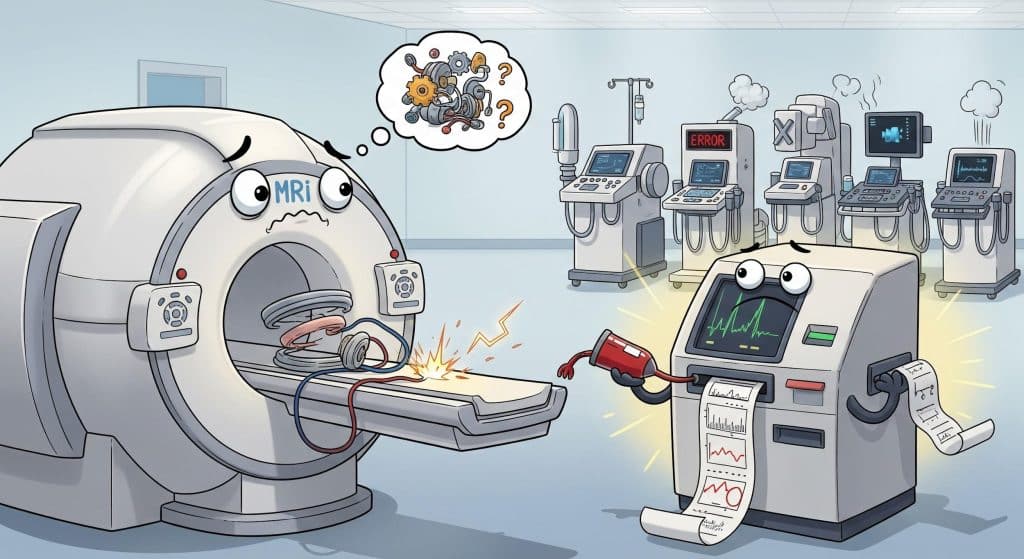
You are at a clinic to do a regular test. An error message flashes on the screen, the staff pauses, and all of a sudden the entire process becomes unpredictable. It is natural to question whether the machine is broken, whether your results are going to get misplaced, or if you need to leave.
The good news is this: medical equipment (such as laboratory analyzers, ECG machines, ultrasound and digital X-rays, vital signs monitors, and even automated blood-pressure stations) is designed to be safe. These checks are actually what cause those error messages to appear. While many mistakes are not disasters, the system is not willing to continue until the issue is fixed.
The article is divided into the most frequent reasons why machines in clinics malfunction and precisely what you should do in this case to remain calm, ask intelligent questions, and save your time and health.
There are general causes why clinic machines malfunction.
Most errors fall into foreseeable categories. Being acquainted with them helps you decode what is going on in your immediate environment.
1) Probability of sample problems (in the case of lab tests).
Lab analyzers are sensitive by nature. When a blood sample is clotted, contaminated, too diluted, or not in the appropriate tube, the analyzer will reject it or give a flagged result.
This may occur despite professional staff because bodies are different. Sample quality may be influenced by dehydration, difficult veins, transport time, or vigorous shaking of tubes.
2) Sensitivity: Consumables and cartridges.
A large number of point-of-care tests (rapid electrolytes, glucose strips, some infectious disease tests) are based on cartridges, strips, or reagent packs. These can trigger errors if:
- They are expired.
- They were kept at an improper temperature.
- They had been open for too long.
- The device senses an incompatibility between the type of cartridge and the test chosen.
These are not errors caused by cheapness; they are a reality of using delicate chemical materials.
3) Checks on the sensor and calibration drift.
The world is sensed and analyzed by machines. Over time, sensors drift. It does not imply they are unsafe; it simply implies that they require regular calibration and check-ups.
Numerous machines perform self-tests and run internal controls. When those controls are beyond the accepted limits, the machine identifies an error to avoid doubtful results.
4) Environment (power, dust, heat, vibration)
Clinics are not designed like a sterile laboratory environment. Certain devices are sensitive to power variations, dust, humidity, temperature changes in the room, or even vibration caused by adjacent construction.
There are systems that have been programmed to shut down when they detect unstable power or internal temperature problems. This may appear like an accident; however, it is usually a protective feature.
5) Software, connection, and data-processing troubles.
Contemporary clinics rely on software: patient identification, barcodes, LIS/HIS, and cloud storage. An error can be shown by a device that is otherwise working well because:
- The network fails as the data is being transferred.
- The barcode cannot scan or the format of the ID is rejected.
- The system is unable to save results under the patient record.
- A bug is created during a software update.
Such errors are aggravating, yet they do not necessarily imply that the medical measurement was inaccurate; at times it is just the reporting connection that failed.
What to do at the time (a patient checklist).
When you notice an error message or when the personnel tells you that you have to repeat something, it is possible to remain polite and at the same time be able to advocate for yourself.
These are the three questions to ask.
“Is it a device problem or a sample problem?”
This lets you know whether you have to provide another sample, retest, or just wait a short time.“Could you repeat the test now, or may it be done later today?”
There are time-sensitive tests, and tests that can be repeated after the device is done checking.“Will this impact my results when they come out?”
This sets expectations and eliminates anxiety.
Identity and labelling (particularly when samples are used)
In case blood is collected or swabs are taken, there is nothing wrong with checking your name and identifiers on the label. The majority of clinics value patients who help minimize confusion.
Even a simple, polite comment suffices: “I just want to confirm that is mine before it is sent off.”
Do not urge employees to print something.
In the event of a machine malfunction, asking the employees to force the process will not work in your favor. By bypassing the safeguards when a quality problem is signaled by the machine, there is a chance of incorrect findings, an unnecessary visit, and wasted money.
Should time be an issue, instead enquire about the options: Are there backup machines or manual procedures? (Some clinics have redundancy; others do not.)
Learn when to take a break and reschedule.
In case you are feeling weak after a blood draw, or repeated attempts are becoming stressful, there is no harm in requesting some rest. Re-scheduling may be considered in the event that:
- You have been fasting too long and feel faint.
- You feel nauseous from drinking too much water and several blood tests are unsuccessful.
- According to the clinic, the device may be out of service for several hours.
It is important to be comfortable, as things such as blood pressure can be influenced by stress.
At what point will an error cause a concern for you?
Most errors are routine. There are, however, a couple of trends warranting additional vigilance.
Be more alert if:
- Employees are not able to give a simple explanation for the delay.
- You are expected to accept findings that were presumably “okay” without a repeat or documented review.
- The clinic keeps losing results or failing to connect them to your record.
- The malfunction occurs in several devices over several days and indicates general maintenance or power problems.
You may demand to see a copy of your report, ask how your test was confirmed, or opt to do the test at a different facility should you feel uneasy.
The process of how these mistakes are remedied in clinics (and why it may be a slow process).
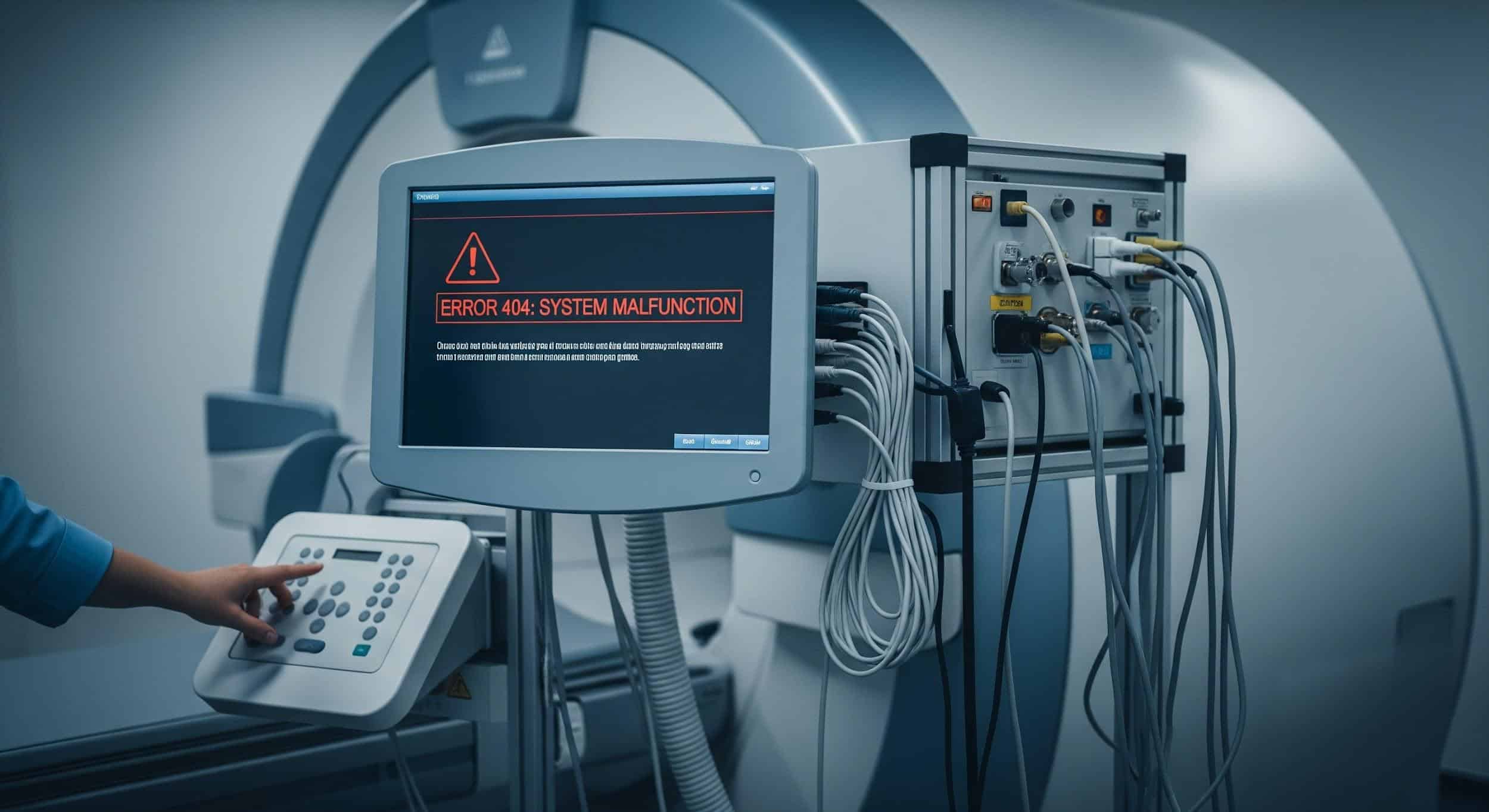
Behind the scenes, fixing an error is a safety workflow process and not just rebooting a machine.
Depending on the device, staff can:
- Check quality control (QC) material to ensure accuracy.
- Calibrate to certified standards.
- Wipe optical paths, probes, or sample aspiration lines.
- Change damaged parts (tubing, sensors, electrodes).
- Reboot or upgrade software, restart services, or reconnect to the reporting system.
- Record the incident for compliance and traceability.
A major role of an instrumentation technician (or a biomedical/maintenance specialist, as is the case in most healthcare facilities) is troubleshooting, calibration, and preventive maintenance—i.e., ensuring that devices are functioning to the required standard before they are re-introduced into service on patients.
Should the clinic take these steps seriously, then a delay is irritating, yet it is an indicator that the clinic is paying attention to the quality of measurements.
Once it has occurred: what to do next.
In case your test was postponed or retested, there are a number of practical options you can use that may improve expediency.
- In case it is not an emergency and the clinic solves the problem: wait and do the test there, particularly when your doctor is supposed to receive the results from that clinic.
- In case you have limited time: request an estimated time of arrival and ask whether or not you will be able to return later the same day without re-registering.
- When you no longer trust the process: look up “medical clinics around me” by indicators of reliability as well as by cost—be willing to look at where they tell you about QC, give transparent turnaround times, and have a clear communication style when things go wrong.
One way to do so is to maintain a little personal diary: note where you were delayed and how the clinic addressed it. With time you will soon realize which facilities have consistent processes.
Summary: make annoying wait times a smarter healthcare habit.
A clinic machine error may seem like a waste of time, but it may also be your signal to be more active in your treatment. Enquire what type of error they made, how they check for accuracy, and its implications on your results timeline. Not only will you leave as a more informed person, but you will have a greater level of trust in the process or a definite reason to use a different facility in the future.