

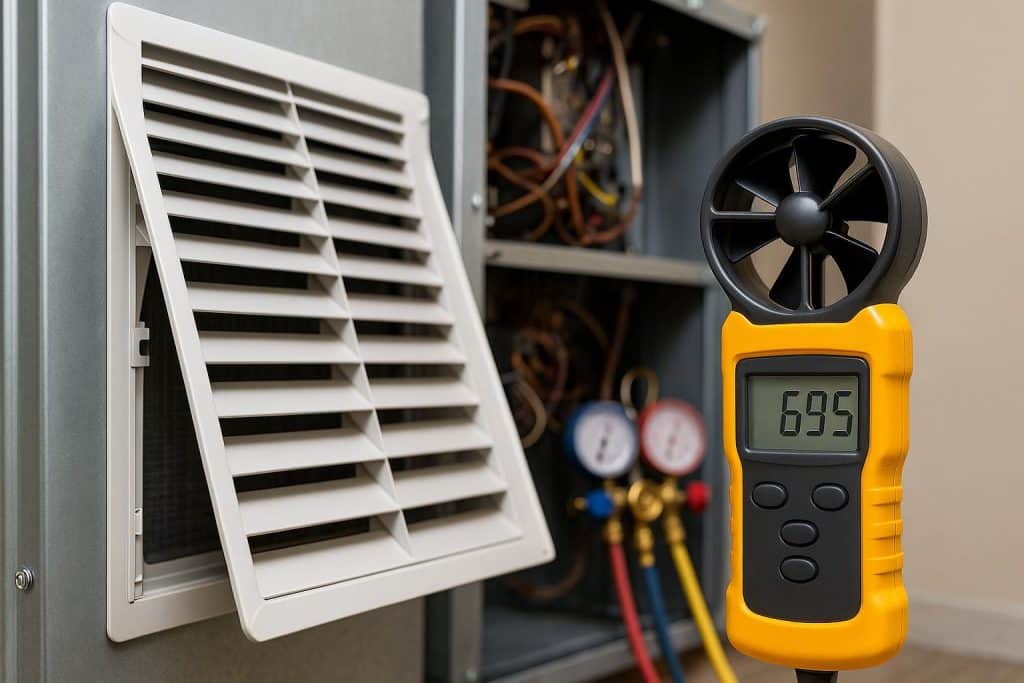
Many homeowners assume HVAC service begins with checking the unit, inspecting the thermostat, or looking for error codes. While those steps matter, professional service visits often start somewhere else—airflow. Airflow is the delivery system that carries heating or cooling throughout a home. Even if the equipment is operating correctly, poor airflow can reduce comfort, increase energy use, cause humidity issues, and lead to unnecessary wear on components. Without airflow measurement, technicians may misdiagnose the cause of a complaint and recommend repairs that do not address the root cause. That is why airflow measurement is often the first step in a service visit. It allows the contractor to evaluate how well the system moves air, identify restrictions early, and determine whether the problem is equipment- or distribution-related.
Why Airflow Comes First
- Airflow Tells the Truth About System Health
Airflow measurement provides immediate, measurable evidence of how the HVAC system is functioning. Heating and cooling equipment is designed to operate within a specific airflow range. If airflow is too low, the system may overheat in heating mode or freeze the coil in cooling mode. If airflow is too high, temperature control becomes less stable, and efficiency can drop. Technicians use airflow readings to determine whether the system is delivering the expected air volume to the home. This is often more useful than focusing only onthe component condition, because the same equipment can perform well or poorly depending on airflow. During a typical visit, a Heating contractor may take early airflow measurements to confirm whether airflow restrictions, duct imbalance, or equipment faults are causing performance issues. This step prevents unnecessary part replacement and improves service accuracy.
- Identifying Restrictions Before They Cause Damage
Airflow problems can damage HVAC equipment over time. Low airflow forces the system to run longer cycles, increases internal temperature stress, and leads to higher wear on motors and control systems. In the cooling season, poor airflow can reduce heat transfer and cause coil icing. In the heating season, restricted airflow can cause overheating and trigger safety shutoffs. Measuring airflow early helps contractors spot the cause before it becomes expensive. The most common restrictions include clogged filters, dirty evaporator coils, blocked return vents, crushed duct sections, closed dampers, and undersized ductwork. When contractors quickly identify restrictions, repairs become smaller and less disruptive. Airflow measurement is like taking the system’s pulse—without it, it is easy to miss early signs of stress.
- Comfort Depends on Delivery
A system can produce heating or cooling without delivering it properly. Airflow measurement confirms whether conditioned air is actually reaching the rooms that need it. If delivery is weak, the system may run longer while comfort stays inconsistent.
- Airflow Measurement Explains Comfort Complaints
Many service calls are not about breakdowns. They are about comfort complaints: rooms that feel too warm, weakly blowing vents, high humidity, or a home that never reaches the thermostat setting. Airflow measurement helps explain these issues. If one room receives less airflow than another, temperature differences will appear, no matter how well the unit is operating. Contractors measure airflow at registers and compare results to expected delivery. They also assess whether return airflow allows proper circulation. A home with blocked returns or poor return placement can develop pressure imbalances that reduce airflow into bedrooms behind closed doors. By measuring airflow first, technicians can connect the homeowner’s complaint to specific airflow conditions rather than assuming equipment failure.
- Supporting Correct Temperature and Humidity Control
Airflow plays a major role in humidity. In cooling mode, the evaporator coil removes moisture from the air. If airflow is too high, air moves too quickly across the coil, reducing moisture removal. If airflow is too low, the coil may get too cold and freeze, also reducing effective dehumidification. Proper airflow is needed for balanced humidity control. Contractors use airflow measurements to ensure the system operates within the correct temperature and moisture-removal ranges. This explains why some homes feel sticky even when the thermostat reads the correct temperature. Without proper airflow, comfort becomes unstable, and moisture stays in the air. Airflow measurement is therefore not only about heat and cold—it also supports a healthier indoor environment.
- Preventing Misdiagnosis and Unnecessary Repairs
Airflow measurement reduces guesswork. Without airflow testing, a technician might assume the compressor is weak, the blower motor is failing, or the refrigerant is low. In many cases, the problem is not equipment capacity but airflow restriction. A clogged coil can mimic refrigerant issues. A blocked return can mimic blower failure. A crushed duct can mimic weak heating output. Airflow measurement is the step that separates symptoms from cause. The policy protects homeowners from costly repairs that don’t address the root cause. It also improves the technician’s ability to recommend the correct solution, whether that solution involves cleaning, duct repair, filter upgrades, airflow balancing, or component service.
- Airflow Sets the Baseline for System Testing
Airflow measurement also supports the rest of the diagnostic process. Temperature split readings, refrigerant pressures, combustion performance, and equipment efficiency measurements all depend on airflow being within normal range. If airflow is incorrect, other diagnostic readings may be misleading. For example, refrigerant pressures can appear abnormal when airflow is restricted. Heat exchanger temperatures can rise dangerously when airflow is low. Technicians measure airflow early to ensure that later tests reflect the equipment’s true behavior rather than airflow distortion. Makes the entire service visit more accurate and efficient.
Airflow Measurement Leads to Better HVAC Service
HVAC service visits often start with airflow measurement because airflow reveals system health, confirms comfort delivery, and prevents misdiagnosis. Proper airflow protects equipment from overheating, freezing, and excessive wear while maintaining stable temperature and humidity control. It also helps contractors identify restrictions early and match repairs to the true cause of the complaint. Airflow is the foundation of heating and cooling performance, and measuring it first gives the technician the clearest starting point for accurate service. When airflow is corrected, many comfort problems improve without major repairs, making airflow measurement one of the most valuable steps in any HVAC visit.