

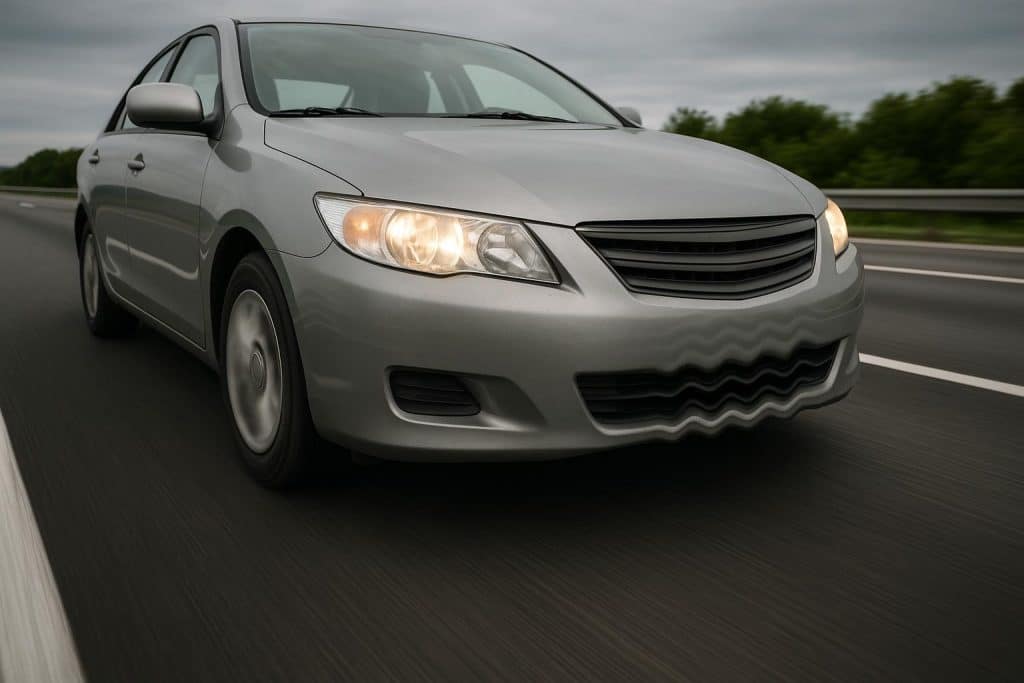
Does your car feel smooth at city speed but have vibration problems on the highway? It’s likely that there is a problem with its mechanism. It could also be worn somewhere in the vehicle.
Depending on the issue, the vibrations might occur in the:
- Steering wheel
- Car floor
- Seats
- Brake pedal.
We will explain how various systems affect vehicle stability at higher speeds.
Tire imbalance
An experienced Auto Mechanic Virginia Beach VA will usually inspect the tires and wheels first. This is because imbalance is one of the most frequent reasons vehicles vibrate at highway speeds.
At high speed, the tires and wheels should spin in parallel. However, one wheel could be slightly heavier due to:
- Lost wheel weights
- Uneven tire wear.
This produces vibration.
When the imbalance is in the front wheels, the steering wheel usually shakes. Seat or floor vibrations often indicate a rear-wheel imbalance. Even a small weight difference can cause some instability at highway speed.
Today’s balancing machines can measure these imbalances. But it could be an issue with the condition of the tires. Even when balancing is done, the imbalance can be caused by:
- Flat spots
- Uneven wear
- Internal tire damage.
Wheel alignment issues
If the wheels get misaligned, the car may start vibrating. You will likely experience a pulling effect at higher speeds.
Too much toe misalignment is particularly troublesome. This is because the tires are fighting each other as the car moves. The result is:
- Vibration
- Jamming
- Premature tread wear.
Misaligned wheels usually happen over time due to contact with:
- Potholes
- Curbs
- Rough roads.
One of the most obvious indications is an uneven tire wear pattern. Vibration is likely due to alignment issues if you notice:
- Feathering around the edge of the tread
- The tire is wearing down on one side.
Worn suspension parts
Suspension systems cushion against road bumps. They keep the tires on the ground. When parts fail, the car loses its stability at higher speeds.
Older vehicles often have worn shock absorbers or struts. They are responsible for the vertical motion of the wheel. If damping is lost, tires can lose contact with the road. Hence, the bounce.
Damage also occurs in:
- Ball joints
- Control arm bushings
- Tie rod ends.
Just a little looseness in any of these parts can cause vibration. It may be in the form of steering movement that increases on the highway.
Sometimes, drivers confuse the vibration of the suspension with that of the tires. They both seem to exhibit similar symptoms. But usually, vibration during suspension will come with:
- Loose steering behavior
- Clunking
- Instability when changing lanes.
Brake rotor problem
Brake components are not just used when braking. Sometimes, rough or broken rotors result in vibration under normal driving conditions.
Warped brake rotors are one of the more common reasons for steering wheel shake. It happens when you’re applying the brakes. However, serious rotor irregularities can also produce light vibrations at high speeds. This occurs because the rotors have uneven surfaces. Hence, inconsistent rotation.
Brake calipers that stick or fail to release fully can also generate excess heat. This leads to rotor distortion over time. Sometimes, you may notice burning odors or loss of fuel efficiency, in addition to the vibration.
Consider a brake system inspection if vibrations significantly increase during braking.
Drivetrain and axle issues
Older vehicles may ride smoothly in town. But shake at highway speed. This happens when drivetrain parts are worn.
CV axles, driveshafts, and universal joints all spin at high speeds. This is necessary as they pass power from the engine to the wheels. Vibration will occur under acceleration or cruising conditions if these components become:
- Bent
- Worn
- Unbalanced.
CV axle wear is a common problem in front-wheel-drive cars. If the inner CV joints are damaged, it can produce vibration upon acceleration.
In an RWD vehicle, driveshaft imbalance and worn universal joints are possible. Often, these problems result in vibration felt through the floor rather than the steering wheel. These vibrations may worsen when driving under load conditions.
Wheel bearing wear
Wheel bearings hold the wheels in place. It enables them to roll along the road. These bearings wear over time from:
- Heat
- Dirt
- Heavy loads.
As bearings wear out, they cause friction and irregular wheel movement. The initial signs are typically humming or growling noises. They become louder as the speed goes up. Over time, vibration can occur as bearing play increases.
Faulty wheel bearings can also impact alignment accuracy and patterns of tire wear. In more severe cases, steering feel may be unstable when cornering.
Misdiagnosing a wheel bearing issue can lead to unnecessary tire replacement. This is why it is crucial to make the right diagnosis before making the replacement. The experts at the London Bridge Auto and Transmission Repair Shop Virginia Beach will know what to check depending on the vibration.
Final words
Most vibration problems at highway speeds start with a slight imbalance or minor wear point. It progresses to a serious problem over just a few thousand miles. Regular auto checks ensure that minor issues do not get out of hand.