

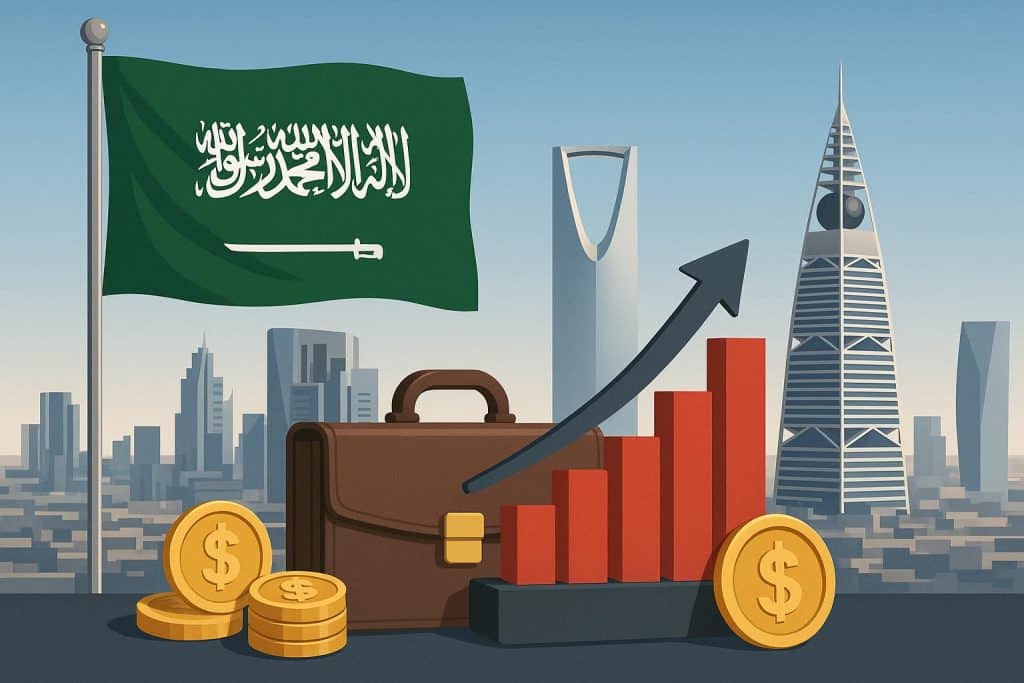
For years, international founders looked at the Gulf with a familiar strategy: establish operations in a regional hub first, test nearby markets, and only later consider expansion into Saudi Arabia. In 2026, that approach is rapidly changing. Today, Saudi Arabia is no longer viewed as a “future expansion market” — it is increasingly becoming the primary destination for serious business growth in the GCC.
The reason is simple: scale, momentum, and long-term opportunity now exist in one market at a level that is difficult to ignore.
A Market Too Large to Delay
Saudi Arabia offers something many regional markets cannot — a combination of population scale, government-backed transformation, infrastructure investment, and expanding private-sector demand.
Businesses entering the Kingdom are not targeting a single city or niche audience. They are entering a nationwide economy with growing procurement activity, rising consumer demand, and major investment flowing across industries including:
- Tourism & hospitality
- Logistics & transport
- Technology & AI
- Industrial services
- Healthcare
- Professional consulting
- Financial & operational support services
For companies exploring expansion opportunities, understanding the broader setup environment is critical. This is why many founders first review a complete Saudi market overview and business setup pathway before making structural decisions.
Saudi Arabia Is Rewarding Prepared Businesses
One of the biggest shifts happening in the Saudi market is the increasing expectation of professionalism and local execution capability.
Saudi buyers — including corporates, institutional groups, and project-led organizations — now expect businesses to demonstrate:
- Proper licensing
- Regulatory compliance
- Local responsiveness
- Operational credibility
- Long-term commitment to the market
Companies trying to serve Saudi Arabia remotely through loose cross-border arrangements often struggle to compete against businesses with a real local operating structure.
This is especially important because the Kingdom is still in an active growth cycle. Supplier ecosystems are expanding, procurement networks are evolving, and many industries are still establishing long-term vendor relationships. Businesses entering now can build credibility and market positioning before sectors become saturated.
Licensing Is Only the Beginning
Many foreign founders mistakenly believe that obtaining a commercial license is the “finish line.” In reality, licensing is only the first operational step.
The real challenge begins afterward:
- Opening bank accounts
- Structuring finance operations
- Managing payroll and compliance
- Hiring employees
- Running contracts and invoicing
- Maintaining regulatory filings
- Building procurement readiness
Saudi Arabia rewards companies that approach expansion as a full operational buildout rather than a paperwork exercise.
For example, banking approval in Saudi Arabia often depends on more than incorporation documents alone. Financial institutions evaluate ownership transparency, transaction logic, business-model clarity, and source-of-funds explanations. Companies that prepare these details early typically avoid delays and become operational much faster.
Workforce Planning Is a Strategic Advantage
Another area where businesses underestimate complexity is workforce planning.
Hiring in Saudi Arabia is not simply about calculating salaries. Businesses must understand:
- Saudization requirements
- Employment platform workflows
- HR compliance obligations
- Visa planning
- Role structuring and retention
A poorly designed setup may initially appear cost-effective but can quickly create operational friction. By contrast, companies that align their structure with real operational needs tend to scale more smoothly and retain talent more effectively.
Why Timing Matters in 2026
Saudi Arabia remains in a rare market phase where both enterprise demand and infrastructure development are accelerating simultaneously.
This creates opportunities for businesses that can establish themselves early with strong operational discipline.
Companies entering now often gain advantages in:
Procurement Readiness
Large Saudi buyers increasingly expect structured documentation, transparent pricing models, compliance files, and clear contractual standards. Businesses that prepare these elements in advance frequently shorten sales cycles and improve conversion rates.
Market Credibility
Organizations with proper governance, local presence, and operational maturity are viewed more favorably by banks, procurement teams, and strategic partners.
Relationship Building
In many sectors, supplier networks and long-term commercial ecosystems are still forming. Early entrants can establish stronger partnerships before markets become crowded.
The Growing Importance of Governance
One of the most overlooked success factors in Saudi Arabia is governance maturity.
Even smaller companies benefit from:
- Defined approval structures
- Monthly financial controls
- Tax and payroll oversight
- Authority matrices
- Contract management systems
These systems may seem “corporate,” but they significantly improve credibility with clients, banks, and institutional buyers.
In Saudi Arabia, governance is not viewed as unnecessary bureaucracy — it is viewed as evidence of reliability and long-term seriousness.
Why Many Investors Are Choosing a MISA-Based Structure
For international founders planning serious entry into Saudi Arabia, structuring the setup correctly from day one is increasingly important.
Many companies exploring foreign-investment entry routes now use a dedicated MISA-focused Saudi setup process to ensure their licensing, ownership structure, and operational model align with regulatory expectations from the beginning.
This becomes particularly important for businesses planning to:
- Hire locally
- Open corporate bank accounts
- Sign enterprise contracts
- Participate in procurement opportunities
- Establish long-term regional operations
The Real Opportunity Ahead
Saudi Arabia in 2026 is not simply attracting businesses because of headlines or mega-project announcements. The deeper opportunity lies in the long-term transformation of the market itself.
Demand is becoming more sophisticated. Buyers are prioritizing reliability over low-cost positioning. Procurement standards are becoming more structured. Operational discipline is increasingly rewarded.
The companies succeeding in Saudi Arabia are not necessarily the fastest to incorporate — they are the best prepared to operate.
Businesses that combine:
- Proper legal setup
- Financial readiness
- Governance discipline
- Procurement preparation
- Workforce planning
- Strong execution capability
are the ones most likely to build sustainable long-term growth in the Kingdom.
For founders considering where to focus expansion efforts in 2026, Saudi Arabia is no longer a market to “watch later.” For many industries, it has already become the market where the next stage of regional growth is happening now.