

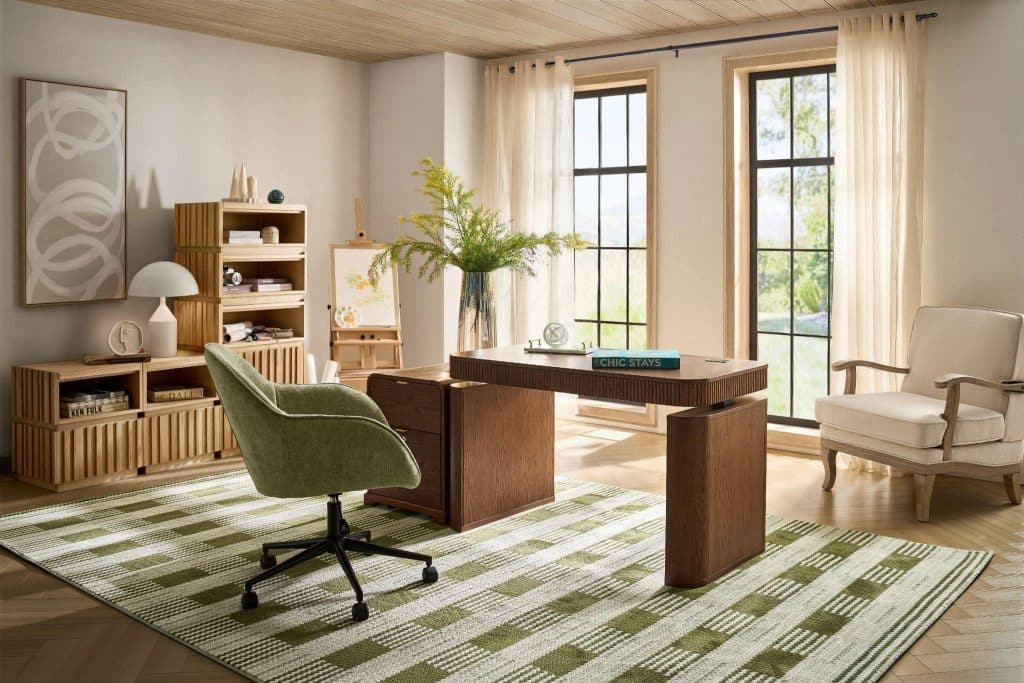
The Home Office Is No Longer Temporary
What began as a temporary adjustment for many UK professionals has now become a long-term way of working. Home offices, once improvised corners of dining tables or spare rooms, are increasingly being treated as essential parts of everyday living.
As hybrid and remote working patterns settle into normal life, people are starting to realise something important: the way a workspace is designed at home has a direct impact on how they feel and perform throughout the day.
This has led to a quiet but significant shift. Instead of simply “making do” with home setups, professionals are now rethinking what a home workspace should actually be.
From Makeshift Setups to Intentional Spaces
In the early days of remote work, most home offices were improvised. Kitchen tables became desks, laptops were balanced on sofas, and ergonomics were often an afterthought.
While this worked temporarily, long-term use has exposed the limitations of such setups. Many professionals now report issues such as:
- physical discomfort from poor posture
- difficulty maintaining focus in shared spaces
- lack of separation between work and personal life
- inconsistent routines due to unstable environments
These challenges have encouraged a more intentional approach to workspace design — one that treats the home office as a permanent, evolving environment rather than a temporary fix.
The Rise of the Hybrid Work Mindset
One of the biggest drivers behind this shift is hybrid working. With employees splitting time between office and home, the home workspace must now be both functional and flexible.
Unlike traditional office environments, home workspaces need to adapt to different roles throughout the day. A space might be used for deep focus in the morning, video calls in the afternoon, and then transition back into a relaxed living environment in the evening.
This constant shift has made rigid furniture setups feel increasingly outdated. Instead, professionals are looking for environments that can adjust with their schedule.
Why Comfort and Functionality Are Now Equal Priorities
In earlier workplace design, productivity often took priority over comfort. Today, that balance has changed. Professionals are increasingly aware that comfort directly influences performance.
A workspace that supports the body properly can:
- improve focus and concentration
- reduce physical fatigue
- support longer periods of productive work
- encourage healthier daily routines
This has led to a growing demand for ergonomic furniture and adjustable solutions that support movement throughout the day, such as the Adjustable Standing Desk, which allows users to switch between sitting and standing positions for better comfort and posture.
The Problem with Static Workspaces at Home
Static work setups can quickly become limiting in a home environment. Unlike office spaces, homes are shared, dynamic, and often multifunctional. A fixed desk or rigid chair does not always align with these changing conditions.
Common issues include:
- long periods of sitting in one position
- lack of flexibility for different tasks
- poor integration with living spaces
- visual clutter in shared rooms
Over time, these issues affect not only productivity but also overall wellbeing. As a result, professionals are beginning to rethink how their workspace fits into their wider home environment.
The Shift Toward Adjustable and Adaptive Furniture
One of the most visible changes in home office design is the rise of adjustable furniture. Height-adjustable desks, ergonomic chairs, and modular accessories are becoming increasingly popular among UK professionals.
These solutions offer something traditional setups cannot: flexibility. The ability to switch between sitting and standing, or to reconfigure a workspace based on daily needs, helps reduce strain and improve focus.
This adaptability is especially valuable in homes where space is limited or where the same area must serve multiple purposes.
In this context, solutions such as an adjustable standing desk are becoming a practical response to the evolving needs of modern professionals.
Blending Work and Home Aesthetics
Another important factor driving this shift is aesthetics. Home workspaces are no longer isolated office corners; they are part of the overall interior design of the home.
Professionals are increasingly looking for furniture that:
- fits seamlessly into living spaces
- avoids a “corporate office” look
- uses neutral, calming design elements
- reduces visual clutter
This blending of work and home aesthetics helps create environments that feel more natural and less disruptive to daily life.
The Emotional Side of Workspace Design
A well-designed workspace does more than support productivity — it also influences how people feel throughout the day. A cluttered, uncomfortable, or poorly structured environment can create a sense of stress or resistance to work.
On the other hand, a calm and well-organised workspace can:
- improve mental clarity
- reduce daily friction
- support a better work-life balance
- create a more positive working mindset
For many professionals, this emotional impact is becoming just as important as physical comfort or productivity.
Redefining Productivity in the Home Environment
The traditional idea of productivity was often linked to long hours and fixed routines. Today, that definition is changing. Productivity is now more closely associated with flexibility, wellbeing, and sustainable working habits.
This means that a good home workspace is not necessarily the one that looks most “office-like,” but the one that best supports a person’s natural working rhythm.
Adjustable furniture, thoughtful layouts, and adaptable environments all contribute to this more modern understanding of productivity.
A Long-Term Shift in How We Work
What is happening in UK homes is not a temporary trend. It represents a long-term transformation in how work is structured and experienced.
As hybrid working becomes more established, professionals will continue to invest in home environments that support both efficiency and comfort. Workspaces will become more integrated into home design, rather than existing as separate or temporary zones.
Within this shift, brands such as Hulala Home are reflecting this movement by focusing on furniture and solutions that better align with modern hybrid living needs.
A More Thoughtful Approach to Work at Home
The way UK professionals think about home workspaces has fundamentally changed. What was once an afterthought is now a carefully considered part of everyday life.
By prioritising comfort, adaptability, and design harmony, people are creating workspaces that better reflect the realities of modern working life.
In this new approach, the goal is not just to work harder — but to work better, in spaces that feel balanced, supportive, and sustainable over time.