

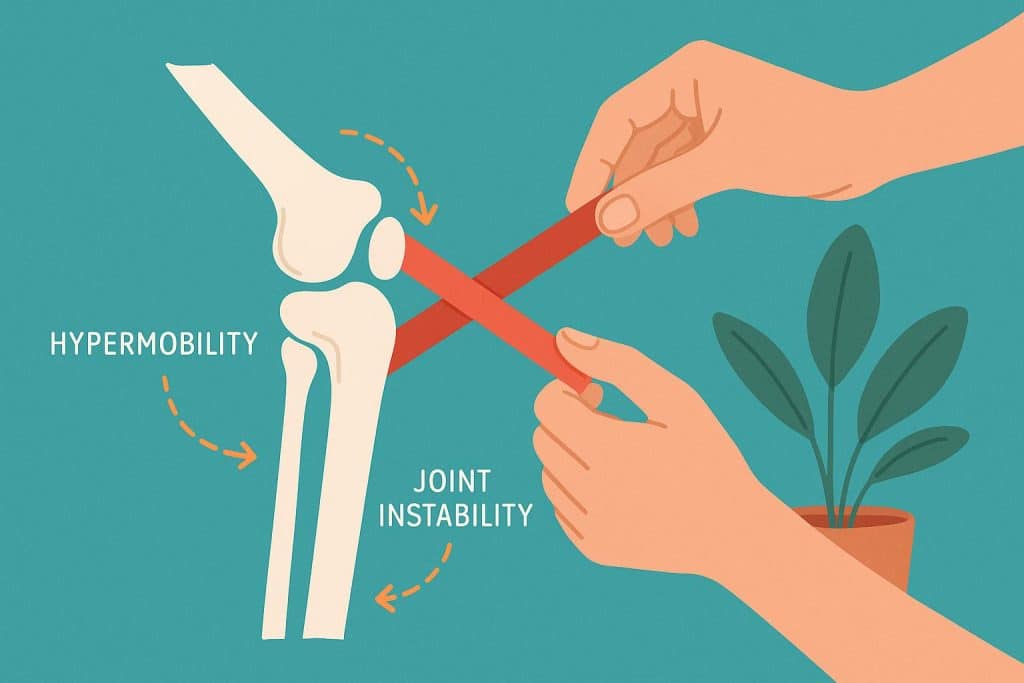
Hypermobility and joint instability can have a profound impact on everyday life, often contributing to persistent pain, recurrent injuries, fatigue, and a reduced sense of confidence in movement. Although flexibility is commonly viewed as a positive trait, excessive joint range without adequate strength and control can place ongoing stress on the musculoskeletal system, increasing the risk of long-term issues if left unaddressed.
For those living in Sydney’s inner city, working with a Darlinghurst physiotherapist who understands the complexities of hypermobility provides access to personalised, evidence-based treatment. Seeking physio for hypermobility in Darlinghurst ensures care that is specifically designed to improve joint stability, build strength, and support the physical demands of daily life, work, and exercise.
Understanding Hypermobility and Joint Instability
Joint hypermobility occurs when joints move beyond the normal range expected for a given joint. For some people, this is benign and causes no symptoms. For others, it is associated with pain, recurrent sprains, joint dislocations, muscle fatigue, and impaired coordination. In more complex cases, hypermobility may be linked to conditions such as generalised joint hypermobility or hypermobility spectrum disorders.
Joint instability refers to the inability of a joint to maintain proper alignment during movement or load-bearing activities. This instability may develop due to ligament laxity, poor neuromuscular control, previous injuries, or long-standing hypermobility.
A physiotherapist plays a critical role in identifying the underlying contributors to these issues and implementing a structured management plan to improve joint control and function.
Why Physiotherapy Is Essential for Hypermobility Management
Contrary to common belief, management of hypermobility does not focus on stretching. In fact, excessive stretching can worsen symptoms. Instead, physiotherapy emphasises:
- Improving joint stability
- Enhancing muscle strength and endurance
- Developing proprioception (joint position awareness)
- Reducing pain and injury risk
- Restoring confidence in movement
A tailored physiotherapy program helps the body rely less on passive structures, such as ligaments, and more on active muscular support.
The Advantage of Seeing a Darlinghurst Physio
Choosing a physiotherapist in Darlinghurst offers several practical and clinical benefits, particularly for those living or working in Sydney’s CBD and inner suburbs.
Local Expertise and Accessibility
Darlinghurst physiotherapy clinics commonly treat office workers, performers, fitness professionals, and active individuals who place diverse demands on their bodies. This exposure allows local physiotherapists to design rehabilitation programs that align with real-world functional requirements, whether that involves desk work, commuting, or recreational exercise.
Convenient access also supports consistency, which is critical for managing chronic conditions such as hypermobility and joint instability.
Individualised Assessment and Diagnosis
A Darlinghurst physio will conduct a comprehensive assessment that goes beyond flexibility testing. This includes evaluating posture, movement patterns, muscle activation, joint control, balance, and load tolerance.
Importantly, physiotherapists differentiate between asymptomatic flexibility and clinically significant hypermobility that requires intervention. This ensures treatment is appropriate, targeted, and evidence-based.
Targeted Strength and Stability Training
Strength training for hypermobility is highly specific. Exercises are selected to improve control through safe ranges of motion, focusing on slow, deliberate movements and progressive loading.
A physiotherapist will guide patients through:
- Deep stabilising muscle activation
- Controlled resistance training
- Functional movement retraining
- Load management strategies
This structured approach reduces reliance on braces or external supports while promoting long-term resilience.
Pain Management Without Over-Reliance on Medication
Chronic pain is a common concern for people with joint instability. Physiotherapy offers non-pharmacological pain management strategies, including education, manual therapy where appropriate, movement modification, and graded exposure to activity.
Understanding why pain occurs and how to manage it empowers patients and reduces fear-avoidant behaviours that can worsen symptoms over time.
Long-Term Benefits of Physiotherapy for Joint Instability
Seeing a physiotherapist is not just about short-term symptom relief. Effective physiotherapy aims to provide sustainable improvements that support long-term health and independence.
Benefits include:
- Fewer joint injuries and flare-ups
- Improved confidence during daily and recreational activities
- Better posture and movement efficiency
- Enhanced physical endurance
- Reduced need for ongoing passive treatments
For many patients, physiotherapy becomes a proactive tool for maintaining function rather than reacting to injury.
When to Seek Physiotherapy Support
You may benefit from seeing a Darlinghurst physio if you experience:
- Frequent sprains, strains, or joint dislocations
- Persistent joint or muscle pain without a clear injury
- A feeling that joints are unstable or “give way”
- Difficulty maintaining strength despite regular exercise
- Fatigue or soreness disproportionate to activity levels
Early intervention can prevent symptom progression and reduce the risk of long-term joint damage.
Choosing the Right Darlinghurst Physiotherapist
When selecting a physiotherapist for hypermobility and joint instability, look for a clinic that prioritises thorough assessment, individualised programming, and patient education. Experience with complex or chronic musculoskeletal conditions is particularly valuable.
A collaborative approach, where treatment plans are adjusted based on response and progress, ensures care remains effective and aligned with patient goals.
Conclusion
Hypermobility and joint instability require careful, informed management to avoid ongoing pain and dysfunction. Physiotherapy provides a structured, evidence-based pathway to improve joint control, reduce symptoms, and restore confidence in movement.
For those based in Sydney’s inner city, consulting a Darlinghurst physio offers accessible, personalised care grounded in both clinical expertise and an understanding of local lifestyle demands. With the right guidance, individuals with hypermobility can move safely, confidently, and sustainably for years to come.