

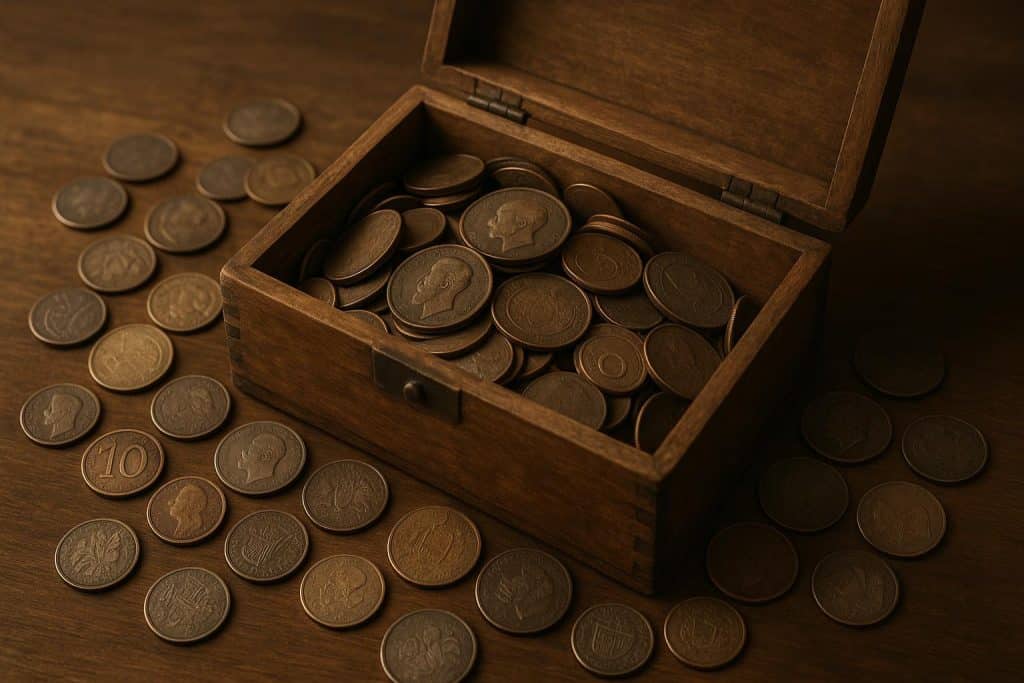
The call comes unexpectedly. A relative has passed, and among the belongings you need to sort through is a box, a drawer, or maybe an entire closet full of coins. Some look old. Some look foreign. A few might be in little plastic cases with numbers on them. You have no idea what any of it is worth, but you suspect it might be more than pocket change.
This scenario plays out thousands of times every year. According to estate planning attorneys, coin collections rank among the most commonly inherited items that families struggle to value. The knowledge gap between collectors and non-collectors creates real financial risk. People unknowingly sell valuable coins for a fraction of their worth, or they spend time and money chasing appraisals on items worth only face value.
This guide walks you through the process of figuring out what you have, what it might be worth, and what to do next.
First Things First: Don’t Clean Anything
This advice sounds counterintuitive, but it’s the most important thing you’ll read here. Never clean old coins. Not with soap. Not with polish. Not with a soft cloth. Not even with water.
Coin collectors prize original surfaces. That dark tarnish you want to scrub off? Collectors call it “toning,” and it can actually increase value. The dull appearance that seems unappealing? It proves the coin hasn’t been tampered with. Any cleaning, no matter how gentle, creates microscopic scratches that experts detect immediately.
Professional grading services refuse to certify cleaned coins at their full grade. A coin worth $500 in original condition might drop to $200 or less after cleaning. People destroy value every day trying to make coins look “better.” Don’t be one of them.
Understanding the Two Types of Value
Coins can have two completely different kinds of value, and confusing them is an expensive mistake.
Metal Value
Some coins are worth money because of what they’re made of. Gold coins contain gold. Pre-1965 U.S. dimes, quarters, and half dollars contain 90% silver. These coins have “melt value” based on their metal content and current commodity prices.
With gold trading above $4,000 per ounce as of late 2025, even common gold coins have significant melt value. A standard one-ounce American Gold Eagle contains $4,000+ worth of gold regardless of its date or condition. Silver coins follow the same principle at lower dollar amounts.
Collector Value
Other coins are worth money because collectors want them. A 1909-S VDB Lincoln penny contains less than two cents worth of copper, but collectors pay hundreds or thousands of dollars for one because so few were made. Rarity, historical significance, condition, and demand drive collector value independently of metal content.
Here’s the trap: if you sell a rare collector coin based only on its metal value, you lose money. If you pay to have common coins professionally appraised expecting collector premiums, you also lose money. Figuring out which category your coins fall into is the essential first step.
Quick Sorting: What to Look For
You don’t need to become a coin expert to do initial sorting. A few quick checks help separate potentially valuable pieces from common ones.
Coins Already in Holders
If coins are sealed in hard plastic cases with labels, someone already thought they were special. These “slabbed” coins were professionally graded, usually by PCGS or NGC, the two major grading services. The label shows the coin’s grade and certification number. These coins deserve careful attention and individual research.
Gold Coins
Any coin that looks gold probably is. U.S. gold coins came in $1, $2.50, $5, $10, and $20 denominations before 1933. Foreign gold coins are common in inherited collections too. All gold coins have significant value, at minimum their metal content. Set these aside for professional evaluation.
Silver Dollars
Large U.S. silver dollars fall into several categories. Morgan dollars (1878-1921) and Peace dollars (1921-1935) are the most common. Both contain about three-quarters of an ounce of silver, giving them melt value around $20-25 at current prices. But certain dates and mint marks bring much more. An 1893-S Morgan can sell for tens of thousands. These coins warrant individual checking.
Pre-1965 U.S. Silver Coins
Dimes, quarters, and half dollars minted before 1965 contain 90% silver. Check the dates. A 1964 quarter looks identical to a 1965 quarter, but the older one contains silver worth several dollars. This “junk silver” adds up quickly in inherited collections.
Old or Unusual Coins
Coins with dates before 1900, unusual designs, or obvious age deserve closer inspection. Same with anything that looks different from regular pocket change. Foreign coins, tokens, and medals might have value too. When in doubt, set it aside for professional review.
Free Research You Can Do Yourself
Before talking to any dealers, spend an hour doing basic research. You’ll make better decisions with a general sense of values.
PCGS CoinFacts and NGC Coin Explorer offer free online price guides. Search by coin type and date to see approximate retail values at different condition levels. These prices represent what dealers sell coins for, not what they pay, but they establish ballpark figures.
eBay’s completed listings show what coins actually sold for recently. Search for your coin type, then filter by “sold items” to see real transaction prices. This gives you current market data rather than theoretical price guide values.
For precious metals, websites like Kitco show current spot prices for gold and silver. Multiply the metal weight by the spot price to calculate melt value. A $20 gold coin contains about 0.97 ounces of gold. A pre-1965 silver quarter contains about 0.18 ounces of silver.
Getting Professional Opinions
Online research only takes you so far. Condition matters enormously in coin values, and judging condition requires experience. Two coins that look identical to untrained eyes might differ by thousands of dollars based on subtle surface differences.
Local coin dealers typically offer free verbal appraisals. They’ll tell you what they’d pay for items, which gives you baseline values even if you don’t sell to them. A reputable dealer like Waco Coin Buyers can examine a collection, identify the pieces worth grading or further research, and separate valuable items from common ones. This sorting alone saves significant time and prevents costly mistakes like paying to grade coins that don’t justify the expense.
Get multiple opinions. Prices vary between buyers, and seeing several offers helps you understand fair market value. Three quotes from different dealers gives you confidence that you’re in the right range.
Red Flags to Watch For
Most coin dealers operate honestly, but the industry attracts some bad actors. Protect yourself by recognizing warning signs.
Pressure tactics signal problems. Legitimate dealers don’t insist you decide immediately. If someone says “this offer is only good today” or “prices might drop tomorrow,” walk away. Honest buyers give you time to think and get other opinions.
Vague explanations raise concerns. Professional dealers explain their offers. They’ll tell you the current metal prices, show how they calculated values, and answer questions about specific pieces. Buyers who just name a number without explanation may be hiding something.
No physical location is a warning sign. Established dealers have shops, business licenses, and verifiable histories. Fly-by-night operators working out of hotel rooms or temporary locations lack accountability. Check reviews, verify addresses, and confirm business credentials before any significant transaction.
Your Selling Options
Different selling channels suit different situations. Your choice depends on what you’re selling, how much time you have, and how much effort you want to invest.
Local Dealers
Selling to a local dealer offers convenience and immediate payment. You walk in with coins, walk out with cash. The tradeoff is that dealers need profit margins, so you’ll typically receive 70-85% of retail value for most items. For common material and moderate-value collections, this convenience often justifies the discount.
Online Marketplaces
Selling on eBay or similar platforms reaches more buyers and can achieve higher prices. But you’ll need quality photos, accurate descriptions, and the ability to handle shipping and customer service. Fees run 12-15% of sale prices. This approach works best for people with time, some knowledge, and comfort with online selling.
Auction Houses
Major numismatic auction houses like Heritage and Stack’s Bowers handle high-value coins. They reach serious collectors willing to pay premium prices for quality pieces. Commissions run 15-20%, and the process takes months. Auctions make sense for rare coins worth thousands, not for typical inherited collections.
Avoid Pawn Shops
Pawn shops pay the lowest prices, typically 30-50% of fair value. Their business model requires large margins. Unless you need cash within the hour and have no other options, avoid selling coins at pawn shops.
Tax Implications
Inherited coins receive favorable tax treatment through something called “stepped-up basis.” The IRS considers your cost basis to be the fair market value at the time of inheritance, not what the original owner paid decades ago.
This means you only owe taxes on appreciation that occurs after you inherit the coins. If your grandfather bought gold coins for $200 in 1970 and they’re worth $5,000 today, you don’t owe taxes on that $4,800 gain. Your basis is $5,000. If you sell them for $5,500, you owe taxes only on the $500 gain.
Coins and precious metals count as collectibles for tax purposes, with long-term capital gains taxed at a maximum 28% rate. Keep records of inheritance dates and values at that time. Consult a tax professional for advice specific to your situation.
What About Keeping Them?
Not every inherited collection needs to be sold. You might discover that coin collecting interests you. You might want to keep certain pieces for sentimental reasons. You might see the coins as a long-term investment.
If you keep coins, store them properly. Temperature and humidity fluctuations cause damage over time. Never store coins in PVC plastic (the soft, flexible kind), which reacts with metals and destroys surfaces. Hard plastic holders, cardboard flips with Mylar windows, or acid-free coin albums all provide safe storage.
Consider insurance for valuable pieces. Standard homeowner’s policies often have low limits for collectibles. A separate rider or specialized collectibles insurance provides better protection for significant value.
Moving Forward
Dealing with inherited coins doesn’t need to be overwhelming. The process follows a logical sequence: don’t clean anything, do basic sorting, research approximate values, get professional opinions, then decide whether to sell, keep, or some combination.
Take your time. Unless you’re facing immediate deadlines, there’s no rush. The coin market isn’t going anywhere. Spending a few hours on research and getting multiple opinions can mean hundreds or thousands of additional dollars in your pocket.
Most importantly, don’t assume inherited coins are worthless, but don’t assume they’re treasure either. Reality usually falls somewhere in between. A systematic approach helps you find that reality and make informed decisions about items that might represent both financial and sentimental value.