

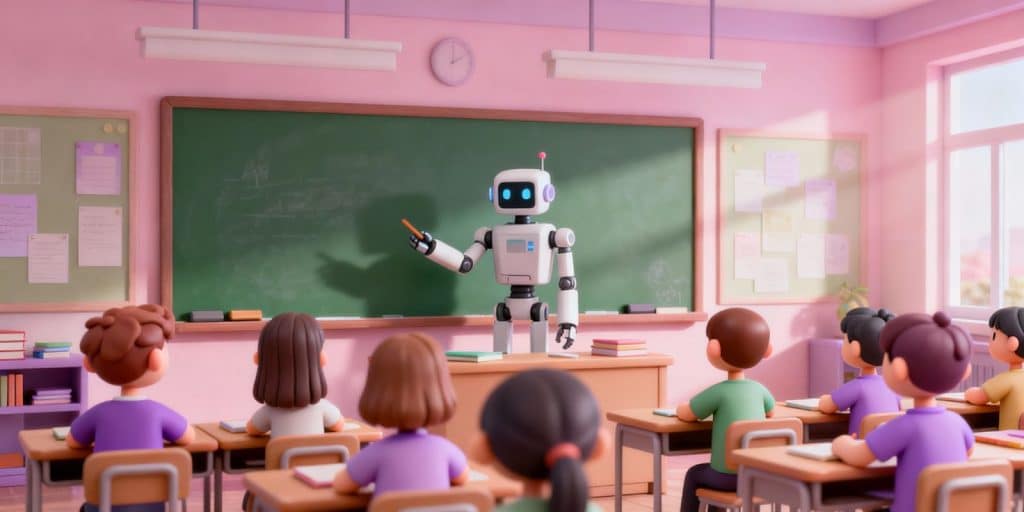
Walk into almost any classroom or open any online learning platform today and you’ll find a quiet shift happening. A well-built chatbot can answer student questions at midnight, help teachers manage routine tasks, and save administrators hours of back-and-forth emails. That’s the promise of AI in education when it’s done right – giving people more time to focus on actual learning.
What Are AI Agents in Education and How Do They Work
AI agents in education are typically digital systems that behave like patient digital teaching assistants. They help students who get stuck, keep track of progress, and give teachers a clearer picture of how the class is doing.
You’ve probably seen early versions of this already. Duolingo’s AI tutor adjusts grammar and vocabulary questions based on your past mistakes. Khan Academy’s “Khanmigo” answers questions in natural language and even explains how to approach a problem instead of just giving the right answer.
The logic is the same across all of them. The agent studies patterns in data – quiz results, response time, even the way a student phrases a question – and adapts. Picture a student who keeps missing the same kind of fraction problem. The agent notices, offers a simpler version for practice, and then tries a harder one once it sees the concept finally click.
For teachers, this feedback loop is gold. Instead of manually scanning through dozens of test results, they get an instant overview of where students need help. It’s not about replacing instructors but about giving them more time to teach while the AI handles the repetitive checking and sorting behind the scenes.
The best AI agents for the education sector combine three abilities: they listen (through natural language processing), they learn (using machine learning models), and they connect (by linking to learning management systems). This combination turns raw data into support that feels personal.
How to Add an Educational Chatbot to Your Platform
If you already run a learning system, adding a chatbot doesn’t have to be a massive rebuild. A practical path looks something like this:
- Define a purpose. Decide what problem to solve first. It might be student support, tutoring, or course navigation.
- Choose the right tools. Frameworks like Dialogflow, Microsoft Bot Framework, or OpenAI’s API can handle the language side.
- Connect it to your LMS. That link lets the bot read course data, deadlines, and grades.
- Train it with real questions. Use examples from actual support chats or student emails.
- Pilot and adjust. Try it with one group first, gather feedback, and refine.
How Educational Chatbots Change Learning
When they work well, chatbots quietly reshape how a learning system feels. Students get answers without waiting. Teachers don’t spend every afternoon repeating the same instructions.
You can see it already:
- Language-learning apps with AI tutors that adjust lessons on the fly.
- Homework helpers that walk students through math problems step by step.
- School portals where bots remind users of assignments or help reset passwords.
The impact shows up in small numbers – faster response times, higher course-completion rates, fewer help tickets – but together they add up. The technology gives teachers breathing room to plan lessons or give personal feedback instead of managing routine questions.
The Pros and Cons of AI in Education
Like most innovations, this one cuts both ways.
Pros
- Always available to answer questions
- Personalized support for every learner
- Lighter administrative load for staff
- Useful insights from learning data
Cons
- Quality depends on good training data
- Risk of bias or errors in automated replies
- Privacy and data-security challenges
- Too much automation can make learning feel less human
AI agents for education should assist, not dominate. Keeping teachers in control of how and when chatbots step in helps maintain trust.
The Future of AI in Education
The next generation of educational tools will likely mix text, voice, and even video into one conversation. AI agents in education will predict when a student is falling behind and suggest new activities before the problem grows.
If you’re exploring AI for your platform, start small. Test one function, measure how people respond, and learn from the data. Step by step, these changes can turn a standard learning app into something more adaptive – proof that AI agents for education don’t replace people; they help everyone focus on what matters most: learning.