

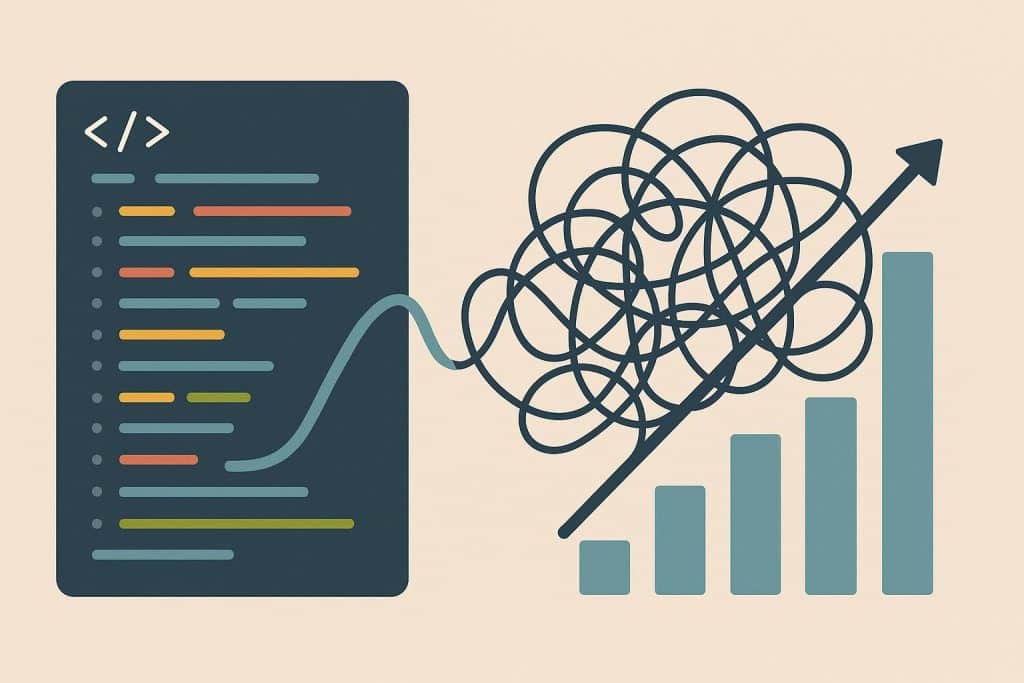
Vibe coding feels exciting at the start. You build fast, screens come together quickly, and progress feels visible every day. Many founders fall in love with this phase because it feels creative and flexible. I have seen this happen often, especially in early startups and side projects. But what feels good in the first few weeks usually becomes painful later.
In this article, I will explain why vibe coding is not scalable and why it breaks down as your product grows. I will show you where teams get stuck, what problems appear after launch, and how this approach quietly increases cost and risk.
If you are choosing an app developer or planning to hire custom software developers, this guide will help you avoid mistakes that are hard to fix later.
What Vibe Coding Really Means in Practice
Vibe coding usually means building without structure. Decisions are based on speed, gut feeling, and what feels right in the moment rather than a clear plan.
At the start, this feels productive. Features ship fast and there is little friction. But there is no shared logic or system behind the app.
Common signs of vibe coding:
- Features are added without clear requirements, documentation, or long-term thinking, which creates confusion when the app grows.
- Code or logic is written to “just work for now,” ignoring future users, performance, or maintenance needs.
- Decisions depend heavily on one person’s understanding, making the app fragile when team members change.
This approach works only for very small projects. The moment users, features, or teams increase, cracks start to appear.
Why Speed Without Structure Breaks Apps Later
Vibe coding prioritizes speed over structure. That trade-off always comes back to hurt you.
When structure is missing, every new feature takes longer to build than the previous one. Developers spend more time understanding old logic than building new functionality.
Here is what usually happens:
- Simple changes require touching many unrelated parts of the app because logic is tangled and unclear.
- Bugs appear in unexpected places since there is no clear separation between features or data flows.
- Onboarding new developers becomes slow and expensive because nothing is documented or standardized.
What looked like fast development in month one becomes slow, risky work by month six.
Vibe Coding Fails When Teams Grow
Vibe coding depends heavily on one or two people who “know how things work.” That does not scale with teams.
As soon as more developers join, communication becomes the bottleneck. Everyone has a different understanding of the app, and decisions become inconsistent.
This leads to:
- Conflicting implementations where different developers solve the same problem in different ways.
- Increased review time because there are no shared standards or patterns.
- Frustration and burnout as developers constantly fix issues caused by unclear logic.
If you are choosing an app developer for a growing product, this is a serious risk. Scalability is not just about users. It is also about people.
Maintenance Becomes a Silent Cost Explosion
One of the biggest problems with vibe coding appears after launch. Maintenance becomes expensive and unpredictable.
Without structure, every fix feels like surgery. Small changes can break unrelated features, forcing teams to test everything manually.
Over time, you see:
- Higher bug-fixing costs compared to feature development.
- Slower release cycles because teams are afraid to touch fragile logic.
- Increased reliance on the original developer, creating a dangerous dependency.
This is why many founders who hire custom software developers after a vibe-coded MVP end up rebuilding large parts of the app from scratch.
Scaling Users Exposes Performance and Data Issues
Vibe coding rarely considers scale. It works fine for small user numbers but collapses under real usage.
As traffic increases:
- Poor data structures cause slow loading times and failed actions.
- Inefficient logic increases server costs and hurts mobile performance.
- Fixing performance issues becomes complex because the system was never designed for growth.
These problems are much harder to solve later than they are to prevent early. Scalability must be built intentionally, not patched in later.
Vibe Coding Creates Vendor and Developer Lock-In
Another hidden issue is lock-in. When logic lives only in someone’s head, you are trapped.
If the original developer leaves:
- New developers struggle to understand how the app works.
- Knowledge transfer takes weeks or months.
- Progress slows while costs increase.
This is especially dangerous when choosing an app developer without checking how they document and structure their work. Scalability requires shared understanding, not personal memory.
Why Founders Confuse Vibe Coding With Agility
Many founders believe vibe coding is the same as being agile. It is not.
Agility still requires structure, clear decisions, and documented logic. Vibe coding skips those steps entirely.
True agility means:
- Fast iteration with clear boundaries.
- Flexible systems that can change without breaking.
- Decisions based on learning, not chaos.
Vibe coding creates speed early but removes flexibility later. That is the opposite of what growing products need.
How to Build Fast Without Falling Into Vibe Coding
Speed and structure are not enemies. You can build fast and still be scalable.
A better approach includes:
- Clear feature planning before development starts, even for MVPs.
- Basic documentation of logic, data, and workflows from day one.
- Choosing developers who think in systems, not just screens.
When you hire custom software developers or low-code teams, ask how they design for growth. Their answer will tell you if they build products or just prototypes.
Conclusion
Vibe coding feels good early but fails when it matters most. It breaks under growth, creates hidden costs, and traps teams in fragile systems. What starts as freedom turns into frustration.
Scalable products need structure, clarity, and shared understanding. You can still move fast, but speed must be intentional. If you are choosing an app developer, look beyond how quickly they build. Focus on how they think, document, and plan for the future.
The real cost of vibe coding is not time. It is rework, stress, and lost momentum. Avoid it early, and your product will thank you later.
FAQs
Is vibe coding ever a good idea?
Vibe coding can work for personal projects or short experiments with no long-term goals. It is not suitable for startups, businesses, or products that need to scale, maintain users, or grow teams over time.
Why do startups fall into vibe coding?
Startups want speed and quick results. Without experience, founders confuse speed with progress. Vibe coding feels productive early, but it ignores future complexity, which later slows everything down.
How can I avoid vibe coding when hiring developers?
Ask about planning, documentation, and scaling. When choosing an app developer, look for someone who explains structure clearly. Avoid developers who rely only on intuition and speed.
Does vibe coding happen in low-code or no-code apps too?
Yes. Low-code tools make building faster, but without structure, the same problems appear. Scalability depends on how logic and data are designed, not the tool itself.
Should I rebuild an app that was vibe coded?
If maintenance is painful and growth is blocked, rebuilding may be necessary. Many founders hire custom software developers to refactor or rebuild once vibe coding limits become clear.