

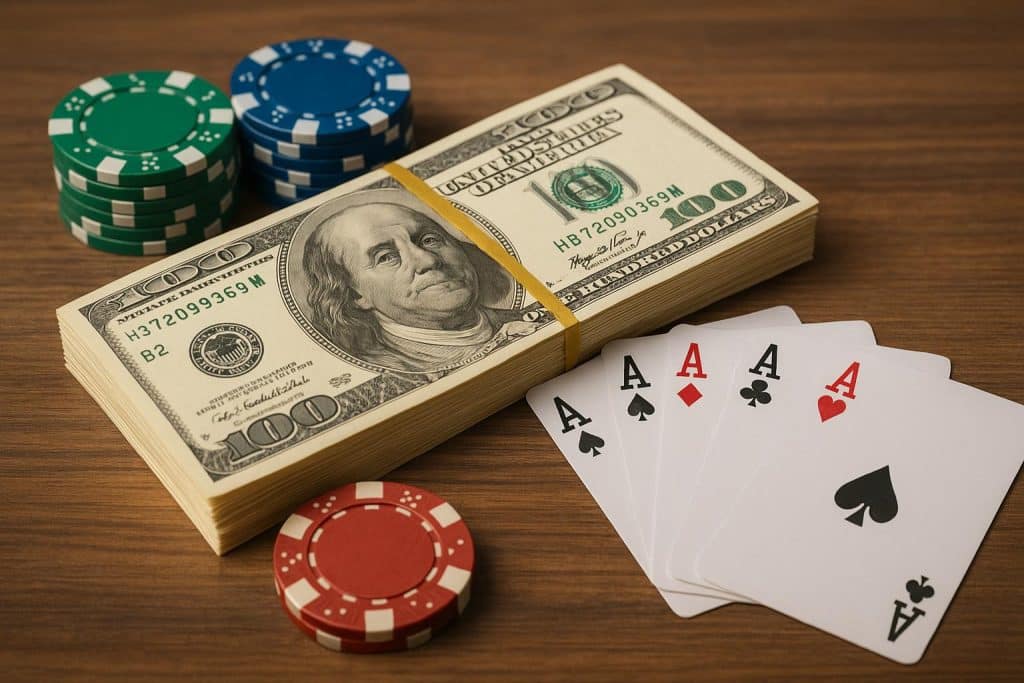
In the high-stakes world of competitive poker, one question consistently shapes the excitement and anticipation surrounding major events: how is the top poker money prize determined? Understanding the mechanisms behind prize distribution is essential not only for players but also for fans, analysts, and the global audience watching millions of dollars change hands every season. Major poker tournaments are complex machines—structured, regulated, and strategically designed to reward exceptional skill, endurance, and strategic brilliance.
This comprehensive guide explores how the top player prize in major poker tournaments is calculated, dissecting every crucial component—from buy-ins and re-entries to guaranteed prize pools and payout structures. With detailed insights rooted in the game’s long-standing traditions and evolving formats, this resource reveals the formula behind the staggering payouts that define poker history.
The Foundation of Every Poker Prize Pool: Tournament Buy-Ins
At the heart of every poker prize pool lies the buy-in, the fee each participant pays to enter the tournament. The total buy-in is typically split into two major components:
- Entry fee – the portion that contributes directly to the tournament’s prize pool
Administrative fee – kept by the organizer to cover event operations, staffing, and venue costs
For example, in a $10,000 tournament, $9,000 may go to the prize pool, while $1,000 is allocated to the house. Multiply this by thousands of players, and the cumulative prize pool quickly becomes colossal.
The 포커 플레이어 포커 상금 is always a proportion of the total prize pool, making the buy-in level and number of entrants primary determinants of the final payout.
How Number of Entrants Influences the Top Prize
Major poker tournaments, especially the World Series of Poker (WSOP) and European Poker Tour (EPT)—attract enormous fields. The more entrants, the more significant the prize pool becomes.
Large Field, Larger Top Prize
Events like the WSOP Main Event thrive on massive participation.
A high number of entrants means:
- A bigger prize pool
- A higher payout for top finishers
- Greater visibility and prestige for the event
The top prize grows exponentially when entry numbers surge. This is why tournaments with lower buy-ins but high attendance sometimes produce prize pools that rival high-roller events.
Small Field, Higher Buy-In: A Different Path to Big Prizes
On the other hand, high-roller tournaments may feature fewer participants but charge premium buy-ins, sometimes $100,000 or even $1,000,000.
These events generate enormous top prizes despite smaller field sizes.
Guaranteed Prize Pools: Stability and Incentive for Players
Many major poker events advertise a guaranteed prize pool—a minimum payout amount promised regardless of how many players register.
This benefits players by offering financial certainty while encouraging higher participation rates.
For example:
- A tournament may guarantee a $5 million prize pool
- If fewer players enter, the organizer covers the difference
- If more players join, the guarantee is easily surpassed
The top prize is always a fixed percentage of the final prize pool, so guarantees create a baseline expectation before the event even begins.
Payout Structures: The Formula Behind the Top Prize
Every major tournament adheres to a predetermined payout structure, carefully designed to:
- Reward top-performing players
- Ensure deep payouts for a portion of the field
- Maintain balance between risk and reward
Most professional poker circuits use a tiered payout system, distributing money to roughly 10–15% of participants.
How the Top Prize Percentage Is Calculated
The winner’s share typically ranges from 15% to 25% of the total prize pool, depending on:
- Tournament size
- Number of paid positions
- Whether it is a freezeout or re-entry event
- Historical standards of that specific series
For example, the WSOP Main Event winner often receives around 20% of the pool, while high-roller winners may take a slightly smaller percentage due to condensed fields.
Re-Entry and Add-On Structures: Increasing Prize Pools Further
Many modern tournaments allow players to re-enter after elimination or purchase add-ons during designated periods. These additional buy-ins contribute directly to the prize pool, often boosting the top prize significantly.
Benefits of Re-Entry for Prize Growth
- More money is injected into the pool
- Larger payouts for final table players
- Higher stakes and more aggressive play during early levels
High-roller events frequently permit multiple re-entries, which is why their payout totals can skyrocket rapidly.
How Final Table Deals Affect the Top Money Prize
At the final table, players sometimes negotiate ICM-based deals (Independent Chip Model deals), redistributing payouts based on stack sizes.
While the tournament’s published top prize may list a specific amount, the actual take-home earnings can shift if:
- Players agree to split the prize pool
- They secure guaranteed payouts
They leave a portion to compete for (often the title and trophy)
These deals are common in:
- EPT
- WPT
- High-stakes private tournaments
However, WSOP events traditionally discourage deal-making, preserving natural payout integrity.
The Role of Sponsorships and Bonuses in Top Player Earnings
In some major tournaments, professional players receive additional bonuses or incentives, which may include:
- Sponsorship bonuses for reaching the final table
- Contracted payouts for wearing brand patches
- Performance-based incentives from poker teams
While these bonuses do not affect the official prize pool, they influence a player’s overall earnings, sometimes significantly.
The Importance of Tournament Format in Determining Prize Distribution
Different structures produce different prize dynamics. The format directly influences how the top prize is calculated:
Freezeout Tournaments
- No re-entries
- Prize pool based solely on initial field
- More predictable top payout
Re-Entry Events
- More volatile but significantly larger prize pools
- Higher top prize potential
Shootout Tournaments
- Prize distribution often flatter
- Slightly reduced top prize percentage
High-Roller Events
- Few entries, huge buy-ins
- Extremely large top prizes despite smaller fields
Why the Top Prize Keeps Increasing Every Year
The evolution of modern poker continually pushes prize pools to new heights. Several factors contribute to this upward trend:
- Online qualifiers bring thousands of new players to live events
- Content creators and streamers expand global interest
- Televised coverage elevates poker to mainstream sports status
- High-stakes communities fuel the growth of super high-roller tournaments
Each of these elements contributes to the massive prize pools seen in today’s poker landscape.
Examples of How Major Tournaments Calculate Their Top Prizes
World Series of Poker (WSOP)
- Uses a structured payout table
- Top prize generally 15–20% of prize pool
- Large field results in multi-million-dollar winner payouts
WPT (World Poker Tour)
- Flexible payout structures
- Often includes final table deal negotiations
- Winner payout varies but typically around 18%
EPT (European Poker Tour)
- Highly structured payouts
- Final table deals common
- Top prize usually between 15–22%
These consistent formulas ensure fairness and transparency across global poker events.
Conclusion: The Art and Science Behind Poker’s Biggest Prizes
The top player poker money prize in major tournaments is not arbitrary—it results from a meticulously engineered system combining mathematical precision, event structure, buy-in strategy, and player participation. From massive field events like the WSOP Main Event to exclusive high-roller spectacles, every prize pool tells a story of competitive spirit, strategic excellence, and the pursuit of life-changing rewards.
Understanding how these enormous payouts are determined provides clarity into the mechanisms that govern professional poker and reveals the intricate balance behind one of the world’s most lucrative competitive sports.