

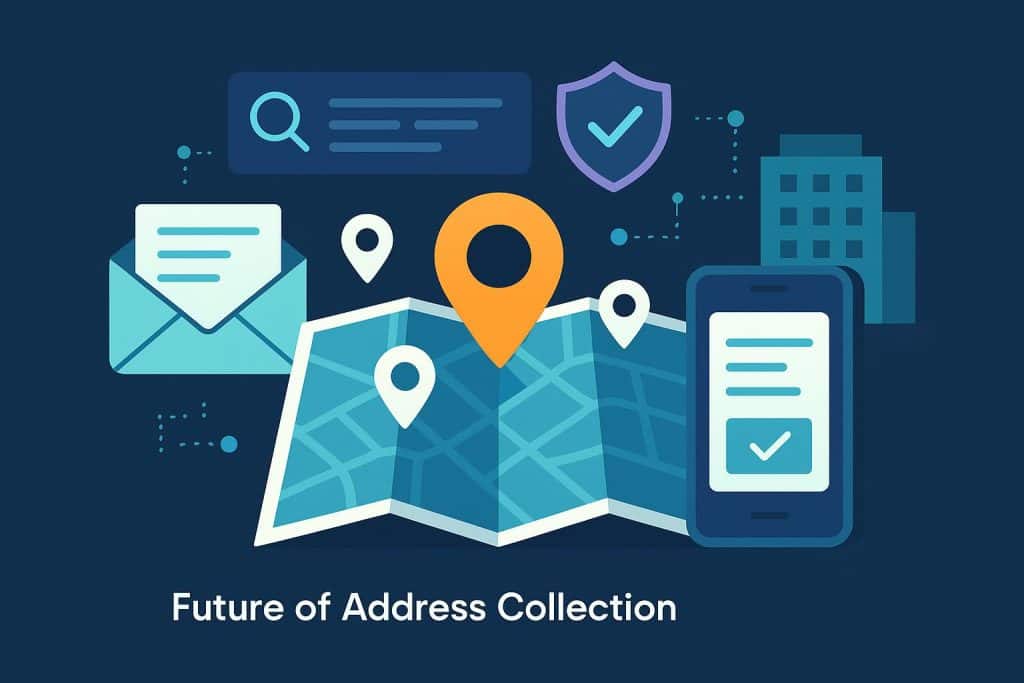
The landscape of address collection and verification is undergoing a profound transformation. As global commerce, digital services, and mobile technologies expand, the demand for accurate, fast, and reliable address data has never been higher. Traditional methods of manual entry and basic validation are no longer sufficient to meet the operational and regulatory needs of modern organizations. The future lies in intelligent, automated, and adaptive technologies that not only capture data efficiently but also verify and optimize it in real time.
From Manual Entry to Intelligent Automation
For decades, businesses relied on manual entry, paper forms, and human verification to collect addresses. While functional, these methods are slow, prone to errors, and challenging to scale. Modern address collection solutions integrate automation, artificial intelligence, and predictive logic to transform this process. Instead of requiring users to type every detail correctly, intelligent systems can suggest 주소모음, validate them instantly, and ensure they conform to regional postal standards.
The next generation of technology will go even further. By combining machine learning with real-time feedback, address systems will adapt to user behavior, regional patterns, and historical data, reducing friction and eliminating errors before they occur. This shift toward proactive, intelligent automation marks a significant step forward in data quality management.
AI-Powered Predictive and Corrective Systems
Artificial intelligence is at the heart of the future of address collection. Predictive algorithms can infer full addresses from minimal input, understand variations in spelling and format, and even reconcile incomplete or inconsistent data. These systems will also provide automatic corrections when errors are detected, ensuring that the captured data is always usable.
Moreover, AI models can continuously learn from patterns of human input and historical errors. Over time, they will become capable of identifying anomalies that even trained staff might miss, such as mismatched postal codes, irregular street names, or potential fraudulent entries. This self-improving capability is poised to make AI-driven address collection systems indispensable for organizations that process large volumes of customer or operational data.
Geolocation and Real-Time Verification
The rise of mobile devices, GPS technology, and IoT-connected services is driving a shift toward location-based address collection. Geolocation enables systems to capture precise coordinates and automatically convert them into validated, deliverable addresses. This approach is particularly valuable in urban environments with complex addressing systems, as well as in rural areas where formal street names may be limited or nonexistent.
Real-time verification will increasingly integrate multiple data sources, including postal services, geospatial databases, and local government records. By checking addresses instantly against authoritative databases, organizations can ensure accuracy, prevent delivery failures, and improve operational efficiency.
Blockchain and Secure Verification
One of the most exciting developments on the horizon is the application of blockchain technology to address verification. Blockchain offers a decentralized, tamper-proof ledger that can record address data securely and transparently. For industries where compliance and auditability are critical—such as finance, healthcare, and logistics—blockchain can provide a trusted framework for verifying and storing addresses.
Beyond security, blockchain could facilitate shared verification networks, allowing multiple organizations to confirm address data without compromising privacy or duplicating effort. This could significantly reduce the costs and inefficiencies associated with repeated address validation across sectors.
Voice, Biometric, and Multimodal Input
As human-computer interaction evolves, the ways users provide address information are expanding. Voice recognition systems are increasingly capable of capturing addresses accurately, converting spoken words into structured data with minimal errors. Biometric verification may also play a role, linking verified identity data to address records for enhanced security and compliance.
Future systems are expected to be multimodal, integrating voice, text, images, and location data to ensure the highest levels of accuracy. For example, a delivery app might accept a voice-provided address, validate it via GPS, and cross-check it against a national postal database, all in real time.
Internationalization and Adaptive Formats
Globalization demands systems capable of handling diverse address formats and languages. Future address technologies will be adaptive, recognizing regional variations in street names, postal codes, and numbering systems. They will also support transliteration, allowing addresses in non-Latin scripts to be accurately captured, verified, and integrated into digital systems.
This flexibility is essential for multinational businesses, eCommerce platforms, and logistics providers that need to maintain consistent, high-quality address data across countries and languages. Adaptive systems will also reduce the cognitive load on users by automatically formatting addresses according to local standards.
Data Quality, Analytics, and AI-Driven Insights
Beyond capturing and verifying addresses, the next generation of systems will leverage analytics and AI-driven insights to continuously improve data quality. Organizations will be able to detect trends in address errors, identify areas with higher delivery failure rates, and optimize operational processes accordingly. This predictive capability transforms address data from a static resource into a strategic asset that supports decision-making and business growth.
Conclusion
The future of address collection and verification technology is intelligent, adaptive, and secure. By integrating AI, geolocation, blockchain, voice input, and real-time validation, organizations can achieve levels of accuracy, efficiency, and reliability that were previously impossible. As businesses expand globally and customer expectations rise, investing in these advanced systems will not only reduce operational costs and errors but also enhance customer experience and compliance.
Organizations that embrace these technologies today will be at the forefront of a new era in data management, one in which address collection is seamless, error-free, and a foundation for smarter decision-making. The transformation is already underway, and the companies that adopt these tools will gain a decisive advantage in accuracy, efficiency, and customer trust.