

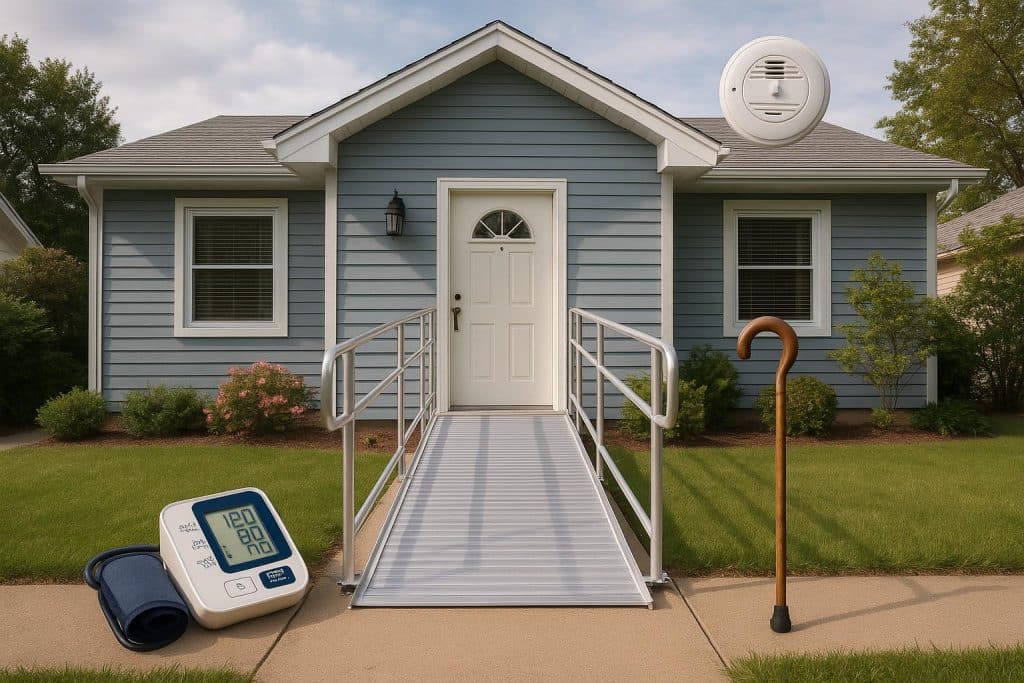
Everybody talks about aging in place. Ask any random sample of older adults where they’d like to spend their final years, and you’re bound to get the same answer: At home. But the difference between wanting to age in place and being able to do so safely is a huge gulf. It’s in that gulf that many families get blindsided.
Aging in place sounds simple enough; it only means you don’t move to a nursing home or assisted living facility. Stay in the house where you raised your children, where you know everyone down the street by name and what they drive, where all the creaky floorboards have memories. But actually managing this requires planning, preparation, and some hard truths about what it is and what it isn’t.
The House Itself Needs Modifications
Houses weren’t built for old people. That beautiful two-story house with the master bedroom upstairs is a death trap when the stairs get too steep for comfort. That old retro bathtub sure is pretty, but anyone who needs to get in and out of it everyday needs a walk-in shower. Even one-story houses aren’t designed for aging in place. Bathrooms or kitchens that aren’t accessible, doorways that aren’t wide enough for walkers, slippery tile floors, dimly lit hallways…
Some modifications are simple and relatively inexpensive. Grab bars in the bathrooms, more lighting, and removing throw rugs that people can trip over don’t break the bank. Other modifications take more thought. Widening door frames isn’t cheap, moving a bathtub to install a walk-in shower isn’t a minor construction project, and adding a ramp instead of stairs up to the front door can be a big deal. A stair lift costs a few thousand dollars, assuming the stairs are otherwise usable.
The hardest part is figuring out which modifications are worth it and which are overkill. Families either wait till after an accident to make changes (which is too late) or they go overboard installing things that never get used. Getting professional input before it’s too late will at least lead to smarter decisions about what’s really useful.
Daily Tasks Need To Get Done
Here’s what people don’t realize: aging in place almost never means being completely independent and not needing other people to help you. People can stay in their own home but they can’t support themselves like they may have been able to do earlier in life.
When someone ages in place, they usually need help with shopping, medications, cleaning, cooking, and cooking, bathing, and getting some companionship. The trick is to figure out how to set up this help so that it’s feasible for all involved.
Professional Home Care Services can assist with all these items. Professional home care workers can provide periodic assistance for activities of daily living. This typically encompasses everything from bathing to dressing and grooming to basic mobility assistance. These all make aging in place feasible instead of a ridiculous notion.
Professional caregivers can do this all by themselves. They can also take care of housekeeping, meal preparation, and picking up medications and groceries as well. They can also be the “eyes and ears” for the family when it comes to nutrition, medication “forgetting” and safety issues inside and outside the home. They can also help reintroduce clients back into things they once loved, like hobbies or other interests.
Getting professional home care services is an even better alternative if the client needs to become active again in groups or if the caregiver can reconnect the client with friends they haven’t seen in a long time.
Transportation Needs Addressing
Transportation issues also usually require a need because most aging adults do not have any means of transportation as they age in place. Using public transportation is not really an option anymore even for those who may still be able to drive.
Family members may not always be available to assist with this need anymore which leaves them stuck at home.
With mobility issues comes the need to continue moving even if many of these aging adults are currently active members of society or previous employees who have not yet retired their long service to humanity in their local communities. It can be as simple as making sure people are able to continue going out into their communities.
Many older adults who are aging in place often require transportation for doctor appointments or therapy sessions. They can very well still take public transportation but this will require issues with scheduling time to see their former coworkers or passing friends.
Caregivers can drive their clients where they need to go in order to continue playing an active role in these agencies even if they have retired from being active caregivers themselves. This allows for aging in place clients to remain active in their local communities as opposed to becoming hermits in their homes.
Social Needs Should Be Fulfilled
The single most important factor that will lead to successfully aging in place is not safety but socialization. Many aging adults who live alone will not see another human for days and even weeks if they are not connected to these home care services.
Social isolation is even more detrimental than other issues usually associated with aging in place needs. They may stop going to temple, church, their book club, the golf course or the local diner. Sooner or later this becomes embarrassing to these aging adults as they feel as if they are imposing on those who once embraced them.
They essentially forget things without help from others can remind them what matters in their lives professionally and personally.
Help with social interaction is essential for many aging adults as the toll of isolation can cripple even the strongest of individuals and even the most fine-tuned memories. People forget who they are without help reminding them.
Caregivers visiting once every week can help stave off loneliness caused by prolonged time spent alone. Caregivers can provide someone to talk to while eating lunch or dinner without an agenda or anyone looking for anything other than companionship.
Caregivers don’t just provide assistance but also provide someone with whom people can interact during these times.
Family Involvement Should Increase
Families have peace of mind when they know their loved one is at home with professional home care services.
This removes the angst that families often feel when an aging adult is home alone with no one around to assist them if they forget something like locking themselves out, remembering to take their medication or even remembering to eat.
The angst associated with wondering if someone is going to forget a recipe is removed when someone else takes care of it.
This does not mean families become nonchalant and stressed out when trying to connect with a parent who may be afflicted with dementia and may need family member attention rather than children or grandchildren.
These caregivers allow family members to be “sons” or “daughters” again rather than simply caretakers who have taken over their job.
Caregiving professionals return some of the golden years of retirement that this older generation deserves by allowing other people who do not have ties to these professional organizations take care of these aging in place clients.
Professional caregivers also benefit these aging in place adults as they don’t need caregivers who may feel overstimulated or be overburdened with the need to take care of clients while attempting to remain the attentive daughter or son rather than the former child they once were.
Professional caregivers also assist them by encouraging their clients to be comfortable when it is time for them to pass on into death.
Gradual Care Stages Change Based on Needs
Not everyone will require the immediate need for eight hours a day of caregiving upon transitioning into an aging in place environment.
Most adults will only require approximately two to four hours of care a week after having aging in place transitions completed successfully. This time can be scheduled by licensed providers and caregivers on an as needed basis.
This will eventually change as these care needs of clients will shift over time. Clients will probably only require two to four hours of care a week during their first few years of spending time at home after retiring or transitioning into the next phase of their lives as they age.
Eventually, clients will experience changes as they age further but this will require somewhat less than 24/7 attention when caregivers assist them with what they do need help completing.
Transitioning from one stage of care to another can be accomplished through professional care services who can assist them appropriately rather than force them into a one-size-fits-all plan after taking care of them at home.
With professional services taking care of the clients as they age in place by continuing to pay attention to needs like ensuring that chores or tasks are completed appropriately at home, as clients continue receiving their medications as prescribed by their doctors becomes a feasible opportunity when caregiving professionals monitor these needs as they occur.