

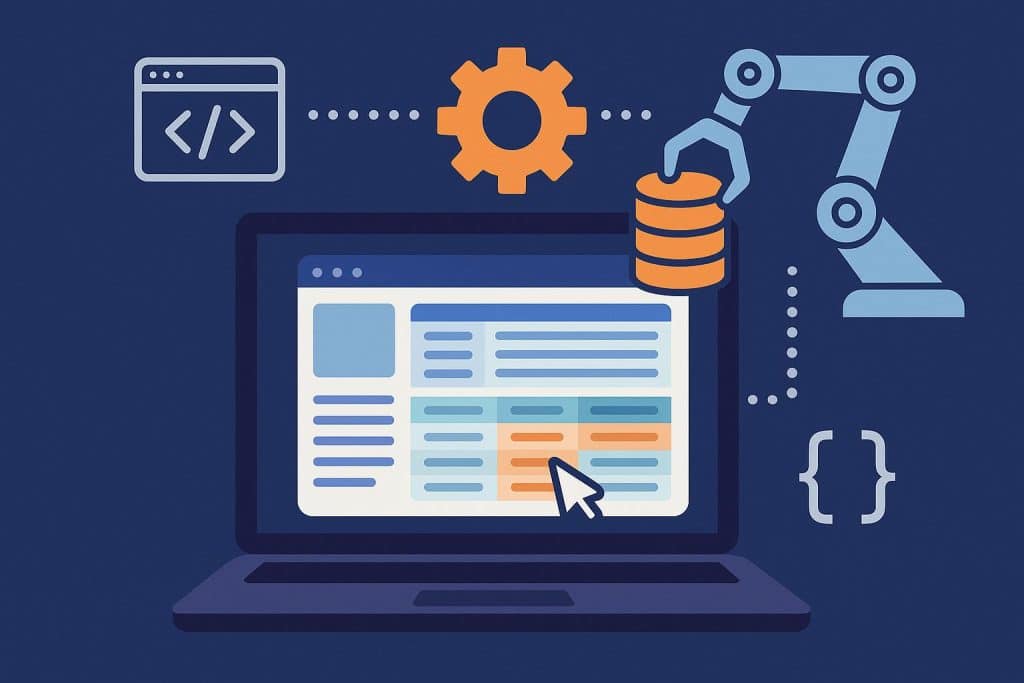
Modern browsers are no longer limited to viewing pages and clicking links. They now act as intelligent systems that observe patterns, read page logic, and organize scattered information into usable structures. Through automation, browsers interpret visual layouts, hidden code, and recurring formats to transform unorganized pages into reliable data sources. This shift supports analysis, monitoring, and research without manual effort, allowing information to be collected with consistency and clarity while maintaining accuracy and scale.
Browser-Based Automation and Structured Data Creation
Browser automation focuses on recognizing elements such as tables, lists, and repeated sections across pages. The systems use page structure information to extract data from web pages, which enables them to operate effectively despite layout variations. The scraping browser concept functions as a fundamental component of this method because it enables automated systems to navigate web pages in a manner that simulates actual user behavior. The process transforms visible content into structured formats that users can organize and assess through advanced evaluation methods without needing human intervention.
Core Technologies Driving Browser Automation
Automated browsers rely on several supporting components that work together to organize information efficiently. These systems focus on logic rather than appearance.
- Browsers read page elements using document object structures to identify repeatable patterns.
- Automation scripts follow user-style actions such as scrolling, clicking, and waiting.
- Parsing engines convert collected material into organized fields and records.
- Rule-based logic ensures accuracy when content loads in stages.
- Session handling allows stable access across multiple connected pages.
Turning Web Pages into Query-Ready Data Sources
Once content is collected, automation systems transform it into structured datasets. Each field is mapped based on position, type, and repetition. This approach makes information searchable and comparable across large sets.
Automated browsers reduce noise by filtering irrelevant sections and keeping only meaningful values. As a result, websites begin to function like databases where insights can be queried without manual review or constant page visits.
Benefits of Structured Extraction Through Browsers
Automated structuring offers clear advantages for teams that depend on timely and reliable information. These benefits focus on speed, consistency, and reduced effort.
- Faster access to organized information without repetitive manual collection
- Improved accuracy through rule-driven selection of relevant elements
- Scalable collection across many pages with minimal additional effort
- Consistent formatting that supports analysis and reporting tasks
- Reduced dependency on manual updates or visual checks
Handling Detection and Behavioral Analysis Challenges
Websites often analyze interaction patterns to identify automated activity. Advanced automation tools now replicate natural behavior, such as varied timing and realistic navigation paths. Approaches like undetected playwright help these tools blend automation with human-like actions in a way that browsers can mimic real users without triggering defenses. This balance ensures data collection remains stable while respecting page logic and avoiding disruptions caused by aggressive or predictable behavior.
Ethical and Practical Automation Practices
Responsible automation focuses on a balance between efficiency and respect for system limits. Thoughtful design reduces strain and maintains long-term access.
- Respect page loading cycles to avoid excessive request pressure
- Limit the collection scope to relevant sections instead of full page capture.
- Apply delays that mirror natural reading and navigation behavior.
- Monitor changes to page structure for timely rule adjustments.
- Maintain transparency in how collected information is stored.
Future Trends in Browser-Driven Data Structuring
Automation is moving toward smarter interpretation rather than simple extraction. Browsers are learning to understand context, relationships, and content meaning. This evolution supports adaptive rules that adjust automatically when layouts change.
As intelligence improves, browsers will organize information with minimal configuration, turning the web into a living data network that updates continuously and reliably.
Practical Outlook for Automated Data Access
Organizations adopting browser automation gain structured access without complex integrations. By treating pages as data sources, teams can respond faster to changes and uncover insights with less effort.
Browser-based systems reduce manual dependency and support ongoing growth. With thoughtful implementation, automated browsers become stable tools that convert scattered information into dependable, structured knowledge.
Shaping Smarter Access
Automated browsers are redefining how information is gathered and organized. By converting pages into structured datasets, they reduce effort while increasing reliability. Careful automation practices ensure long-term value and adaptability. As browsers continue to evolve, structured access will become a standard approach for managing large volumes of online information with precision and confidence