

A product video does not need to be flashy to be effective. In most cases, people are not looking for a mini movie. They are looking for fast answers. They want to know what a product looks like, how it fits into real life, and whether it seems worth their attention.
That is why many product videos fail. They focus too much on style and not enough on clarity. The visuals may look polished, but the message is weak. The viewer finishes the video without learning much, so nothing happens next.
A product video converts when it makes the decision easier. It helps people understand the product faster. It lowers doubt. It gives them a clearer reason to keep exploring.
Good Product Videos Help People Understand Fast
When someone lands on a product page or sees a product clip on social media, they usually have a simple question in mind. They want to know whether this item is relevant to them.
That is why the best product videos are easy to follow. They show the product early. They highlight one clear benefit. They help people picture the product in use instead of making them guess.
This matters even more for smaller brands and lean teams. They often need to create useful visual content without long shoots or large budgets. That has pushed more businesses to look at simpler image and video workflows. Readers who want to explore that shift can visit iCreat AI and see how AI-powered visual creation is becoming more accessible.
The First Few Seconds Do Most of the Work
A strong opening matters because attention is limited. If a viewer cannot tell what they are looking at in the first few seconds, they are likely to move on.
Many weak product videos begin with slow mood shots, dramatic edits, or close-ups that hide the product. Those choices may look stylish, but they often delay the point. A viewer should not have to work hard just to understand the basics.
A better opening is usually simple. It shows the product quickly. It gives a sense of purpose. It creates a reason to keep watching.
Think about how this works in real life. If the product is a skincare item, viewers want to see texture, application, or visible use. If it is a bag, they want to see shape, material, and how it looks when carried. If it is a home item, they want to see where it fits and how it changes a space. The faster a video answers these practical questions, the more useful it becomes.
One Clear Message Works Better Than Five Small Ones
One common mistake in product videos is trying to say everything at once. Brands want to mention features, quality, story, style, lifestyle, value, and personality in one short clip. The result is usually clutter.
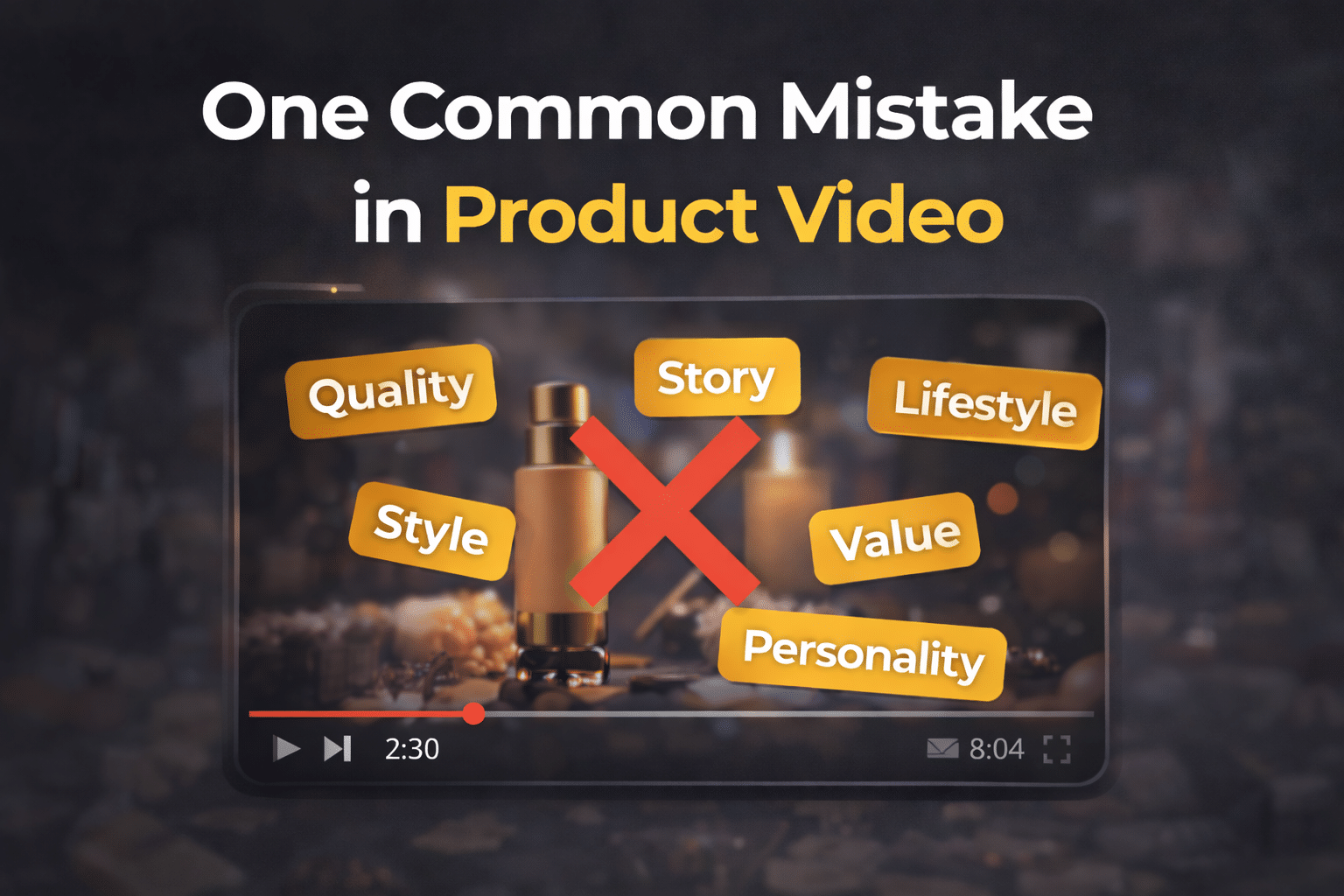
Most viewers remember one strong point, not five weak ones.
That is why a good product video usually focuses on one main idea. It might be comfort. It might be texture. It might be ease of use. It might be an appearance in a real setting. Whatever the message is, it should stay clear from beginning to end.
This does not mean the video has to be plain. It just means the visual choices should support the message instead of distracting from it. A clean, focused video often feels more convincing than a busy one because it gives the viewer less to decode.
Context Builds Trust
Products are easier to understand when people can imagine owning them.
Context helps with that. It lets viewers see how the product might look in a real moment, not just in isolation. It can show scale, fit, movement, or mood in a way that static images sometimes cannot.
This is especially important for products that depend on appearance or use. A shoe looks different when shown in motion. A beauty product becomes easier to understand when shown near the skin. A chair feels more real when it appears in an actual room instead of floating against a blank background.
Context does not need to be complicated. It just needs to feel believable. When a product appears in a setting that makes sense, the viewer has to do less mental work. That can make the product feel more familiar and more trustworthy.
The Best Product Videos Reduce Hesitation
At its core, a product video should reduce hesitation.
People hesitate when they are unsure about size, finish, fit, quality, or use. They hesitate when the product feels abstract. A good video makes the product feel more concrete. It gives the viewer enough visual proof to keep moving forward.
This is one reason more brands are paying attention to faster content workflows. Many teams already have product images, but they need motion content for product pages, short-form social posts, and campaigns. An AI Product Video Generator can support that process by helping teams build product-focused video assets from existing visual inputs instead of starting from scratch every time.
That matters because speed alone is not the goal. The real goal is to make useful content more often. When teams can test more visual ideas, they have a better chance of finding what actually connects with viewers.
A Simple Framework for Better Product Videos
If you want a product video to do a better job, it helps to keep the process simple.
Start with one question. What is the main thing the viewer should notice or remember?
Next, show the product clearly and early. Do not hide it behind style.
Then place it in a setting that makes sense. Help the viewer picture where the product belongs or how it is used.
After that, include one detail that builds confidence. That could be texture, movement, finish, size, or visible result.
Finally, make sure the video leaves the viewer with a clear next step. A strong product video should not feel confusing when it ends. It should make the viewer want to learn more, compare options, or keep exploring the product.
This is not a complicated formula, but it works because it matches how people actually watch. Most viewers are not asking for more drama. They are asking for more clarity.
Conversion Starts With Understanding
A product video does not convert because it looks expensive. It converts because it helps people understand the product without friction.
The strongest videos are often the clearest ones. They show the product early. They stay focused on one useful idea. They place the product in context. They reduce doubt instead of adding noise.
That is what makes a product video effective. It does not just attract attention for a few seconds. It gives people enough confidence to keep going.
In the end, the best product video is not the one that shows off the most. It is the one that makes the product easier to believe in.