

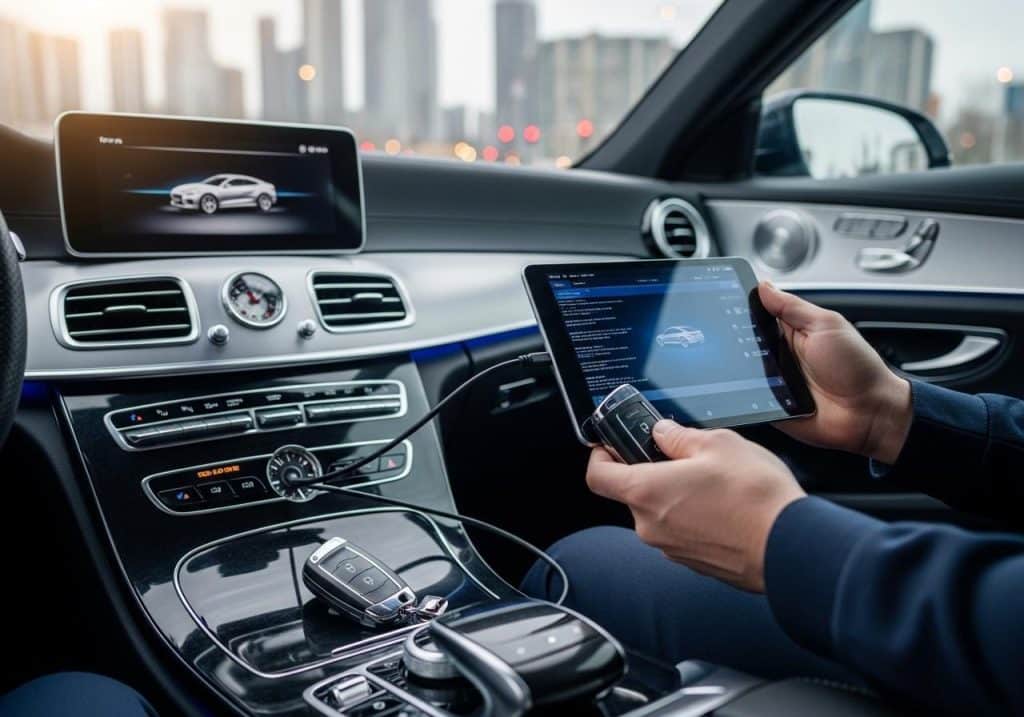
There was a time, not too long ago, when losing your car keys was a minor inconvenience. A quick trip to the local hardware store, a few dollars handed to the clerk, and you would walk out with a freshly cut piece of brass that could start your engine. If you locked your keys inside the cabin, a wire coat hanger and a little patience were often enough to bypass the door lock.
Fast forward to 2026, and the automotive landscape is unrecognizable. Vehicles are no longer just machines composed of gears and pistons; they are highly sophisticated rolling computers. This massive leap in technology has made cars safer and significantly harder to steal, but it has also transformed a lost key from a minor hiccup into a high-tech emergency. Understanding the invisible systems guarding your vehicle is the first step in protecting yourself from the stress and expense of a modern lockout.
The Disappearance of the Metal Blade
The traditional metal key blade is rapidly becoming a relic. In its place, the automotive industry has universally adopted the “smart fob” or proximity key. These devices rely on radio frequency identification (RFID) and advanced encryption to communicate with the car’s immobilizer system.
When you approach your vehicle, the fob broadcasts a rolling code. The car’s computer receives this signal, verifies the encryption, and unlocks the doors. When you press the “Start” button, another digital handshake occurs to disengage the engine immobilizer. Because the codes change every time the key is used, “cloning” a modern key via simple duplication is nearly impossible. This encryption is a fantastic deterrent against traditional car theft, but it creates a complex hurdle when a fob is lost, damaged, or dropped in a puddle.
Why the Dealership Isn’t Your Only Option
When faced with a lost smart key, most drivers assume they have no choice but to tow their vehicle to the nearest dealership. This assumption often leads to a frustrating experience. Dealerships typically require you to bring the car to their lot, meaning you have to pay for a tow truck. Once there, you may wait days for a specific proprietary key to be ordered from a central warehouse, followed by a hefty bill for the hardware and the specialized labor required to program it.
However, the aftermarket security industry has adapted to this technological shift. Today, a specialized auto locksmith carries the exact same diagnostic computers and programming software that the dealerships use. The critical difference is mobility. Instead of towing your vehicle across town, mobile technicians can meet you where you are stranded—whether that is your office parking garage or a grocery store lot. They can cut the emergency mechanical blade on-site and program the new digital fob directly to your vehicle’s computer, often completing the entire process in a fraction of the time it takes to arrange a tow.
The Hidden Danger of Used Keys
As the cost of replacement fobs has risen, a secondary market for “used” or “refurbished” smart keys has emerged online. Drivers looking to save money often purchase these keys from auction sites, assuming a local technician can simply reprogram them.
This is a dangerous gamble. Many modern car keys are designed with a “write-once” microchip. Once a key has been programmed to a specific vehicle’s Vehicle Identification Number (VIN), the immobilizer chip is permanently locked. It cannot be overwritten or transferred to another car. Buying a used key online often results in acquiring an expensive piece of plastic that is completely useless to your vehicle. It is always recommended to source the replacement hardware directly from the professional performing the programming to guarantee compatibility.
Tech-Driven Solutions in Urban Environments
The complexity of automotive lockouts is magnified in dense urban environments. If you lose your keys while attending a concert or navigating a busy commercial district, the logistical nightmare of securing your vehicle overnight is stressful.
This is where local expertise becomes invaluable. For drivers navigating the sprawling layout of Southern California, relying on experienced Los Angeles locksmith professionals ensures that you are dealing with technicians who understand the local logistics and carry a wide inventory of key blanks. They have the capability to not only generate a new key on the spot but also to access the car’s computer and “delete” the lost key from the system’s memory. This crucial step ensures that whoever finds your missing fob cannot use it to access or steal your vehicle later.
Preventive Measures for the Modern Driver
Given the high stakes of modern automotive security, prevention is the best strategy. Here are a few ways to protect yourself:
- Invest in a Duplicate Early: The cost of generating a spare key while you still possess a working original is significantly lower than the cost of originating a new key from scratch when all are lost. Treat a spare fob as an essential piece of automotive insurance.
- Track Your Keys: Bluetooth trackers like Apple AirTags or Tile devices have become small enough to attach to any keychain. In a scenario where your keys are simply misplaced in your house or dropped in a restaurant, a tracker can save you the cost of a full replacement.
- Mind the Battery: Smart fobs rely on small coin-cell batteries to broadcast their signals. If you notice you have to stand closer to your car to unlock it, or if your dashboard displays a “Key Battery Low” warning, replace the battery immediately. A dead battery won’t wipe the programming, but it will prevent the proximity features from working.
Conclusion
The automotive industry’s shift toward digital security has permanently altered the relationship between drivers and their keys. While we may mourn the simplicity of the five-dollar brass duplicate, the reality is that our vehicles are vastly more secure than they were a decade ago. By understanding the technology inside your pocket and knowing who to call when it fails, you can navigate the complexities of modern automotive security with confidence and peace of mind.