

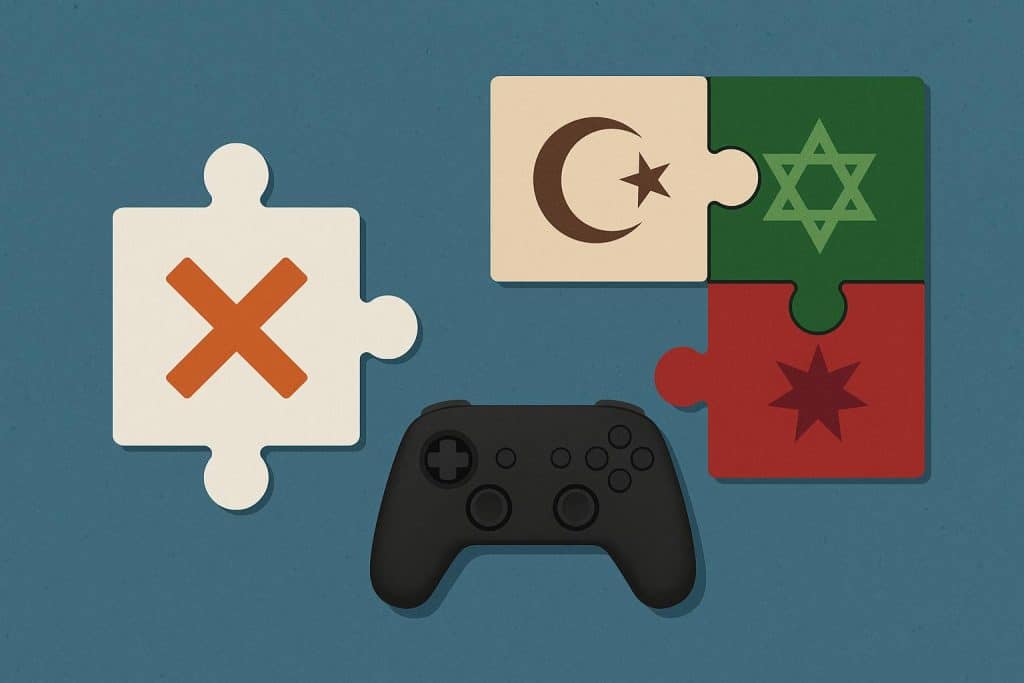
One-Size-Fits-All Approach Fails the MENA Gaming Audience
There is a subtle change in how gambling is perceived across the Middle East and North Africa (MENA), one that extends into culture, identity and influence.
On sites such as the Arab casino comparison platform Haz-Tayeb, games such as slots, blackjack and roulette are extolled as exciting new entertainment pastimes.
In a region where many nations have traditionally frowned upon gambling, this is a major step towards the establishment of a more liberal society.
However, as with any emerging sector, there are significant challenges to overcome. Read on as we assess some of the issues the MENA region faces.
Understanding a Demanding Audience
Robin Heymann, regional director at Burson Global, has warned stakeholders in the MENA gaming industry to resist the urge to flatten a diverse audience into a single narrative.
“Gaming and eSports audiences here aren’t one group,” Heymann said. “There are layers, from casual players to highly competitive communities.
“Each has their own expectations, platforms and language. Treating them as one, limits everything you try to build.”
MENA’s gaming numbers cut across age, class and cultural experience, bound less by uniformity than by a shared digital fluency.
Mobile-first behaviour shapes much of the engagement, but even that label does not fully encapsulate the nuance of how audiences switch between sites, communities and formats.
There is also an insistence on originality that cannot be created. Campaigns that appear fully formed, with little or no regard for local context, rarely get traction because communities expect participation, not observation.
They react to voices that understand the lingo of their spaces, the humour, the codes and the unwritten rules. That expectation has begun to make rounds across several industries.
Audiences in iGaming demand clarity on mechanics, fairness and value. The same instinct that makes a gamer question a campaign’s originality helps form how a casino player evaluates a platform.
From Participation to Cultural Ownership
The MENA region has hosted major sports and gaming tournaments to gain global recognition.
The events now have a distinct local energy, formed by audiences who can see themselves reflected in the show. Heymann captures this transition with measured precision.
“Success now comes from earning your place within these communities,” he added. “Brands that interrupt are ignored. Those that add value, that understand the culture, become part of it.”
There is a difference between visibility and belonging. Many brands achieve the former – few secure the latter.
Localisation in gaming is earned through consistency and continuous dialogue rather than a single campaign. Creator-led collaborations have become crucial to this process.
Influencers, streamers and community figures carry a form of legitimacy that traditional advertising cannot replicate. This change has implications in iGaming as similar patterns are showing up.
Users no longer act as passive recipients of offers – they take part actively, assessing platforms for fairness, usability and integrity. Live environments, interactive features and personalised journeys are expectations.
What becomes evident is that audiences from that region are not waiting to be convinced. They are setting the terms, defining what relevance looks like and rejecting anything that falls short.
Measuring What Matters in a Changing Landscape
Metrics have become contested ground. Reach and impressions still exist, but they no longer carry the authority they once did.
The question has shifted from how many people saw something to how it was accepted, how it lived within the people and whether it altered perception in any meaningful way. Heymann points to a broader recalibration for this.
“We look beyond visibility,” he said. “Sentiment, share of voice, the role of creators, how a campaign builds long-term equity, these are the measures that define impact now.”
It is a more demanding framework, one that needs patience as much as perfection. Marketing campaigns must live, adapt and react to audience interaction.
The idea of a fixed narrative has given way to something more fluid, shaped in real time by those engaging with it. This is where data plays a role as a guide to behaviour, preference and response.
The same evolution is visible in iGaming, where measurement extends beyond acquisition to retention, trust and long-term engagement.
Users track their experiences with a level of scrutiny that mirrors gaming communities, paying attention to consistency, fairness and the reliability of outcomes. Platforms that fail to meet these expectations are quickly exposed.
A single truth emerges across both spaces. Audiences in the region are informed, demanding and deeply engaged. They expect platforms, brands and experiences to meet them at a level that respects their knowledge and culture.