

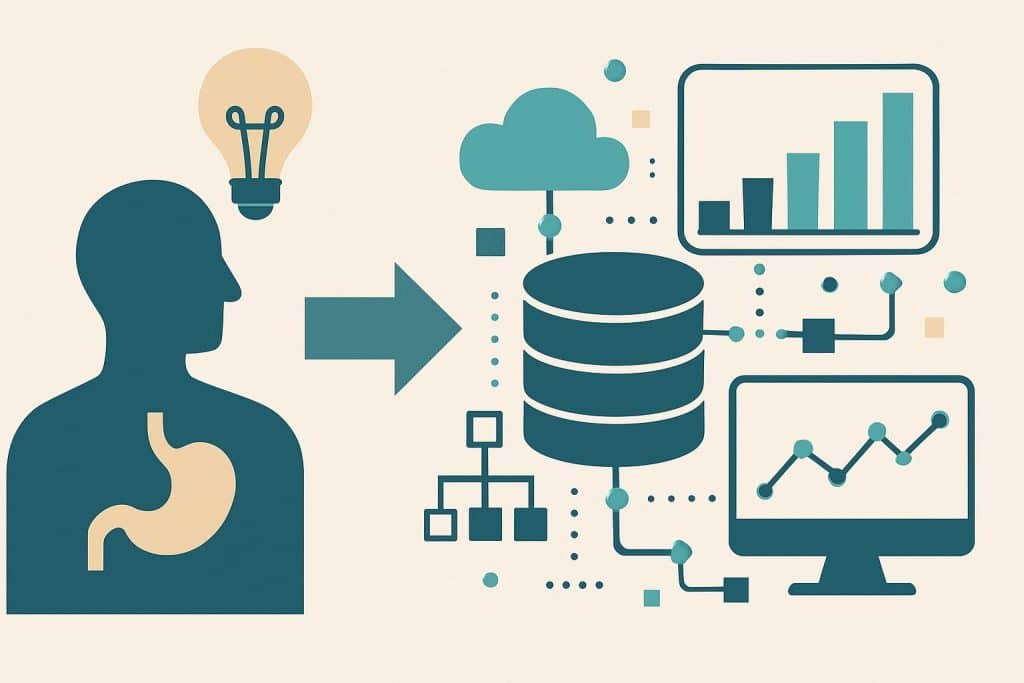
Sports prediction has existed as long as sport itself — fans have always speculated about outcomes, debated form, and backed their judgements with pocket money or public bragging rights. But in 2026, something qualitatively different is happening. The algorithms that once powered financial markets and logistics networks are now being trained on decades of sports data, producing prediction systems of a sophistication that would have been unthinkable even ten years ago.
The shift is significant not because machines are better at predicting sport than humans — they aren't, exactly — but because they can process more variables, more quickly, without fatigue or bias. And they're making those capabilities available to fans who've never written a line of code in their lives.
From Gut Feel to Data Architecture
Traditional sports analysis relied on observable patterns: home advantage, recent form, head-to-head record. These remain relevant, but they tell an incomplete story. Modern AI-driven platforms layer additional dimensions onto these basics — player workload metrics, expected goals models, atmospheric conditions, referee tendencies, travel distances, squad depth at specific positions, and even social media sentiment preceding big matches.
When a model trained on 15 years of match data identifies that teams with a particular defensive injury profile underperform against high-press sides by a margin of 12%, that's not something a human analyst would typically track with precision. It's exactly the kind of marginal advantage that separates rigorous prediction from informed guesswork.
The Platforms Bringing This to Fans
What's democratised prediction isn't just the algorithms — it's the interface design. Early data platforms required users to interpret raw statistics, build their own filters, and draw their own conclusions. Today's best services do the heavy lifting and present conclusions in accessible formats: probability distributions, colour-coded confidence indicators, trend lines that non-specialists can read at a glance.
Platforms delivering 365 sports predictions have emerged as a key category in this space, offering round-the-calendar coverage across dozens of sports and hundreds of competitions. The "365" in the name is significant — the modern sports calendar is relentless, and fans want analytical support that keeps pace with it.
Where AI Still Falls Short — and Why That Matters
Responsible use of AI in sports prediction requires acknowledging its limitations. Models are trained on historical data, which means they're inherently backward-looking. They can struggle with genuinely novel situations: a team restructuring its entire tactical system mid-season, the debut of a generational talent who has no comparable historical precedent, or the psychological ripple effects of a manager dismissal.
The best prediction platforms are transparent about uncertainty. A well-constructed probability output that says "60% confidence in a home win" is honest. A flat prediction with no confidence interval is not — it's false precision masquerading as insight. Fans who understand this distinction get more from these tools, and platforms that explain uncertainty build more trustworthy long-term relationships with their users.
The Broader Impact on Sports Media
As AI-driven prediction becomes more accessible, it's reshaping how sports media talks about upcoming fixtures. Journalists reference expected goals models routinely now. Television pundits are increasingly asked about data-driven assessments. Sports talk is becoming more analytically literate at every level.
This creates a virtuous cycle: more analytically literate fans demand better data, which drives investment in better platforms, which produces more sophisticated outputs, which raises the baseline expectations of fans. The sports prediction landscape of 2026 is substantially more rigorous than it was in 2020, and the trajectory points toward further improvement.
For fans who want to engage with this evolution rather than be left behind by it, the first step is simply finding a reliable data source and using it consistently. The learning curve is shorter than most people expect, and the rewards — in terms of richer understanding and more informed viewing — are genuinely worthwhile.