

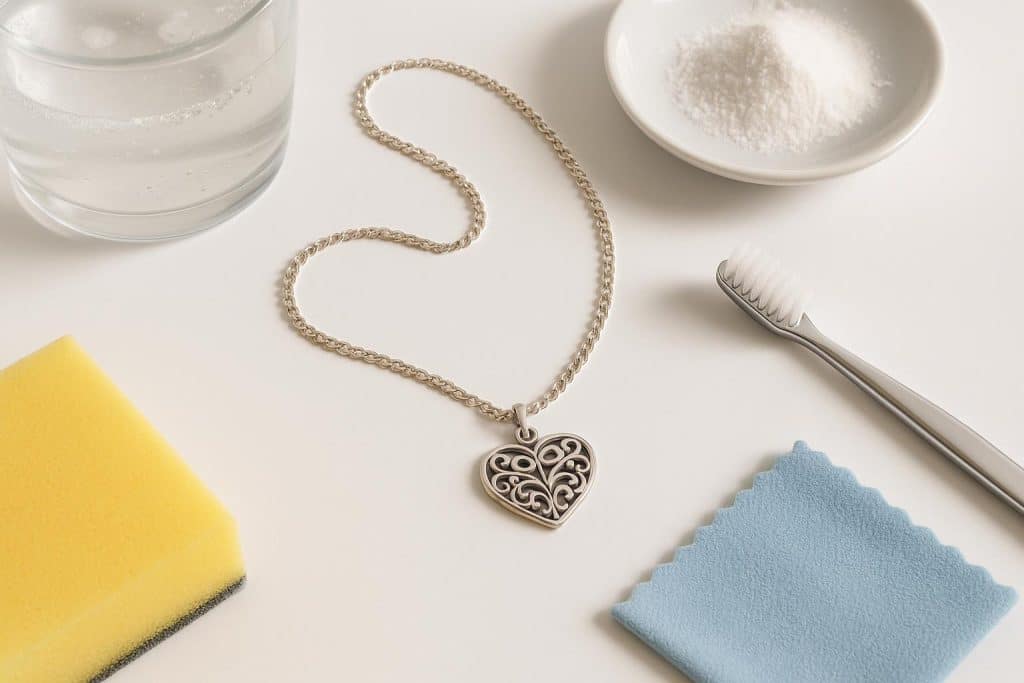
Sterling silver has a frustrating habit of losing its glow. Air, moisture, skin oils, and household chemicals all contribute to tarnish, that grayish film that makes even beautiful pieces look neglected. Plenty of people toss a darkened necklace into a drawer and forget about it. That’s a shame, because restoring the shine usually takes minutes, not hours. Most of these cleaning techniques use items already sitting in a pantry or medicine cabinet. Here are nine approaches that actually deliver results without putting the silver at risk.
1. Baking Soda Paste
Stir three parts baking soda into one part water until a smooth paste forms. Rub it across the necklace with a soft cloth, using light circular strokes. Concentrate on spots where tarnish has built up, but keep the pressure gentle. Rinse everything under cool water and pat the piece dry with a lint-free cloth. This technique handles light-to-moderate discoloration particularly well.
2. Aluminum Foil and Baking Soda Bath
Line a shallow bowl with aluminum foil, keeping the shiny side up. Lay the necklace flat on the foil and pour boiling water over it. Sprinkle in a tablespoon of baking soda, then wait 2 to 5 minutes. During this soak, a chemical reaction pulls tarnish off the silver and deposits it onto the foil instead. Rinse and dry the piece once it comes out. Understanding how to clean a sterling silver necklace like this one gives owners confidence in picking the safest method for their specific piece. Chains with intricate links or embedded stones may respond better to softer alternatives covered later in this list.
3. White Vinegar and Baking Soda Soak
Pour half a cup of white vinegar into a bowl and add two tablespoons of baking soda. Drop the necklace in and let it sit for two to three hours. Vinegar’s mild acidity breaks down tarnish while the baking soda amplifies the effect. Rinse under cool water afterwards and dry the piece completely. Any lingering moisture speeds up future oxidation, so skipping this step creates problems down the line.
4. Dish Soap and Warm Water
A basic solution often handles the job just fine. Add a few drops of gentle dish soap to a bowl of warm water, then submerge the necklace for 5 to 10 minutes. A soft-bristle toothbrush helps reach tight spots between chain links. Rinse well and dry right away. This method suits pieces worn regularly that need routine maintenance rather than heavy-duty restoration.
5. Lemon Juice and Olive Oil
Combine half a cup of lemon juice with a teaspoon of olive oil in a small dish. Dip a microfiber cloth into the blend, then buff the silver surface with even strokes. Citric acid removes tarnish, while the oil adds a subtle protective sheen. Wipe away any leftover residue with a separate clean cloth once the piece looks bright again.
6. Cornstarch Paste
Mix cornflour with just enough water to form a thick, spreadable paste. Coat the necklace, then let everything dry thoroughly. Once the paste hardens, buff it off with a soft cloth or a strip of cheesecloth. Tarnish lifts away as the dried mixture flakes off, revealing a polished surface underneath.
7. Toothpaste Rub
Plain, non-gel toothpaste doubles as a mild abrasive cleaner for silver. Squeeze a small dot onto a damp cloth and rub the necklace in gentle passes. Stay away from whitening or tartar-control formulas, since their harsher additives can leave fine scratches on softer alloys. Rinse the piece thoroughly and dry it once the discoloration clears.
8. Commercial Silver Polish
A quality silver polish from a reputable brand removes stubborn tarnish that household remedies struggle to remove. Each formula varies, so reading the label first matters. Apply the product with a soft cloth, working in straight lines to minimize the chance of micro-scratches. Remove all polish residue with a thorough rinse before putting the necklace away.
9. Professional Silver Cleaning Cloth
Pre-treated polishing cloths come infused with micro-abrasives and anti-tarnish compounds woven into the fabric. A few firm passes across the surface remove light tarnish in seconds. These cloths also deposit a thin protective film that helps slow oxidation between deep cleanings. Keeping one stored alongside a jewelry collection makes quick touch-ups effortless.
Conclusion
Tarnish happens to every piece of sterling silver eventually, but lasting damage need not follow. Each of these nine methods offers a practical path to restoring brightness without specialized tools or professional fees. The right choice depends on how severe the discoloration is and whether the necklace features delicate details or gemstones. Storage habits matter too: anti-tarnish pouches and airtight bags limit exposure to humidity and open air. With steady, attentive care, a sterling silver necklace holds its shine for years to come.