

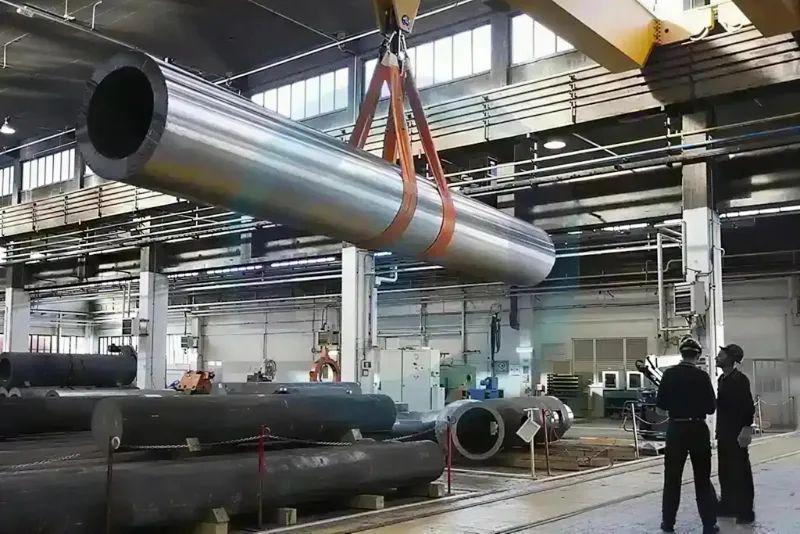
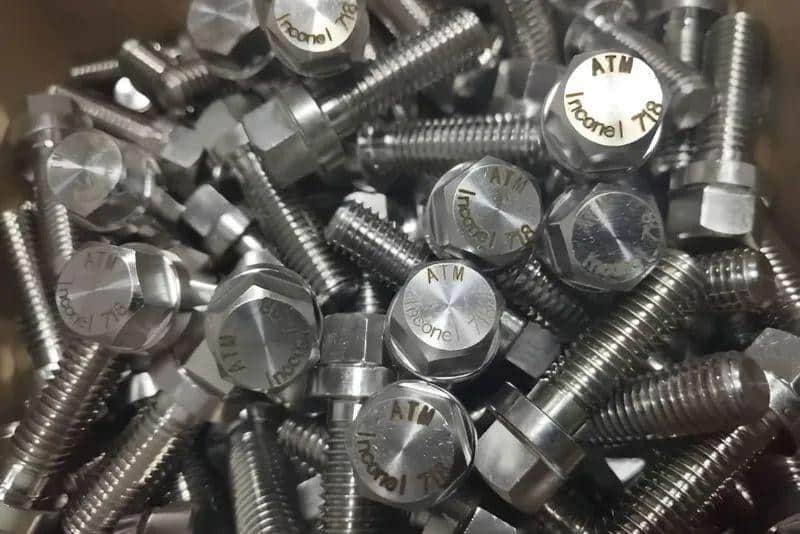
Inconel 718—honestly, just calling it “718” is what most shop floors do—sits at the top of the difficult-to-cut materials list. And for good reason. The stuff work-hardens almost while you’re looking at it, thermal conductivity is basically terrible, and tool life… well. Short. Not uncommon to see carbide inserts fail in under 15 minutes on aggressive passes. Design engineers speccing aerospace micro-components in 718 face a compound problem: the alloy’s mechanical advantages—retention of tensile strength above 650°C, oxidation resistance, AMS 5662 compliance—are the exact same properties that make it punishing to machine. This article covers the core processing challenges, practical tool selection criteria, spindle speed logic, and where the geometry boundaries get uncomfortable. Practical stuff, not theory.
How Superalloy Properties Create Traditional Machining Failure
The Work-Hardening Challenge
718 is a nickel-chromium superalloy (roughly 50–55% Ni, 17–21% Cr, with niobium, molybdenum, the whole deal). The problem—actually, the real problem, not just the headline—is work-hardening rate. Coefficient of work-hardening for 718 runs something like 0.45–0.55 in normalized form. Compare that to 304 stainless at around 0.35, and you start getting the picture. Each cut plastically deforms the surface layer, raises hardness by 30–40 HRC locally, and the next pass is already cutting a harder material than the last. Basically wrong approach if you try to compensate by slowing feed—slowing down actually makes it worse. Rubbing instead of cutting. The result? Accelerated flank wear. Fast.
Thermal Conductivity Function
Low conductivity—11.4–14.7 W/m·K depending on heat treatment condition—means heat doesn’t go anywhere useful. Doesn’t transfer into the workpiece much, doesn’t dissipate into the part. Goes straight into the tool edge. That’s the thing we’re dealing with. Cutting edge temperatures above 900°C are not uncommon on standard carbide without coatings, and that temperature range is where cobalt binders in WC-Co start softening. Diffusion wear accelerates. Crater wear on the rake face—you know, that scooping erosion right behind the cutting edge—compounds with abrasive wear from the hard γ'' precipitates (Ni₃Nb, if you want to get specific about it).
Architectural Difference vs. Conventional Steel Machining
Steel? You push feeds up, accept some tool wear, finish with a sharp insert. 718? The whole deal is inverted. Sharp geometry, aggressive coolant, controlled depth, lower feed per tooth than intuition suggests—roughly 0.05–0.10 mm/rev on turning, give or take. Run it like steel and you’ll burn through inserts at a rate that makes the job economically incoherent. The architecture of the process has to be rebuilt, not adapted.
Performance Specifications and Material Constraints
Cutting Speed Ranges
Speed, frankly, is where most engineers get it wrong first. General guidance for uncoated carbide on 718: 20–35 m/min surface speed. Coated carbide (TiAlN, AlTiN)—up to 40–55 m/min, sometimes 60 m/min on roughing if tool geometry and coolant are right. CBN inserts—actually, wait. CBN works in a different regime, above ~200 m/min for finish turning on fully aged 718, but it’s not broadly applicable to micro-features because minimum chip thickness constraints get violated at small depths of cut. Ceramic inserts (SiAlON type) sit in a middle range: 100–180 m/min, dry or with air blast, but they’re brittle and don’t like interrupted cuts. Interrupted cuts basically shatter them. Don’t use ceramics on features with slots or keyways.
Material Suitability Matrix
Table 1: Tool Material Performance in Inconel 718 Micro-Machining
Tool Material | Speed Range (m/min) | Feed Range (mm/rev) | Recommended Application |
Uncoated WC-Co Carbide | 20–35 | 0.05–0.10 | Roughing, general turning |
TiAlN/AlTiN Coated Carbide | 40–60 | 0.05–0.12 | Finish turning, light milling |
SiAlON Ceramic | 100–180 | 0.10–0.20 | Continuous finish turning only |
CBN (PCBN) | 180–250 | 0.10–0.20 | Hard finish on aged 718 |
PCD (Polycrystalline Diamond) | Not suitable | — | Chemical reactivity with Ni |
PCD reacts chemically with nickel at elevated temperature. Not theoretical—it happens. Avoid PCD on 718.
Coolant Influences
High-pressure coolant is not optional, it’s non-negotiable. Period. Standard flood coolant at 6–10 bar helps; 70–150 bar high-pressure through-tool delivery is what actually works for micro-part precision. The mechanism: thermal shock at the cutting edge from intermittent coolant is less damaging than sustained 900°C edge temperatures without it, and chip evacuation in small-diameter features (below 3mm bore, for example) is essentially impossible without pressure-assisted delivery. Minimum quantity lubrication (MQL) at 40–60 mL/hr works as a supplement on some finishing passes but not as primary cooling. Honestly, if your setup doesn’t support high-pressure coolant, you’re going to fight tool life the whole job.
Geometric Boundaries
Micro-parts—let’s say features below 0.5mm diameter or wall thickness below 0.3mm—hit a constraint that isn’t just about cutting speed. Tool-to-workpiece stiffness ratio. Deflection from cutting forces (718 generates radial cutting forces roughly 2–3× higher than mild steel at equivalent parameters) causes dimensional error that compounds with work-hardening. You can’t brute-force small features in 718. Depth of cut below 0.05mm on finishing, radial engagement below 10% of tool diameter for end milling, and tool runout controlled to under 0.003mm [Check this]. Runout matters a lot more here than in aluminum.
Design Parameters for Production Viability
DFM Guidelines
Design for manufacturability in 718 micro-parts starts with one rule: minimize interrupted cuts. Every feature that requires the tool to enter and exit repeatedly (slots, crossholes, undercuts) compounds tool wear non-linearly. Where function permits—and often it does—blend features into continuous turning profiles. For turned micro-components, L/D ratio (length-to-diameter) below 4:1 is comfortable; between 4:1 and 8:1 needs steady rest or tailstock support; above 8:1 gets into territory where unlike Swiss CNC turning—which handles aspect ratios up to 20:1 using guide bushing support within ±0.005mm tolerance for long slender 718 shafts—conventional machining centers will produce unacceptable taper and chatter. Specify corner radii on internal features above 0.2mm wherever possible. Sharp internal corners are stress concentrators and tool breakage sites simultaneously.
Tolerance and Risk Management
718’s thermal expansion coefficient (11.7 μm/m·°C) means in-process thermal variation translates directly to dimensional error. A temperature swing of 5°C in the workpiece changes a 50mm feature by roughly 2.9 microns—about five microns, give or take—which is inside tolerance on precision aerospace components. Measure workpiece temperature before final passes. Not uncommon to see shops using temperature-stabilized measurement rooms (20°C ±0.5°C, ISO 1 reference standard) and still getting surprised by thermal drift from cutting heat accumulated in the part. In-process gauging on critical diameters is worth the setup time. Scrapping a 718 micro-part on the last pass—that’s expensive, roughly 4–8× material cost in lost machining hours.
Economic Thresholds
Tool cost in 718 is a significant cost driver. Budgeting 15–25% of job cost to tooling is not unusual on precision 718 work, versus 5–8% on stainless. Economic breakeven for high-performance coated inserts versus budget carbide tips somewhere around batch size 10–15 parts; below that, the insert cost per part is hard to justify over cheaper tooling with more frequent changes. For micro-milling, solid carbide end mills (2-flute, 30° helix, sub-micrograin substrate) in 718 typically yield 20–40 parts per tool at correct parameters—or 3–5 parts if parameters are wrong. That cost spread is what makes process setup non-trivial.
Applications by Industry
Aerospace Turbine Components
The classic application. Fuel nozzles, turbine blade roots, seal rings, combustor hardware. 718 is basically the default choice when you need high-temperature strength with weldability (the low Nb/Al ratio keeps strain-age cracking risk manageable). Tolerances on mating surfaces routinely run ±0.005mm or tighter. Micro-drilling for cooling holes—diameters from 0.3mm to 1.2mm, depth-to-diameter ratios above 10:1—is a recurring challenge that requires peck drilling cycles with high-pressure coolant and either carbide micro-drills or EDM for the extreme aspect ratios.

Medical and Industrial Instrumentation
718’s corrosion resistance and non-magnetic properties (roughly 1.00–1.05 μr permeability) make it useful for surgical instruments, MRI-compatible components, and high-pressure valve bodies. Wall thicknesses below 0.4mm in turned components are not uncommon in this sector. The work-hardening behavior actually helps here—finished surfaces in 718 polish to low Ra values (0.2–0.4 μm Ra achievable with CBN finishing) and resist scratching during assembly.
Energy and Oil/Gas Downhole
High-pressure, high-temperature downhole tools—valve seats, pressure housings, instrumentation bodies—use 718 for its combination of yield strength (1100–1275 MPa in AH condition per AMS 5663) and resistance to H₂S-induced stress corrosion. Macro-scale components here, mostly, but the machining challenges carry over. Thread forms on 718 components are a specific headache—chasing threads after heat treatment, on a workpiece that work-hardens during the tap operation. Single-point threading on the lathe, slow, with good coolant, is generally the right answer over tapping.
Table 2: Application Summary by Sector
Industry | Component Type | Critical Parameter | Typical Tolerance |
Aerospace | Turbine seals, nozzles | Temperature resistance | ±0.005mm or tighter |
Medical Devices | Implant bodies, instruments | Non-magnetic, Ra finish | ±0.010mm, Ra ≤0.4μm |
Oil & Gas | Valve seats, pressure bodies | H₂S corrosion resistance | ±0.025mm |
Defense/Space | Structural micro-fasteners | Fatigue life, weight | ±0.008mm |
Process Limitations and Alternative Methods
Technical Boundaries
Not everything is practical in 718 by cutting. Features below 0.2mm diameter essentially can’t be drilled conventionally—EDM micro-drilling or laser ablation is what you’re looking at. Internal geometries requiring undercuts with L/D above 15:1, blind keyways, or complex 3D pockets below 1mm scale are not really within subtractive machining’s comfortable range regardless of tool selection. Grinding is used for flat reference surfaces and ID grinding on bores, but wheel loading from nickel smearing makes it slower than comparable operations on steel.
Application Exclusions
718 isn’t suitable where cost is the primary driver with non-extreme performance requirements. If you don’t need temperature performance above 400°C and corrosion resistance is manageable with 316L stainless, you’re paying a 5–10× material premium for properties you’re not using. And machining cost on top of that. Not wrong to spec 718, but make sure the requirements actually justify it.
Alternative Approaches
Waspaloy handles higher temperatures (up to ~980°C versus 718’s ~700°C continuous limit) but is even harder to machine. Haynes 282 is increasingly used as an alternative with slightly better machinability. For less extreme temperatures, 17-4 PH stainless or titanium Ti-6Al-4V are worth evaluating—Ti-6Al-4V has its own issues (built-up edge, fire risk with fine chips) but is arguably more manageable than 718 at similar precision requirements.
Conclusion
Machining Inconel 718 for precision micro-components isn’t a matter of running the right speeds from a chart. It’s rebuilding the process logic—tool material selection, coolant pressure, depth of cut, thermal management, and feature geometry—around the alloy’s specific combination of strengths that are also its machining penalties. Work-hardening, low thermal conductivity, high cutting forces. Those three things, together, is basically what makes 718 the benchmark difficult-to-cut material in aerospace and energy applications. Get any one of them wrong, and the feedback is immediate and expensive. The corollary is that shops running 718 well—consistently hitting ±0.005mm on complex micro-features, managing tool life within predictable cost parameters—have a genuine process capability that isn’t trivially replicated. For engineers working through the full specification of Precision Machining of Superalloys components from material selection through tolerance stack-up, Richconn covers the capability range discussed here.