

Acne is often treated as a teenage problem, but many adults know that is not true. Breakouts can continue into the twenties, thirties, forties and beyond, sometimes triggered by hormones, stress, medication, skincare products or inflammation. For people who have tried strong creams, drying routines or repeated antibiotics, the idea of a gentler treatment is appealing. This is where LED light therapy has become increasingly popular.
LED therapy does not scrub the skin, peel it aggressively or rely on harsh ingredients. It uses specific wavelengths of light to target acne-related bacteria and calm visible inflammation. It is not a replacement for medical acne care in severe cases, but it can be a useful non-invasive option for mild to moderate breakouts or for people who want to support a broader acne plan.
Why acne is more than blocked pores
Acne develops when several factors overlap. Oil production increases, dead skin cells can block pores, bacteria multiply and inflammation follows. Hormones, stress, diet, sleep and skincare habits may also influence flare-ups. This is why acne can be so frustrating. A product that helps one person may irritate another, and aggressive routines can sometimes make the skin barrier worse.
A good acne approach should aim to reduce breakouts while protecting the skin barrier. Over-drying the skin can create more irritation, more redness and sometimes more oil production. LED therapy is attractive because it works without stripping the skin.
How blue light helps acne-prone skin
Blue LED light is commonly used in acne treatment because it targets acne-related bacteria near the surface of the skin. These bacteria can contribute to inflammation within blocked pores. By reducing bacterial activity, blue light may help reduce the number and severity of breakouts over time.
Blue light is not the same as ultraviolet light. Professional LED treatments use selected visible light wavelengths and should be delivered with appropriate eye protection and a correct protocol. The goal is controlled exposure, not harsh light damage.
Why red light is often combined with blue light
Acne is not only about bacteria; it is also about inflammation. This is why red light is often used alongside blue light. Red light can support calmer skin, reduce visible redness and help the skin recover from active blemishes. For many clients, the combination is more balanced than using a bacteria-focused approach alone.
Red light is also associated with skin repair and collagen support, which can be useful when breakouts leave the skin looking uneven or stressed. It will not erase deep acne scarring on its own, but it may support overall skin quality as part of a longer-term plan.
For anyone comparing treatment options, a clear explanation of LED light therapy for acne can make it easier to understand why blue and red wavelengths are often paired in professional skin clinics.
Near-infrared support for recovery
Some professional LED systems also use near-infrared light. This wavelength penetrates more deeply than visible red or blue light and is often used to support tissue repair and inflammation control. For acne-prone skin, this can be helpful when the skin is irritated, reactive or slow to recover.
The value of a multi-wavelength device is that treatment can be adapted. A client with inflamed breakouts may need a different protocol from someone whose acne is calmer but who is left with uneven tone and post-breakout marks.
Why professional treatment can outperform at-home devices
At-home LED masks are popular because they are convenient, but they vary widely in quality, power and fit. If the mask does not sit evenly, if the output is low or if the user is inconsistent, results may be limited. Professional systems are designed to deliver more reliable coverage and output across the treatment area.
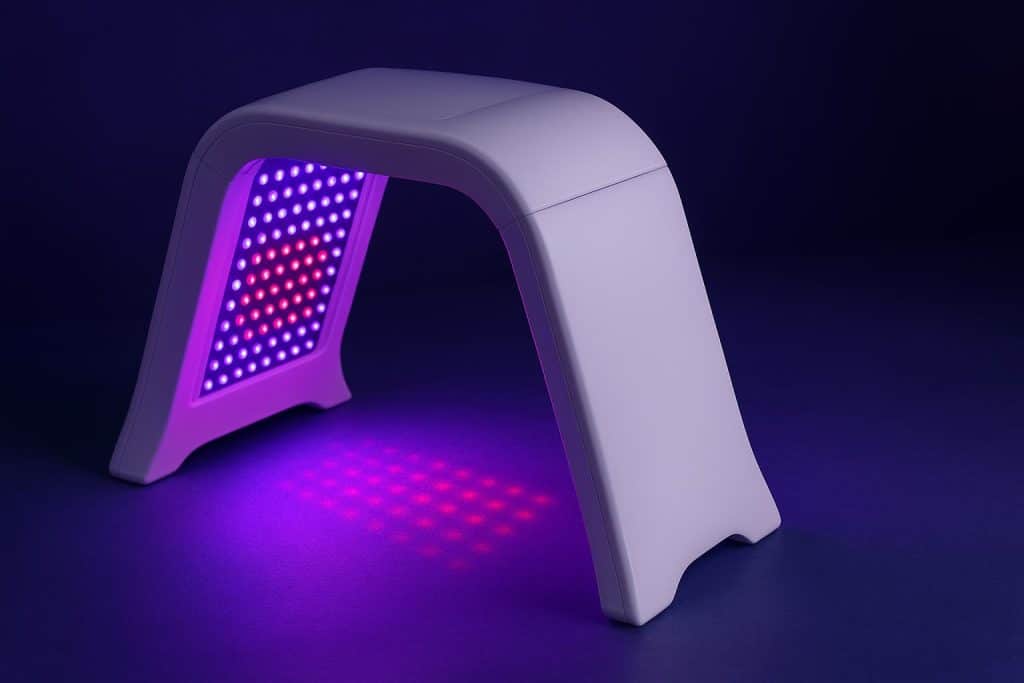
Dermalux Tri-Wave MD is an example of a professional LED phototherapy device that uses blue, red and near-infrared wavelengths. In a clinic setting, the practitioner can select the appropriate protocol and build a course around the client’s skin, rather than relying on a generic setting.
Who may benefit from LED for acne?
LED therapy may be suitable for people with mild to moderate acne, recurring breakouts, inflamed blemishes or skin that becomes easily irritated by strong topical treatments. It may also be useful for adults who want a non-invasive support treatment alongside a skincare routine.
It is not suitable as the only solution for every case. Severe, cystic or painful acne should be assessed by a GP, dermatologist or qualified medical professional. Acne that appears suddenly, worsens rapidly or is linked to medication or hormonal symptoms should also be reviewed properly.
How many sessions are needed?
Consistency is essential. Acne is a recurring process, so one LED session is unlikely to produce a lasting result. Many clinics recommend a course of treatments, often weekly at first. The exact number depends on the skin, the severity of breakouts and the device used.
Some people notice calmer skin within a few sessions, while others need several weeks before changes become obvious. The best results usually come when LED therapy is combined with a simple, non-irritating skincare routine and realistic lifestyle support.
What to avoid while having LED for acne
Clients should avoid overloading the skin with too many active ingredients at once. Strong exfoliating acids, retinoids, benzoyl peroxide and drying cleansers may all have a place in acne care, but using everything together can irritate the skin. A practitioner may recommend simplifying the routine during a course of LED therapy.
Sun protection also matters. Acne-prone skin can develop post-inflammatory marks, and UV exposure can make uneven tone more visible. LED therapy supports the skin, but good daily habits are still important.
How a clinic mention can remain natural
A subtle local reference is enough. For example, 3D Lipo London offers non-invasive LED light therapy in the Marylebone and Baker Street area using professional equipment. That type of mention works because it gives readers a practical example without turning the article into a sales page. The treatment itself should remain the focus.
Why gentle does not mean weak
People sometimes assume that because LED therapy is comfortable, it must be doing very little. That is not the right way to judge it. Many effective skin treatments work by influencing biological processes rather than creating obvious trauma. LED therapy is gentle on the surface, but selected wavelengths can still interact with targets in the skin.
For acne-prone clients, that gentleness is a major advantage. Skin that is already inflamed can react badly to overly aggressive routines. A treatment that supports clarity while respecting the barrier can be easier to maintain over time.
Combining LED with acne skincare
LED therapy often works best when combined with a simple acne skincare plan. This might include a gentle cleanser, non-comedogenic moisturiser, sunscreen and carefully chosen actives. The exact products depend on the skin, but the principle is the same: reduce triggers, support the barrier and avoid unnecessary irritation.
Some clients may use prescription treatments alongside LED, but this should be discussed with a qualified professional because certain medications or topical products may affect sensitivity. The clinic should always ask about medication and current skincare before treatment.
Managing expectations around acne marks
Many people seek acne treatment not only for active spots but also for the marks left behind. LED can help support calmer, healthier-looking skin, but post-inflammatory pigmentation and true scarring may need additional treatments. This distinction matters. A red mark, a brown mark and a pitted scar are different concerns and may require different strategies.
A responsible acne article should explain this clearly. LED therapy can be part of the plan, especially for inflammation and recovery, but it should not be described as a standalone cure for every type of acne mark. That honesty makes the recommendation more credible.
Adult acne and confidence
Adult acne can be particularly upsetting because many people expect to have outgrown breakouts. It can affect confidence at work, in social settings and in photographs. The frustration often leads people to over-treat the skin, trying stronger and stronger products in the hope of forcing a quick result.
LED therapy offers a different approach. It is calm, structured and non-invasive. For some clients, the benefit is not only fewer breakouts but also feeling that they have a treatment plan that does not punish their skin. This is why LED has become popular among adults who want clarity without constant irritation.
Teen acne and safe expectations
Teenagers may also benefit from LED therapy, but expectations and consent should be handled carefully. Parents and young clients should understand that acne is common, that results take time and that professional medical advice may be needed for severe or painful acne. LED can be supportive, but it should not be sold as a guaranteed cure.
For younger clients, the gentleness of LED can be appealing because it avoids aggressive peels or harsh routines. The most important point is consistency and a simple home routine that the client can actually follow.
For SEO, acne-focused LED content should answer practical questions: what blue light does, why red light is added, how many sessions may be needed, who is suitable and when medical advice is better. Covering those questions makes the article useful to readers and more relevant to search engines.
The final takeaway
LED light therapy is a useful option for acne-prone skin because it targets two important parts of the breakout cycle: bacteria and inflammation. Blue light helps address acne-related bacteria, while red light supports calming and recovery. Near-infrared light may add deeper repair support in professional protocols.
The best results come from consistency, suitable equipment and a treatment plan that respects the skin barrier. For people who want a gentle, non-invasive way to support clearer skin, LED therapy is worth considering as part of a wider acne strategy.