

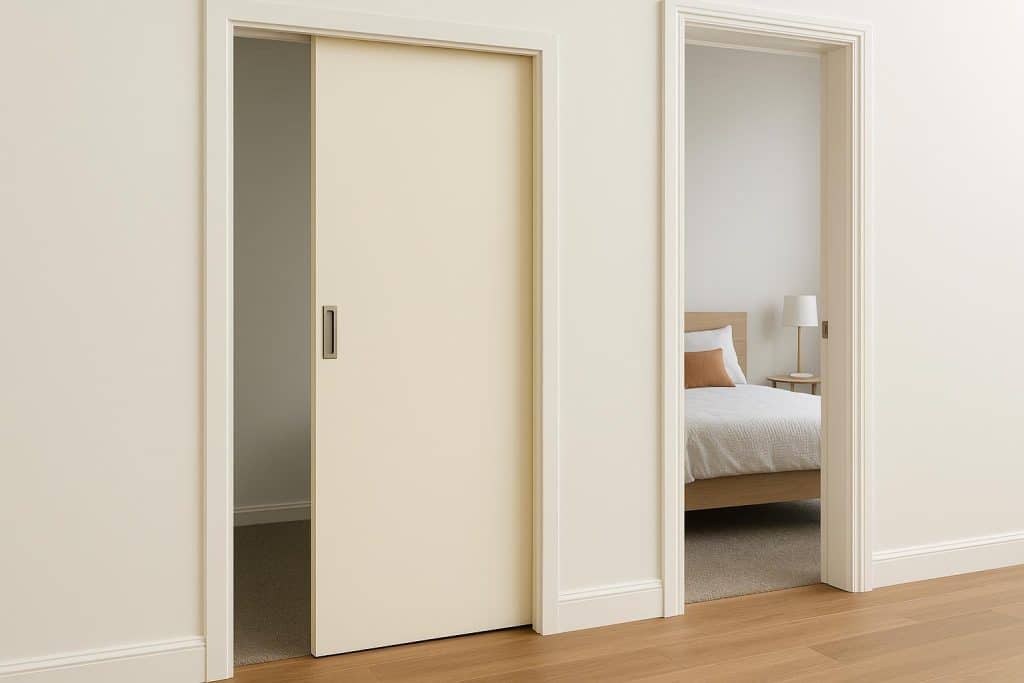
Renovation choices often come down to comfort, safety, and usable space. A door may seem minor, yet its swing can affect how people move, carry laundry, support a child, or assist someone with limited mobility. Pocket-style sliders shift the panel into a wall cavity, which changes floor clearance and room function. This breakdown weighs practical gains, privacy limits, installation needs, and long-term value with a measured, home-focused lens.
The Space Case
A hinged door needs an open floor area for its arc, which can interfere with basins, shelves, mobility aids, or narrow circulation paths. In compact rooms, cavity slider doors can free that zone for safer movement, better storage, or easier transfers. The saved area may look small on plans, yet daily use often proves its value.
Best Rooms
The strongest fit is usually a small, high-use area. En-suites, laundries, wardrobes, pantries, and studies often benefit because every clear section of floor has a purpose. A sliding panel can also separate an open living zone when rest, work, or noise control matters. In generous rooms, the gain may be less obvious unless furniture placement already feels restricted.
Privacy And Sound
Pocket sliders do not usually close with the same compression as a well-fitted hinged door. Small gaps can allow sound, light, steam, or odour to pass. That detail matters in toilets, bedrooms, consulting rooms, and media spaces. Quality seals, brushes, and accurate alignment can reduce leakage, but expectations should stay realistic. For strong acoustic control, a solid hinged option may perform better.
Cost Factors
Cost depends on wall preparation, hardware grade, panel weight, finish, and labour time. New construction is simpler because framing can be set before plasterboard, services, and trim are installed. Retrofit work often costs more, particularly where pipes, wiring, or structural studs sit in the planned pocket. A sound budget should include plaster repair, painting, handles, and finishing details.
Installation Matters
A pocket system is only as good as the wall that holds it. The cavity must be straight, plumb, and free from hidden obstructions. Even slight misalignment can cause rubbing, scraping, rattling, or uneven rolling under daily use. Strong tracks and balanced rollers reduce strain on the panel. Skilled installation is especially important in older homes with settled framing.
Maintenance Reality
Sliding hardware is practical, but it is not maintenance-free. Dust, lint, pet hair, and grit can collect along the track and affect movement. Rollers may loosen after years of repeated opening, particularly on heavier panels. Serviceable trims and removable stops make future repairs far less intrusive. A light cleaning routine helps protect quiet motion and reduces avoidable wear.
Safety And Access
Door swing can create hazards in tight rooms, especially where a person needs support, balance, or carrying space. Pocket sliders may improve access for walkers, prams, laundry baskets, and carers assisting movement. Soft-close fittings help reduce slamming and finger injuries. Handles should allow a firm grip without awkward twisting. Bathroom locks with emergency release features add another layer of practical safety.
Style Options
A pocket slider can make a room feel calmer because the panel disappears when open. That visual effect works well in small homes, minimalist interiors, and busy family areas. Material choice still matters. Painted timber, frosted glass, veneer, and solid-core panels each change light, privacy, and durability. Matching trims, jambs, and handles with nearby joinery gives the installation a more settled finish.
Possible Drawbacks
The trade-offs deserve careful attention. Wall pockets restrict where switches, towel rails, pipes, shelves, and artwork can be placed. Repair access may be harder than with exposed hinges. Sound control is often weaker, and retrofit labour can be disruptive. Heavy panels need stronger gear, which raises costs. Some households also prefer the positive latch and familiar feel of a hinged door.
Value Verdict
Pocket sliders are usually worth considering where floor clearance is limited, circulation feels tight, or accessibility needs may change over time. Their value is lower where acoustic privacy, low upfront cost, or simple repair access ranks higher. The best approach is selective placement. Use them where they solve a defined problem, then specify durable hardware and careful framing from the start.
Conclusion
Cavity-style sliders can be a sensible improvement, provided the decision is based on function rather than fashion. Their main benefit is recovered floor area, followed by easier movement through compact or busy rooms. Their limits include sound leakage, service access, and higher retrofit effort. Homes get the best results when the room purpose, wall structure, hardware quality, and future access needs are assessed early. With that planning, the upgrade can feel genuinely worthwhile.