

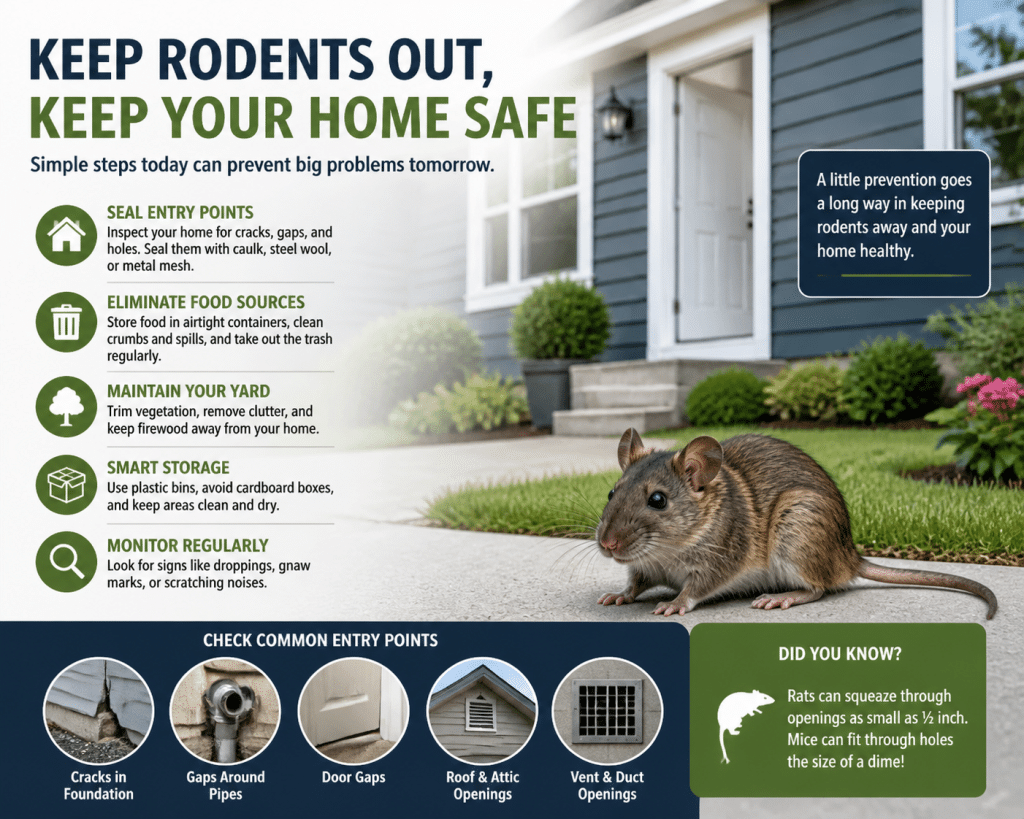
Rodents are more than just an inconvenience. They damage property, contaminate food, and spread harmful diseases. Once they enter your home, they multiply quickly, making control much harder. That is why rodent prevention is not just a seasonal task but a year-round responsibility.
Whether you are preparing for colder months or dealing with an active issue, understanding how rodents behave and what attracts them is the first step. This guide breaks down simple, practical strategies to help you protect your home effectively.
Why Rodents Enter Homes
Rodents such as mice and rats are always searching for three basic needs: food, shelter, and warmth.
What are the different types of rodents that enter the house?
Common types of rodents that often invade homes include:
- Rats: Known for their ability to squeeze through small gaps and for causing significant damage.
- Mice: Smaller than rats, they are equally skilled at finding entry points and can reproduce rapidly.
- Squirrels: Often entering through attics, they are less common but still pose a problem in certain areas.
- Chipmunks: Although not as frequently encountered indoors, they can still find their way into your home in search of food.
During colder months, they are more likely to invade homes, making bold winter pest control a crucial part of prevention. Even a small opening or a crumb left behind can invite them in.
Signs You May Have a Rodent Problem
Before focusing on mouse infestation prevention, it is important to identify early warning signs.
Common Indicators
- Droppings near food storage or cabinets
- Gnaw marks on wires, furniture, or walls
- Scratching noises inside walls or ceilings
- Unpleasant, musty odors
Quick Fact: According to the CDC, rodents can spread more than 35 diseases worldwide.
Effective Rodent Prevention Methods
To effectively protect your home from rodents, it’s essential to implement a combination of preventive measures that target entry points, food sources, and living conditions.
Seal Entry Points to Keep Rodents Out
One of the most effective ways to keep rats out of the home is by blocking their entry.
Areas to Inspect
- Gaps around doors and windows
- Cracks in the foundation
- Openings around pipes and vents
- Roofline and attic spaces
Best Materials for Sealing
| Area | Recommended Material |
|---|---|
| Small holes | Steel wool + caulk |
| Larger gaps | Wire mesh or metal flashing |
| Door gaps | Weather stripping |
Pro Tip: Always check utility lines entering your home. These are common but often ignored entry points.
Eliminate Food Sources
Rodents stay where food is easy to find. Reducing access is a core part of rodent prevention. By eliminating food sources, you remove one of the main reasons rodents will enter your home in the first place.
Simple Steps
- Store food in airtight containers
- Clean kitchen surfaces daily
- Avoid leaving pet food overnight
- Dispose of garbage regularly
Do You Know?
Rats can survive without water longer than camels if the food contains moisture.
Maintain a Clean Outdoor Environment
Your yard plays a major role in winter pest control.
Outdoor Prevention Checklist
- Trim bushes and tree branches near your home
- Keep firewood at least 20 feet away
- Clean up fallen fruits and debris
- Maintain proper drainage to avoid water buildup
A clean yard reduces hiding spots and nesting areas for rodents.
Use Smart Storage and Organization
Clutter provides perfect nesting areas. This is where bold mice infestation prevention becomes practical.
Indoor Tips
- Declutter storage areas like basements and attics
- Use plastic bins instead of cardboard boxes
- Keep storage areas dry and well-ventilated
Note: Cardboard is easy for rodents to chew and use for nesting.
Seasonal Rodent Prevention Strategy
Rodent activity changes with seasons. Planning strengthens rodent prevention efforts. By understanding how rodents behave during different seasons, you can proactively address their needs before they enter your home.
| Season | Focus Area |
|---|---|
| Winter | Seal entry points, indoor monitoring |
| Spring | Clean outdoor areas, remove nests |
| Summer | Manage food sources, inspect for damage |
| Fall | Prepare for cold-weather invasion |
When to Consider Professional Help
Sometimes prevention is not enough, especially in severe infestations. In such cases, expert support like Terminix pest control may be required to manage the situation effectively.
For homeowners in specific regions, consulting local specialists, such as pest control in Norfolk, VA, can help address location-based rodent issues more efficiently.
Quick Facts About Rodents
- Mice can reproduce every 21 days
- Rats can chew through wood, plastic, and even soft metals
- A single pair of mice can produce up to 200 offspring in a year
How to Use Traps and Baits Effectively?
While prevention is the first step, traps and baits are essential for active control.
Setting up traps or using baits can be an immediate solution for a small rodent problem. However, it’s important to use them correctly to ensure they are effective.
Types of Traps
- Snap traps: A quick and humane way to kill rodents
- Glue boards: Sticky traps that hold rodents in place
- Live traps: For catch-and-release options
Where to Place Traps
- Near walls or pathways, rodents commonly use
- Close to food sources but not in high-traffic areas
- In attics, basements, and other hidden areas
Key Takeaways
- Rodent prevention starts with sealing entry points and removing food sources
- Winter pest control is critical as rodents seek warmth indoors
- Consistent cleaning and decluttering support mice infestation prevention
- Outdoor maintenance plays a key role in long-term protection
- Early detection helps you keep rats out of your home before infestation spreads
Wrapping Up
Rodent prevention is not about reacting to a problem but staying ahead of it. Small, consistent actions can make a big difference. From sealing gaps to maintaining cleanliness, every step reduces the chances of an infestation.
When you combine awareness with proactive measures, your home becomes far less attractive to rodents. Stay vigilant, act early, and maintain these habits year-round to ensure a safer, healthier living space.
FAQs
1. What is the best way to start rodent prevention at home
Start by sealing all entry points and removing food sources. These are the two most effective steps.
2. Why is winter pest control important for rodents
Rodents look for warmth during cold months, making homes a prime target.
3. Can rodents survive in sealed homes without access to food?
While rodents need food to survive, they can live for a time without it, relying on stored food sources or chewing through materials for sustenance.