

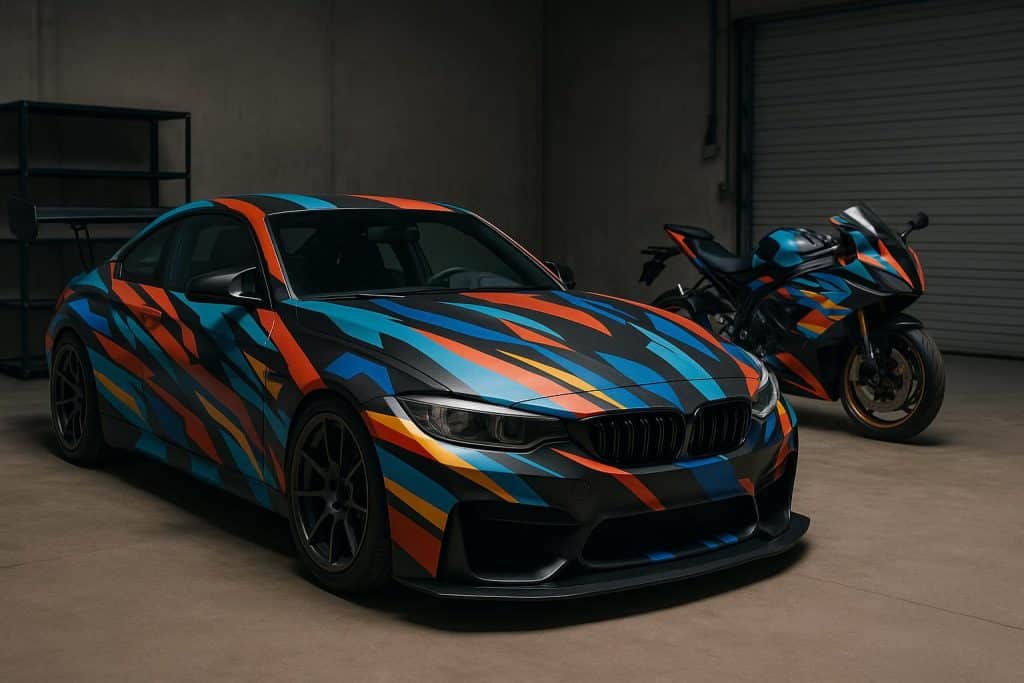
A quick look at local and international motorsports racetracks reveals a simple truth – factory specifications are no longer the norm. In any dirt bike setting, whether it be under the gleaming city lights or a suburban hangout spot, you’ll find vehicles that are different from one another, design and parts-wise.
And why not? There’s spare parts and infinite variety everywhere. Our mobile phones are extensions and expressions of ourselves. Gaming setups can be bedecked with RGB light strips, and let’s not even get started with cars. It makes total sense that the same would eventually arrive in the motorsports scene. In the last 20 years, the niche has exploded into a billion-dollar trend. Where before customization was an afterthought, it’s now a part of a massive economic and cultural force that propels the industry forward.
Why Riders Customize: The Psychology of the Machine
People bring a certain level of attachment to everything they own, and this includes their interests and hobbies. For a karting, ATV, or motorcycle enthusiast, customization is not only allowed; it’s celebrated and considered an extension of their brand or persona.
Identity
Who am I? What do I like? How do I want to be seen? These are all questions tied to human identity. Buying a mass-produced vehicle instantly connects you to thousands of other people. The question is, how do you differentiate or separate yourself from the pack? Customizing is one way to break out of the mold, whether it’s bespoke parts, unique colorways, or a specialized seat cover. Without saying anything, people get a feel for who the rider is even before they race.
Performance Perception
‘When you look good, you feel good’ is an age-old adage that also applies to racing. In psychology, customizing is linked to confidence and then to performance. Performance perception goes two ways- a racer can finetune his or her machine to fit their weight and riding style, and that same person can add aesthetic upgrades, and somehow it will look and feel faster.
Pride of Ownership
Spend enough time on a sport or hobby, and you’ll feel a sense of ownership and pride. Customizing takes it a step further, as you’ll soon delve deep into design, discovering and selecting its parts, and tinkering with your machine. This transforms people from casuals to dedicated consumers and brand advocates.
From Factory Bikes to Personal Machines
Evolution Over the Last 15 Years
In the 2000s, motorsport customization meant that you had access to industrial catalogs, had lots of time and patience, and were a mechanic. Those who wanted to be different (get a custom paint, for instance) would have to leave their precious vehicles at a shop, which would take weeks or even months. Moreover, switching to performance parts equals modifying your factory components.
Rise of Custom Graphics
The 2010 era was when things got interesting. Suddenly, custom graphic kits became readily available within the motocross and off-road sectors. Dirt bikes became the perfect canvas for full-coverage dirt bike graphics. It’s now easy to completely change a machine’s appearance, usually within an hour and in your own garage.
The off-road community immediately took to custom graphics kits. Heavy-duty vinyl templates started to become more and more popular. Top brands like OMX Graphics took it to the next level and began offering dirt bike graphics that are not only good to look at, but also added a layer of protection against scuffs and damage. Full customization meant local riders have unhindered access to the aesthetic they want at the same level as their racing idols.
The Social Media Effect: The Ultimate Digital Showroom
If tech advancements lit the spark of the commercialization boom, then social media is the rocket fuel that propelled it to the stratosphere. Popular platforms such as TikTok, YouTube, and Instagram play a huge role in spreading motorsports culture globally.
Riders can post their custom-made bikes on social media and get rewarded with massive exposure. The audience then admires the work and gets the idea to individualize and build their own brand and culture, which gives rise to demand for custom and aftermarket parts.
The Business Behind Customization
Today, the aftermarket industry is valued in tens of billions of dollars, and the need for consumers to get their own personalized products.
Big brands have started getting in on the action, too. Traditionally, dealerships stuck to stock parts and components, but quickly shifted and now feature PG&A (parts, garments, and accessories) catalogs prominently in their shops. Moreover, manufacturers have quietly moved away from stock and now offer modular parts that can be swapped with aftermarkets, such as anodized hardware, slip-on exhaust, or a carbon fiber fairing.
DTC, or direct-to-consumer marketing, elevated it further to the point that riders could have free access to boutique shops on a global scale.
Future Trends: What’s Next for Customization?
AI-Assisted Design
Like everything else, AI is becoming integrated into the design pipeline. Riders will soon be able to put in their own prompts, including themes, colors, and sponsor preferences, in a capable engine. The software takes all the commands in and generates a scaled and photorealistic concept and renders within a 3D topology of their vehicle.
Online Customization Tools
Interactive and 3D configured software is built into websites with no downloads necessary. Choose the vehicle model, and it will come up on-screen, ready to be customized in a virtual world. All the planning takes place digitally, with the user able to swap out parts such as wheels, exhaust, and graphics kits to their chosen ones.
Faster Production
To catch up with demand, faster production will be required. 3D printing and automated precision cutting are the keys to on-demand production as it scales to a global market. Custom-designed parts will be ready for shipping in 24-48 hours after being placed online.
Conclusion
Customization is no longer a niche but a standard in the community and racing industries. It’s within reach of those who yearn to be different and those who want an enhanced experience within their respective sport and hobby.