

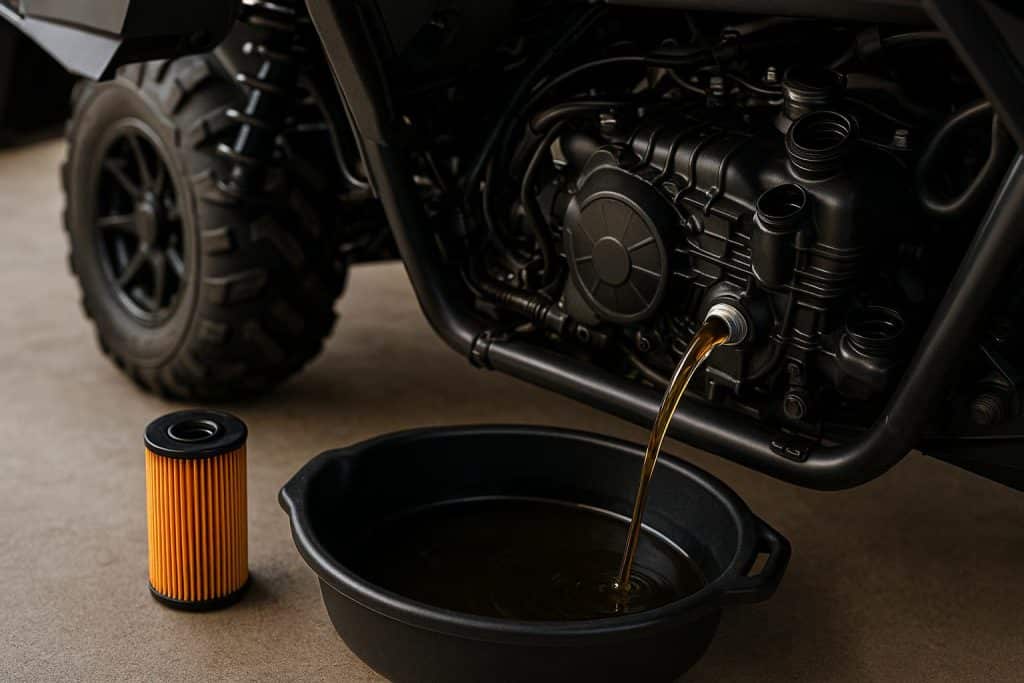
A UTV engine takes a beating. Hauling loads, climbing grades, and pushing through rough terrain puts consistent stress on every moving part inside that engine. Oil is what keeps that stress from becoming permanent damage.
Still, plenty of riders treat oil changes as optional upkeep rather than a maintenance priority. Knowing what a regular change schedule actually does, at a mechanical level, tends to shift that perspective quickly.
How Engine Oil Degrades Over Time
New oil handles multiple jobs. It lubricates metal surfaces, transfers heat away from critical components, and holds contaminants in suspension so they cannot grind against precision-machined parts.
The problem is that oil does not stay effective indefinitely. Heat cycling, operating pressure, and combustion byproducts all break the fluid down gradually. As viscosity falls, the protective film separating metal surfaces gets dangerously thin.
What Degraded Oil Leaves Behind
Worn oil carries particles, soot, and moisture. None of that clears out on its own. It circulates through the engine continuously, slowly eroding bearings, cylinder walls, and piston rings with every ride.
Why the Interval Matters
Following the manufacturer’s recommended service interval is not a suggestion to consider casually. It reflects how quickly oil loses its protective properties under real operating conditions.
For machines that see hard use, that interval can be shorter than most riders assume. Dusty trails, heavy towing, and repeated short trips all accelerate the breakdown process.
Riders who use purpose-built service packages tend to stay on schedule more reliably. Quality Polaris oil change kits include the correct filter, the right fluid volume, and drain hardware sized to the machine, removing guesswork and eliminating the risk of incompatible parts. Keeping a kit on hand also means the service actually happens on time, rather than getting delayed while sourcing supplies.
What Consistent Changes Actually Protect
Bearings and Clearances
Engine bearings rely on a pressurized oil film to prevent direct metal contact. When oil loses viscosity, that film thins. Bearing wear accelerates gradually and quietly, often producing no noticeable symptoms until serious damage has already occurred.
The Cooling Function
Oil absorbs a significant share of the heat that the cooling system alone cannot handle. In many small-displacement engines, that figure approaches 40 percent. Degraded oil transfers heat less efficiently, contributing to elevated operating temperatures and added strain on surrounding components.
Sludge Prevention
As oil oxidizes, it forms sludge. This residue coats oil passages and restricts flow to areas that depend on consistent lubrication. Routine changes remove contaminated fluid before oxidation has a chance to build up into a real problem.
Signs the Schedule Has Slipped
Dark, gritty oil on the dipstick is the clearest indicator. A faint metallic smell after a ride can suggest lubrication quality has dropped below acceptable levels. Some riders notice a rougher idle or a slight reduction in throttle response as internal friction climbs.
None of these symptoms are immediately catastrophic, but each one points to wear that accumulates and compounds over time.
How Proper Maintenance Extends Engine Life
Engines serviced on a consistent schedule reliably outlast those that are not. The reason is not complicated. Clean oil reduces friction, stabilizes operating temperature, and flushes suspended contaminants before they settle into critical clearances.
For a machine used regularly across varied terrain, that difference can represent years of added service life and fewer expensive repairs.
Matching the Oil to the Conditions
Riding conditions vary significantly, and the baseline service recommendation does not always account for extremes. High-altitude operation, sustained heat, or regular towing may warrant a heavier viscosity grade or a shorter change interval. The owner’s manual typically includes condition-based guidance worth reviewing before the next service.
Conclusion
A consistent oil change schedule is not routine maintenance in the dismissive sense of that phrase. It is the most direct form of engine protection available to any rider. Clean oil keeps friction manageable, temperatures stable, and internal passages clear of buildup. Riders who stay current with their service intervals consistently spend less on repairs and get more reliable performance across more seasons.