

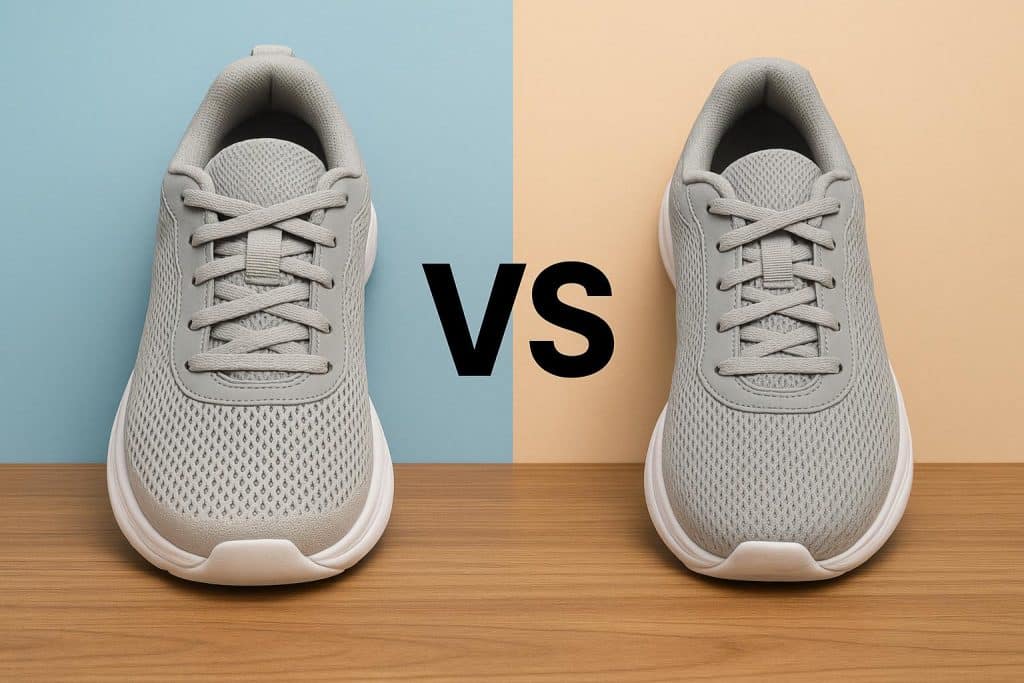
Most people do not think much about the front of their shoes until their toes start complaining.
At first, it is easy to ignore. A little pressure near the big toe. A bit of rubbing around the little toe. A tight feeling across the forefoot after walking for a while. Nothing dramatic. Just one of those small daily discomforts people accept because shoes are supposed to feel like that, apparently.
Except they are not.
Walking shoes should not squeeze your feet into submission. They should support the way your feet actually move. That is where the debate between wide toe box shoes and regular-fit walking shoes becomes more important than it sounds.
This is not just a question of comfort. The shape of the toe area can affect pressure, balance, foot fatigue, walking mechanics and how your feet feel after long use. For commuters, hikers, dog walkers, travellers, retail workers, weekend ramblers and anyone who spends serious time on foot, the wrong fit can turn a normal day into a slow argument with your shoes.
So which is better for foot health: a wide toe box or a regular fit?
The honest answer is that it depends on your feet. But for many people, especially those who walk long distances or struggle with toe pressure, the wide toe box has a strong case.
What Is a Regular-Fit Walking Shoe?
A regular-fit walking shoe is usually designed for an average foot shape. It should offer enough length, a secure heel and a standard amount of room through the forefoot.
For some people, that works perfectly well.
If your feet are average width, your toes sit comfortably, and you can walk for hours without pressure or rubbing, a regular-fit shoe may be all you need. There is no rule that says everyone must wear wider shoes. A shoe should match the foot, not follow a trend.
The problem is that many regular-fit shoes narrow too much at the front. They may look sleek, but the toe box can squeeze the toes together. This is especially noticeable during longer walks, warm weather, downhill sections or days when the feet swell slightly.
A regular fit can be fine when it is genuinely shaped well. It becomes a problem when it forces the foot into a narrow outline that does not match the person wearing it.
Feet are not all the same. Shoes should stop pretending they are.
What Is a Wide Toe Box Walking Shoe?
A wide toe box walking shoe gives more space at the front of the shoe, where the toes and forefoot sit.
This does not always mean the entire shoe is wide. That is an important difference. A good wide toe box shoe can still hold the heel and midfoot securely while allowing the toes to spread more naturally.
The aim is not to make the shoe loose. It is to stop the front of the foot from being squeezed.
When you stand, your foot spreads slightly under body weight. When you walk, your toes help with balance and push-off. When you go downhill, the foot may move forward a little. When you walk for a long time, your feet may swell. A narrow toe box often gives no room for any of this.
A wide toe box makes space for real foot behaviour.
That is why many walkers find it more comfortable, especially if they have wide feet, bunions, hammertoes, swelling, thick socks, sensitive toes or general forefoot pressure.
The Foot Health Problem With Narrow Toe Boxes
A narrow toe box can cause several issues.
It can press the toes together. It can rub the little toe. It can put pressure on the big toe joint. It can make bunions feel worse. It can create hot spots and blisters. It can leave red marks across the forefoot. It can also make the foot feel tired because the toes cannot spread and stabilise naturally.
Sometimes the discomfort does not appear immediately. A shoe may feel acceptable for a quick walk around the house. Then, after several miles or a full workday, the front of the foot starts to feel trapped.
That is because walking discomfort is often cumulative. A small pressure point repeated thousands of times becomes a bigger problem.
For people who walk often, a cramped toe box is not a minor detail. It can change how the foot lands, how the toes push off and how the body compensates.
The shoe may be fashionable. The foot does not care. It wants space.
Why Toe Spread Matters When Walking
Toes are not decorative extras.
They help with balance, grip, stability and forward movement. When you walk, the toes spread slightly and help push the body forward. If the shoe prevents that, the foot may not move as freely as it should.
A wide toe box allows the toes to sit in a more natural position. This can make the foot feel more stable, especially on uneven ground. Hikers may notice this on trails, slopes, gravel, grass or rocky paths. Commuters may notice it on stairs, pavements, station platforms and long urban routes.
This does not mean your toes need an enormous amount of empty space. Too much room can cause sliding. But they should not be crushed together.
A good test is simple. Can your toes relax? Can they spread slightly? Does the shoe feel comfortable across the ball of the foot after walking, not just standing?
If the answer is no, the toe box may be too narrow.
Regular Fit Can Still Be Right for Some People
Wide toe box shoes are useful, but they are not automatically perfect for everyone.
Some people have narrow feet. A wide toe box may feel too roomy for them, especially if the shoe does not hold the foot securely elsewhere. Too much movement inside the shoe can create rubbing, instability and blisters.
A regular-fit walking shoe can be a good choice when it gives enough toe room and supports the foot properly. The issue is not regular fit itself. The issue is poor shaping.
A well-designed regular-fit shoe should still respect the natural shape of the foot. It should not pinch, squeeze or force the toes into a pointed front.
The best shoe is not the widest shoe. It is the best-matched shoe.
That is worth remembering because footwear advice can become too simple. Wide is not always better. Narrow is not always bad. Fit is personal.
But if your regular shoes regularly hurt across the front, the toe box is worth questioning.
Hikers Often Benefit From More Toe Room
Hiking asks more from shoes than ordinary walking.
The ground changes constantly. You may step on roots, stones, mud, grass, gravel, slopes, wet paths or uneven trails. Your feet adjust with every step. On downhill sections, the toes may push forward. On long hikes, swelling can make a snug shoe feel much tighter.
This is where wide toe box designs become especially useful.
They give the forefoot more room to handle movement and expansion. They can reduce pressure on descents and help prevent that cramped, bruised feeling around the toes. They may also make thicker walking socks easier to wear.
Of course, hikers still need grip, cushioning, heel security and proper support. A wide toe box alone does not make a shoe trail-ready. But when combined with a stable sole and reliable traction, it can make walking on mixed terrain feel more comfortable.
For outdoor use, wide toe box walking shoes can offer a practical middle ground between everyday comfort and trail-friendly space.
The toe room helps. The rest of the shoe still has to do its job.
Commuters Should Care Too
Wide toe box shoes are not only for hikers.
Commuters can benefit from them as well, especially those who walk to stations, stand on platforms, climb stairs, cross busy streets or spend long days in the same shoes.
City walking can be surprisingly demanding. Pavements are hard. Train floors are not kind. Office corridors are longer than they look. Add wet weather, crowds and a rushed morning, and the feet get a full workout before lunch.
A regular-fit shoe may feel smart and tidy, but if it squeezes the front of the foot, comfort fades quickly. A wide toe box can help the shoe remain wearable through the day, especially if the feet swell after hours of movement or standing.
This is particularly useful for people who do not think of themselves as “serious walkers”. You do not need to climb a hill for your shoes to matter. A daily commute can create plenty of foot pressure on its own.
Sometimes the most brutal trail is just the walk from the office to the bus stop in bad weather.
Wide Toe Box Shoes and Common Foot Problems
People with certain foot concerns often find extra toe space helpful.
Bunions need room around the big toe joint. Hammertoes need space above and around the toes. Swelling needs flexibility. Corns and calluses can become worse when shoes rub repeatedly. Flat feet may benefit from wider support and better stability. Plantar fasciitis often needs cushioning and arch support alongside a comfortable fit.
A wide toe box does not cure these conditions. It should not be treated as a medical treatment. But it can reduce one common source of irritation: unnecessary compression.
If a shoe is constantly pressing on a sensitive area, the first sensible step is to stop wearing that shape of shoe. This sounds obvious, but many people keep trying to make narrow shoes work because they like the look, already paid for them, or assume discomfort is normal.
It is not normal for shoes to make your toes go numb.
If pain is ongoing, severe or linked to a medical condition, professional advice is important. But for everyday foot comfort, shoe shape is a good place to begin.
The Balance Between Space and Support
The main risk with any wider shoe is too much movement.
If the shoe is roomy at the front but loose everywhere else, the foot may slide. Sliding creates friction. Friction creates blisters. A shoe that is too loose can also feel unstable, especially on slopes or uneven surfaces.
That is why the best wide toe box walking shoes are not just oversized regular shoes. They are designed with a more natural forefoot shape while keeping the heel and midfoot secure.
The heel should not lift excessively. The arch should feel supported. The upper should hold the foot without squeezing it. The sole should give enough grip and structure for the intended use.
A healthy walking shoe should feel calm on the foot. Not tight. Not sloppy. Just secure, roomy and steady.
That sounds simple, but it is exactly where many shoes fail.
How to Know If You Need a Wide Toe Box
There are a few signs.
If your toes feel cramped in most regular shoes, you may need more toe room. If you often get pressure on the little toe, red marks across the forefoot or rubbing near the big toe joint, the toe box may be too narrow. If you size up for comfort but then deal with heel slipping, width may be the real issue.
Pay attention to how your shoes feel at the end of the day, not just when you first put them on. Feet often swell slightly with walking and standing. A shoe that only works for the first hour may not be the right shoe.
Also look at the shape of your foot compared with the shape of the shoe. If your forefoot is wider than the shoe’s outline, the shoe is asking your foot to become someone else’s foot.
That rarely ends well.
How to Choose Between Wide Toe Box and Regular Fit
Start with your foot shape.
If your foot is narrow or average and regular shoes feel comfortable across the front, a regular fit may be fine. Focus on cushioning, arch support, grip and heel stability.
If your foot feels squeezed in standard shoes, try a wide toe box. Do not jump straight to a much longer size. Look for more room across the forefoot while keeping the rest of the shoe secure.
Think about your main activity too. For pavement walking, you may prioritise cushioning and breathability. For hiking or mixed terrain, grip and stability become more important. For long days on your feet, support and toe room matter together.
Try shoes with the socks you actually wear. Walking socks can change the fit. Test them later in the day if your feet tend to swell. Walk around properly before deciding.
Do not trust a shoe that only feels good while sitting down. Sitting down is not a walking test.
Are Wide Toe Box Shoes Always Healthier?
They are often healthier for people whose feet need the space. But the healthiest shoe is the one that fits correctly and supports the activity.
A wide toe box can reduce toe compression and support more natural movement. That is a major benefit. But if the shoe lacks arch support, has poor cushioning, slips at the heel or has weak grip, it may still cause problems.
Regular-fit shoes can also be healthy if they fit well and do not squeeze the toes. The problem is that many standard walking shoes are not generous enough in the forefoot.
So the better question is not “wide toe box or regular fit?” The better question is “which shoe lets my foot move naturally while still giving me support?”
For many walkers, that answer will be a wide toe box. For some, it will be a well-shaped regular fit.
The foot gets the final vote.
Style Should Not Override Foot Shape
People often choose walking shoes based on looks. That is understandable. Nobody wants shoes they hate wearing.
But style should not win against fit.
A narrow shoe may look sleek, but if it causes pressure and discomfort, it is not serving you well. A slightly roomier toe box may feel unfamiliar at first, especially if you are used to narrow footwear. But once the toes have space, many people find it hard to go back.
Modern wide toe box shoes also look much better than they used to. They do not have to appear bulky or medical. Many designs look like normal walking shoes, outdoor trainers or casual hiking shoes.
The goal is not to make feet look smaller. The goal is to make walking feel better.
And honestly, comfortable walking has its own style. It usually looks like not limping.
Final Verdict
So, which walking shoe is better for foot health: wide toe box or regular fit?
If regular shoes fit you comfortably, give your toes enough room and support your walking routine, they may be perfectly fine.
But if you often deal with cramped toes, forefoot pressure, rubbing, bunions, swelling, numbness, downhill discomfort or foot fatigue during longer walks, a wide toe box is likely the better choice.
A wide toe box allows the toes to spread more naturally, reduces unnecessary compression and gives the forefoot room to work. For hikers, commuters and long-distance walkers, that extra space can make a noticeable difference.
Still, toe room is only one part of the shoe. The best walking shoe should also provide cushioning, support, heel stability, grip and a secure overall fit.
Your feet are not asking for luxury. They are asking for enough space to do their job.
Give them that, and walking becomes less about managing discomfort and more about actually enjoying the journey.