

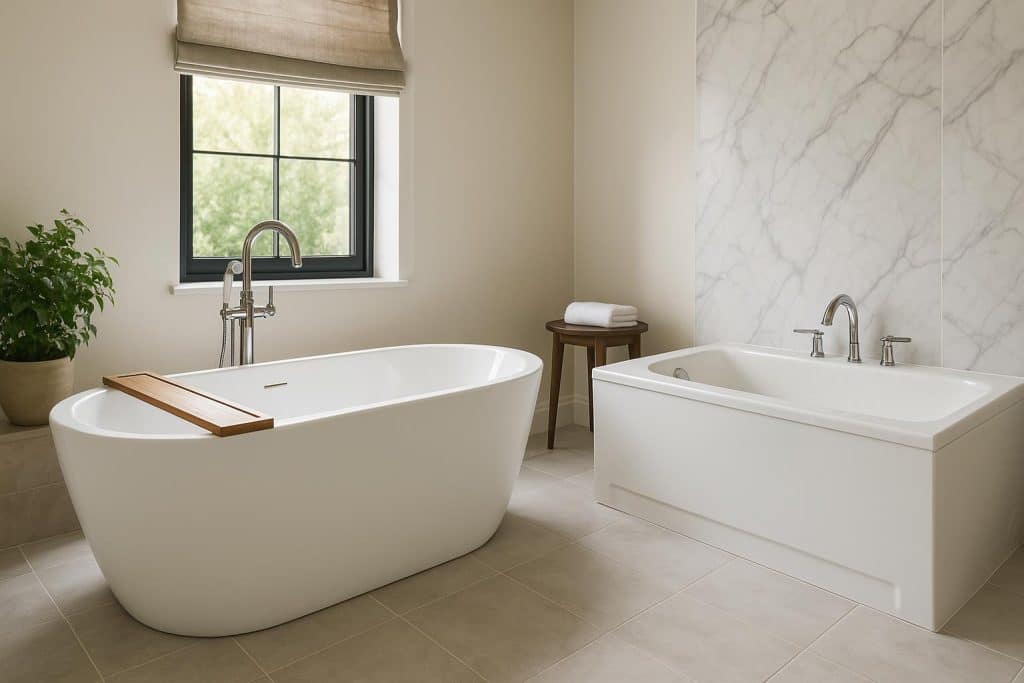
A bathtub handles a basic need, but the experience it delivers varies enormously depending on how it was built. Standard models prioritize function and affordability. Premium versions bring together better materials, thoughtful ergonomics, and refined aesthetics to make bathing feel genuinely restorative. For anyone planning a bathroom renovation or a new build, understanding these differences makes it easier to spend wisely and avoid settling for less than expected.
1. Material Quality
1.1 What Goes Into High-End Construction
Standard bathtubs are most commonly made from fiberglass or acrylic, materials chosen primarily for their low cost and ease of production. Luxury versions take a different approach entirely. Cast iron, stone resin, and solid surface composites are the materials of choice at the premium end. They retain heat far longer, hold up against daily wear, and carry a solidity that cheaper alternatives simply cannot match.
Stone resin, in particular, delivers a smooth matte finish that acrylic struggles to replicate convincingly at any price point.
1.2 Surface Finish and Durability
Premium materials also hold up better over time. Acrylic yellows and scratches with regular use. Stone resin and cast iron, maintained properly, look nearly the same after two decades as they did on installation day. That kind of longevity makes the higher upfront cost a reasonable trade-off for most buyers.
2. Ergonomic Design
Standard bathtubs follow a broad, practical template sized to fit most people adequately. Luxury versions are shaped around the human body more deliberately, with sloped backrests, wider rims for elbow support, and angled bases that reduce strain during extended soaks.
Shoppers exploring luxury bathtubs will also notice that many premium options offer significantly greater interior depth. That added depth allows for full submersion, something standard tubs rarely accommodate without triggering overflow concerns. The difference is immediately clear once a person actually settles in.
3. Freestanding Versus Built-In Configuration
Most standard bathtubs are alcove or drop-in installations, set between walls and treated as a functional fixture. Luxury versions frequently stand alone, visible from every angle and positioned as a design focal point rather than something tucked away in a corner.
Freestanding bathtubs demand more floor space, but they offer considerably more visual presence. They also open up more creative possibilities for faucet placement and drain positioning.
4. Hydrotherapy and Jet Features
4.1 Air Jets Versus Water Jets
Many premium bathtubs come with integrated jet systems built directly into the tub body. Air jets create a gentle, effervescent sensation across the skin. Water jets apply targeted pressure, which helps with muscle tension and circulation after a long day.
Standard tubs offer neither option. Adding jets after installation is technically possible but tends to be expensive and rarely delivers results as effective as a purpose-built system.
4.2 Heating Elements
Some high-end models go further with heated surfaces, either through pre-warmed panels or water recirculation systems that prevent mid-soak cooling. That cooling effect is one of the most common complaints about standard fiberglass and acrylic tubs, and premium heating features address it directly.
5. Integrated Technology
Luxury bathtubs increasingly incorporate chromotherapy lighting, digital temperature controls, and audio integration. Standard models include none of these.
Chromotherapy uses colored light to support relaxation and mood regulation. Digital temperature controls remove the guesswork from water settings. Together, these features move the bathtub from a hygiene fixture into something closer to a dedicated recovery space.
6. Dimensions and Depth
Standard bathtubs follow conventional sizing to simplify installation. Premium versions offer a wider range of formats, including elongated designs for taller users and deeper soaking configurations that prioritize full immersion over shower functionality.
Soaking tubs require more water volume, but they are built around that trade-off intentionally. The depth is the key point.
7. Aesthetic Finish Options
Standard bathtubs arrive in a narrow range of colors (usually white or off-white) with predictable, utilitarian shapes. Luxury versions offer matte, gloss, textured, and hand-applied finishes across a much broader palette. Deep charcoal, warm stone tones, and custom colors are all available.
Rim profiles, drain hardware, and foot designs in claw-foot styles all receive more deliberate attention in premium manufacturing. These details shape how well the tub integrates with the broader bathroom aesthetic.
Conclusion
The difference between a standard bathtub and a luxury one goes well beyond price. It reflects real distinctions in materials, structural engineering, physical comfort, and long-term value. Hydrotherapy systems, ergonomic shaping, high-grade construction, and refined finishing details work together to create a bathing experience that standard models cannot deliver. For anyone who places genuine value on daily comfort and bathroom quality, a premium bathtub is an investment that tends to hold up well over time.