

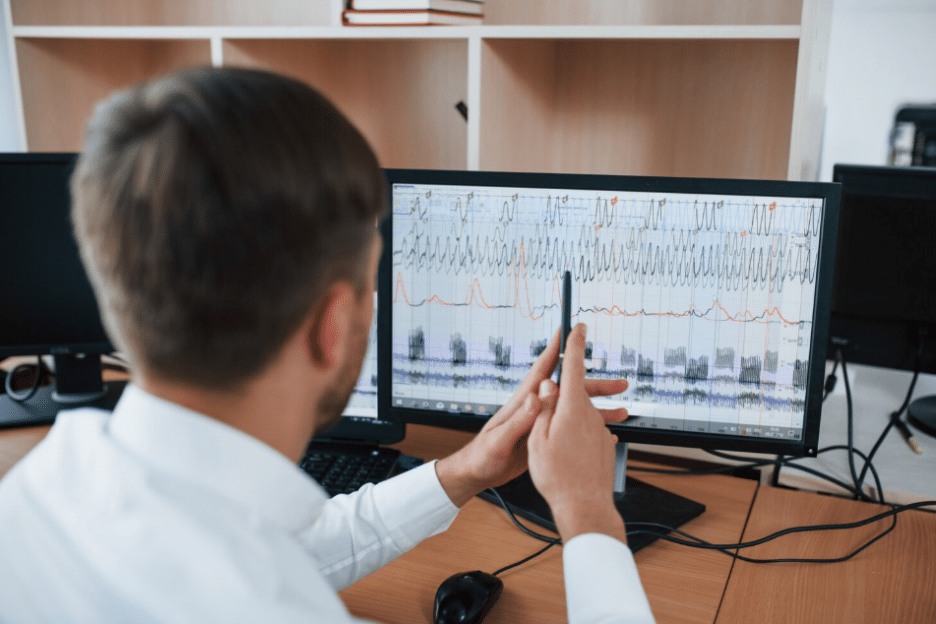
The polygraph exam can begin to impact the body before the first question has been asked.
Once you have sensors attached and the formal process begins, you may feel an increased heart rate, irregular breathing, or overall pressure.
Naturally, this leads to a simple question:
Is this anxiety, or something more meaningful?
This concern is made more evident with an understanding of how a lie detector device functions. It measures the physiological response related to the autonomic nervous system, one of the systems that is very responsive to stress and anxiety. That overlap makes people wonder whether nervousness could be mistaken for deception.
To make sense of this, it’s therefore important to understand how structured questioning and baseline measurements guide the interpretation of responses.
Can Anxiety Affect a Lie Detector Test?
Anxiety can affect the physiological data that are recorded during a polygraph exam, and it is not always a deciding factor. For cooperative and truthful persons, there is psychological pressure in the testing environment.
As a result, this pressure stimulates the autonomic nervous system (ANS), which controls the functions of the body without conscious thought, including blood pressure, pulse rate, respiration, and electro-dermal activity. Thus, measurable changes in physiology can occur prior to questioning. These changes reflect emotional arousal rather than deception.
From a physiological standpoint, this reaction is related to activation of the sympathetic nervous system, which is known as the “fight or flight” response. It produces variations in skin conductivity, cardiovascular activity, and respiratory rhythm.
Since these are the same channels monitored during a lie detector test, anxiety becomes an important factor to understand—but not a standalone indicator of deception.
Why Anxiety Naturally Occurs During Testing
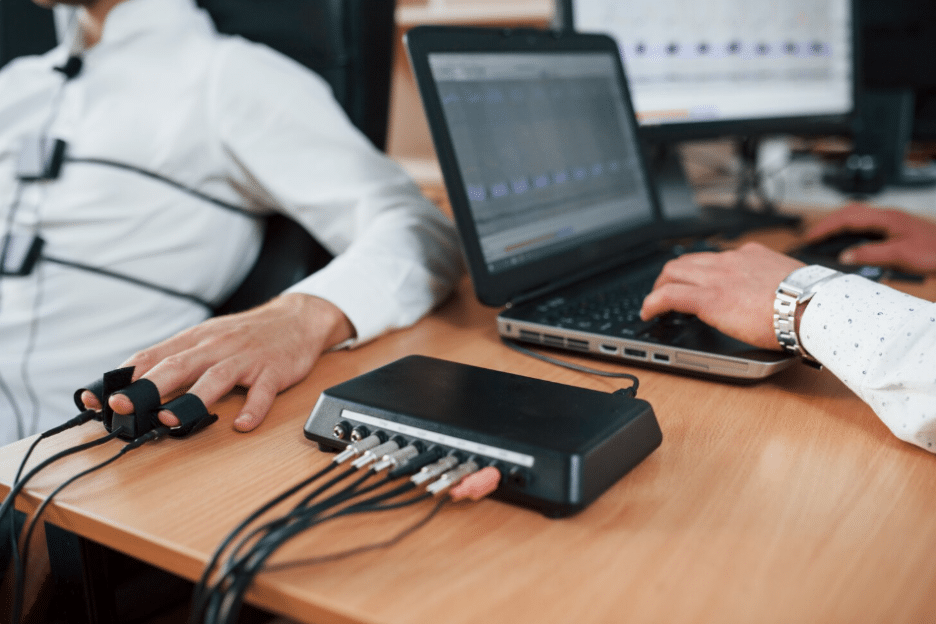
During a polygraph, it is normal and expected to experience anxiety. The formal context and protocols of questioning, as well as an understanding of the assessment, can all intensify emotional arousal.
Even before the test begins, anticipation alone can trigger physiological changes. This is because the autonomic nervous system is more responsive to perceived evaluation, judgment, and perceived threat—not just physical threat.
In this context, anxiety is not treated as an abnormal condition. Instead, it is regarded as a baseline emotional response that can happen in any formal assessment setting. A major problem for polygraphy is identifying the impact of general anxiety signs from those occurring in response to questions.
What a Polygraph Actually Measures
A polygraph does not tell whether a person is lying or telling the truth. Rather, it captures information from your body when you are trying to avoid the consequences of being caught in a lie and thinking intensely.
These typically include:
- Respiratory activity
- Cardiovascular activity (blood pressure and pulse rate)
- Electrodermal activity (skin conductivity)
- Subtle physiological movement or response changes
These signals are continuously recorded while the examinee answers structured questions. The key principle is that both anxiety and deception can produce arousal, but the instrument itself does not assign meaning to that arousal.
Rather, it serves as a measuring mechanism. Therefore, interpretation is solely dependent on methods of structured evaluation provided by trained examiners.
How Examiners Use Baselines and Comparison Techniques
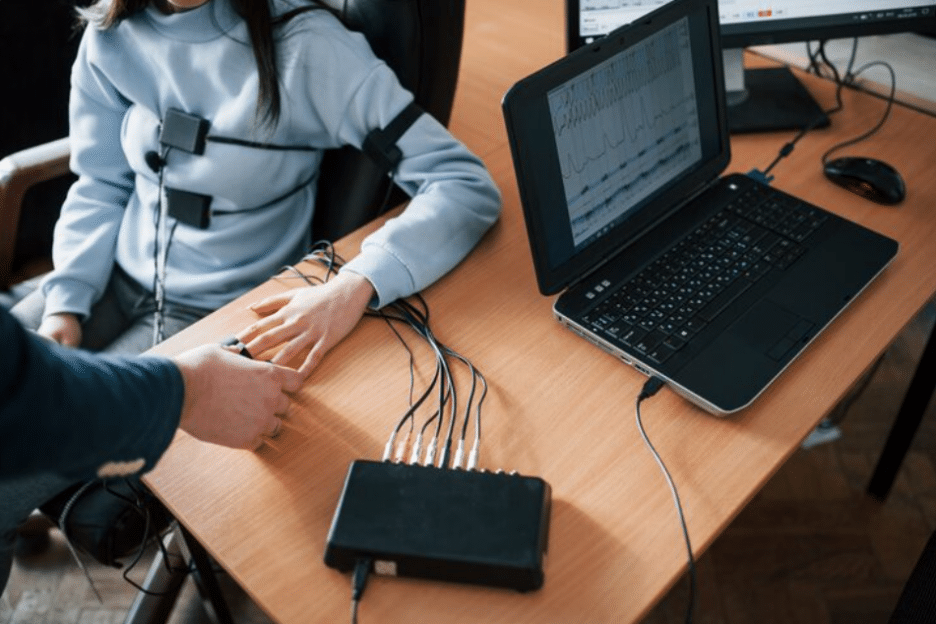
Modern polygraph analysis uses comparison rather than single physiological readings and baseline measurements.
First, examiners come up with “neutral” questions to create a physiological baseline before formal questioning. These responses help identify the individual’s natural physiological patterns under controlled conditions.
This is particularly important as individuals have different stress, attention, and anxiety reaction profiles. Therefore, the absence of a baseline would make it hard to interpret the physiological changes that occur during questioning.
After determining the baseline, the examiner then presents a series of questions to the individual, usually varying in complexity and type, such as:
- Relevant questions related to the issue under investigation
- Control questions designed to create a comparison response
- Neutral questions used for calibration
The examiner then compares the physiological response in each of these categories, not on absolute readings. Therefore, the comparative structure is an important element in the methodology of polygraph interpretation.
Why Anxiety Alone Does Not Define Results
Generalized anxiety is not an automatic ground to fail a polygraph test. Usually, the physiological activation complex associated with anxiety is more uniform throughout the examination than quick reactions to individual questions.
In contrast, polygraph analysis focuses on differences between question types. Therefore, examiners evaluate whether physiological responses stay the same across the test or if measured changes occur while answering the questions during the specific categories of questions.
However, anxiety still plays a role in interpretation. As a result, baseline stability can be impacted by high stress, fatigue, medical conditions, or environmental discomfort. In such a case, the procedures of the examination may be altered or delayed to obtain stable and comparable physiological data.
Can a Lie Detector Distinguish Anxiety From Deception?
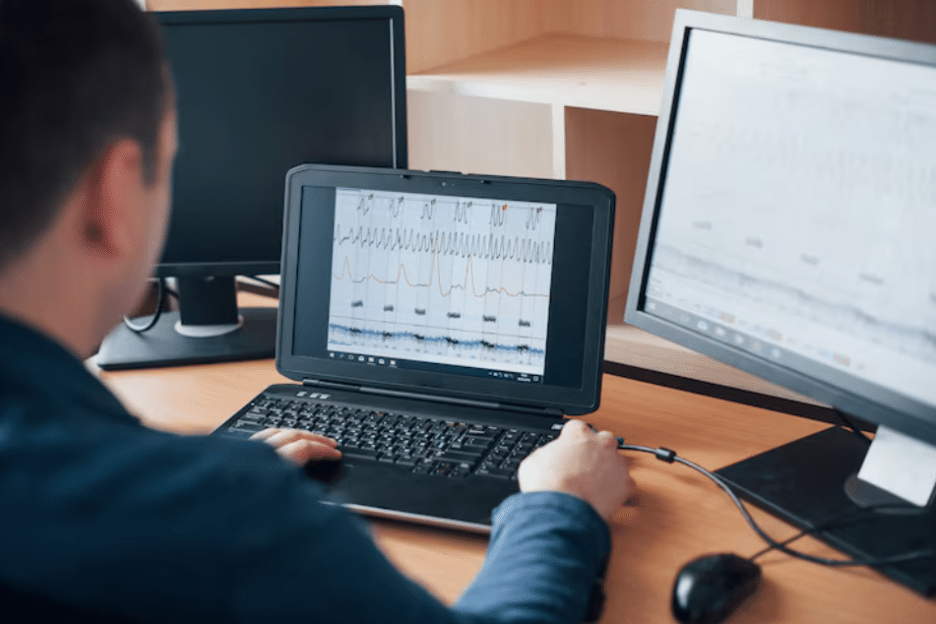
A polygraph cannot directly distinguish anxiety from deception at the physiological level. Both states activate overlapping autonomic nervous system responses, producing similar measurable signals.
Instead, differentiation occurs through structured interpretation. Examiners analyze:
- Differences in response intensity across question types
- Consistency of physiological patterns
- Stability of baseline measurements
- Overall response distribution throughout the test
This comparative framework allows physiological data to be evaluated in context rather than in isolation.
However, the reliability of interpretation depends on examiner expertise, testing protocols, and controlled examination conditions. The instrument provides raw data, while trained professionals assign meaning to that data.
Conclusion
Anxiety can influence the physiological signals measured during a polygraph examination, but it does not independently determine the outcome. A polygraph records autonomic nervous system activity rather than truth or deception itself.
Because anxiety and deception can produce similar physiological responses, differentiation is not made at the level of raw data. Instead, trained examiners rely on baseline measurements, structured comparison questions, and pattern analysis to interpret results in context.
Ultimately, a polygraph does not biologically separate anxiety from deception. It evaluates differences in physiological patterns under controlled questioning conditions, where interpretation—not the instrument—determines the final assessment.