

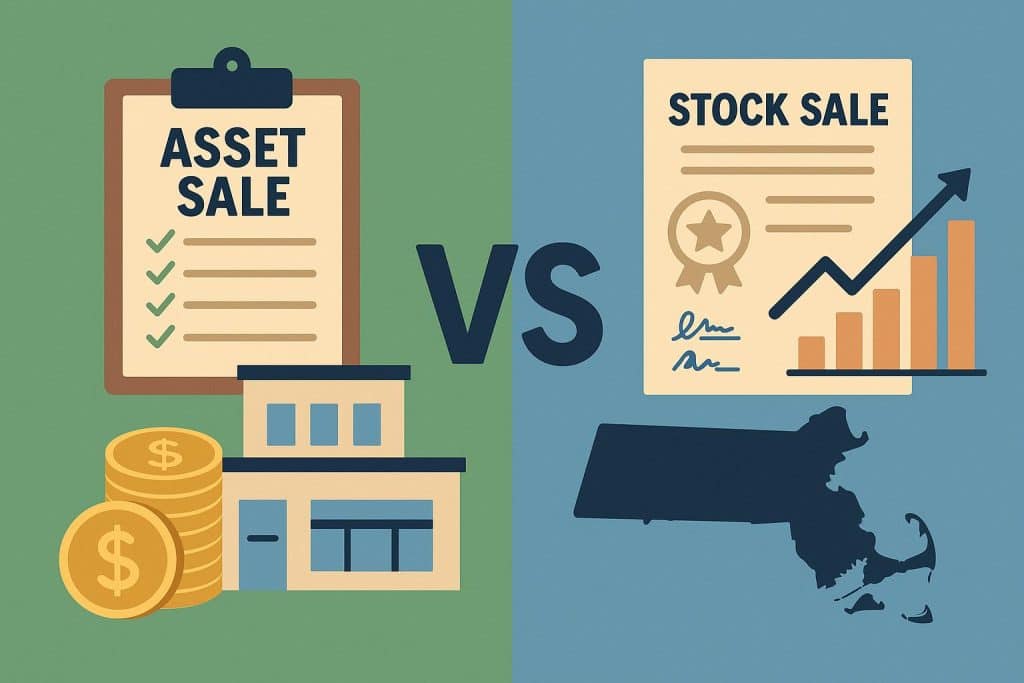
For entrepreneurs looking to buy a business in Massachusetts, one of the most consequential decisions isn’t just which company to acquire, but how the transaction is structured. In the Bay State’s sophisticated 2026 economic landscape, the choice between an asset sale and a stock sale can significantly impact your tax liabilities, legal exposure, and long-term profitability.
At First Choice Business Brokers Boston Metro, we guide buyers through these complexities daily. Understanding the mechanics of each structure is the first step toward a successful acquisition.
The Fundamentals: Asset Sale vs. Stock Sale
The primary difference between these two methods lies in exactly what is being transferred from the seller to the buyer.
What is an Asset Sale?
In an asset sale, the buyer acquires specific items that make up the business, such as equipment, inventory, customer lists, and intellectual property, but does not necessarily buy the legal entity (the corporation or LLC) itself.
What is a Stock Sale?
In a stock sale, the buyer purchases the actual shares or membership interests of the entity. By doing so, they step into the shoes of the previous owner, inheriting the entire company, including all its assets and all its liabilities.
Why Buyers Often Prefer Asset Sales
From a buyer’s perspective, asset sales are typically the preferred route for two major reasons: Liability Protection and Tax Efficiency.
1. Shielding Yourself from Legacy Liabilities
When you buy a business via an asset sale, you generally have the ability to “cherry-pick” the assets you want while leaving behind unwanted liabilities. This is crucial for avoiding hidden risks such as:
- Past-due taxes.
- Pending or future employee litigation.
- Unresolved product liability claims.
2. The Power of the “Step-Up” in Basis
One of the most significant financial advantages of an asset sale is the ability to “step up” the tax basis of the acquired assets to their current fair market value. Instead of inheriting the seller’s old depreciation schedules, you can restart them. This allows for higher depreciation and amortization deductions in the coming years, which effectively increases your post-acquisition cash flow.
Why Stock Sales Might Be Necessary
While asset sales offer protection, a stock sale is sometimes the only viable path, especially in highly regulated industries or businesses with complex contracts.
- Transferability of Licenses: In Massachusetts, certain licenses (like liquor licenses or specialized health care permits) can be notoriously difficult to transfer in an asset sale. A stock sale avoids this by keeping the legal entity and its licenses intact.
- Continuity of Contracts: If a business has critical long-term contracts with vendors or government entities that contain “non-assignment” clauses, a stock sale ensures that these agreements remain valid without needing third-party consent.
Massachusetts-Specific Considerations for 2026
Massachusetts has unique legal nuances that both buyers and sellers must navigate:
- Sales Tax on Tangible Assets: In an asset sale, the transfer of tangible personal property may be subject to Massachusetts sales tax unless a “casual and isolated sale” exemption applies.
- Successor Liability: Despite the protections of an asset sale, Massachusetts courts may occasionally impose “successor liability” if the new business is essentially a “mere continuation” of the old one. This makes thorough due diligence and precise contract drafting essential.
- Bulk Sales Laws: Reporting requirements to creditors must be strictly followed to ensure that the buyer isn’t held responsible for the seller’s unpaid debts.
Partnering with First Choice Business Brokers Boston Metro
Navigating the choice between an asset and stock sale requires a team that understands the local Boston market. First Choice Business Brokers Boston Metro provides the specialized expertise needed to evaluate these deal structures from a practical, “boots-on-the-ground” perspective.
Our brokers work alongside your legal and tax professionals to ensure that when you decide to buy a business, you are doing so with a structure that protects your investment and maximizes your future returns.