

Window blinds do more than manage sunlight. They shape how a room looks and feels, influence privacy, and can even affect heating and cooling costs. The right choice can make a space feel calmer, brighter, cozier, or more structured—depending on the material and design.
Smart technology has also changed what “window coverings” can do day to day. Motorized options remove the need for cords and make it easier to control hard-to-reach windows. SmartView Homes offers shades, blinds, and drapery solutions that bring automation into everyday living while keeping the window area visually clean. A good decision still comes down to basics: room needs, material performance, and a style that fits the home.
Why Choosing the Right Window Blinds Matters
Light control is one of the main reasons blinds are installed in the first place. Good blinds help reduce glare on screens, soften harsh afternoon sun, and protect finishes from fading. In workspaces and media rooms, precise control can make the room easier to use without turning it into a dark cave.
Privacy is just as important, especially in urban neighborhoods or homes with close sightlines. The best solutions block views from the street while still allowing daylight and, in many cases, a view outward. That balance matters most in ground-floor rooms, bedrooms facing nearby buildings, and bathrooms.
Energy performance is another factor that’s easy to overlook. Window coverings add a layer between indoor air and glass, which can help reduce heat gain during summer and slow heat loss during winter. Over time, that can reduce how hard heating and cooling systems need to work.
Design matters too. Blinds act like a finishing detail—similar to trim or lighting—because they sit at eye level and frame the view. The right color and texture can make a room feel more polished, while bulky or mismatched coverings can distract from an otherwise well-designed space.
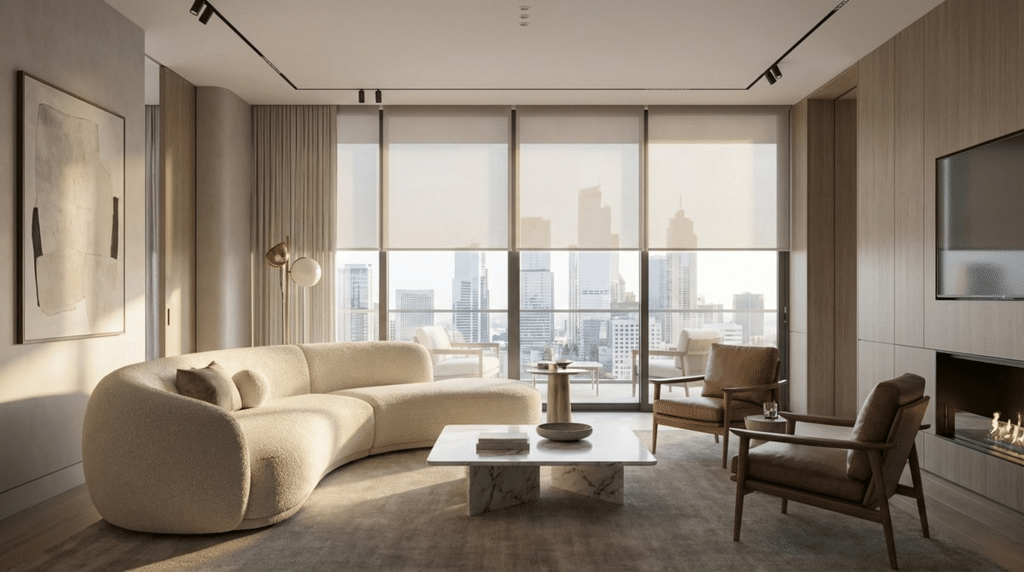
Modern living room with motorized roller blinds filtering sunlight
Different Types of Window Blinds
There are several common blind styles, and each suits different rooms and priorities. The best choice depends on how much light control is needed, whether the window is frequently used, and how the treatment should look when fully raised.
Roller Blinds
Roller blinds are a popular option for clean, modern interiors. A single fabric panel rolls up neatly at the top, keeping the window area simple when the shade is open. This style works well in living rooms, kitchens, and offices because it doesn’t add visual bulk.
Maintenance is usually straightforward. Many fabrics can be wiped clean, and there are options ranging from sheer light-filtering materials to full blackout fabrics for bedrooms. Motorized roller blinds are also common for larger windows because they keep operation consistent and remove cords from the wall area.
Roman Blinds
Roman blinds offer a softer, more layered look. The fabric folds into structured pleats as it lifts, adding texture and a tailored feel around the window. This style is often chosen for dining rooms, primary bedrooms, and spaces that benefit from a more traditional or boutique-hotel aesthetic.
Fabric choice makes a big difference here. Heavier textiles can help with sound absorption and create a cozier feel, while lighter fabrics keep the room bright. Proper measuring and installation are important so the folds stack evenly and hang straight.
Cellular / Honeycomb Blinds
Cellular blinds are designed with energy performance in mind. Their honeycomb structure traps air in pockets, which helps reduce heat transfer through the window. This makes them a strong option for homes that deal with hot summers, cold winters, or rooms with large glass exposure.
They’re also flexible for privacy control. Top-down/bottom-up configurations allow daylight to enter from the top while maintaining coverage at eye level, which is useful for bathrooms, street-facing bedrooms, and closely spaced homes.
Vertical Blinds
Vertical blinds are commonly used for large windows and sliding glass doors. The slats move side to side and can be tilted to adjust light. This makes them practical for doorways that see frequent traffic.
Updated versions use improved materials and finishes that feel less “office” and more residential. For households with pets or high daily use, vertical styles can hold up well because individual slats are easier to replace if damaged.
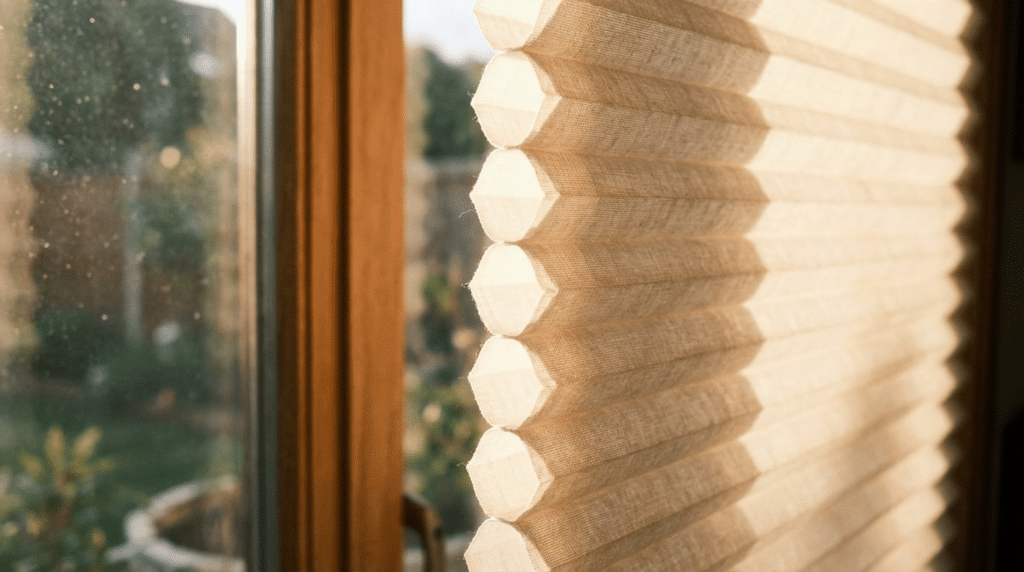
Close-up of energy-efficient cellular honeycomb window blinds
Best Window Blind Materials for Durability and Style
Material choice affects durability, cleaning, moisture resistance, and how the blinds look in different lighting. Kitchens, bathrooms, and sunny rooms often need different materials than bedrooms or formal living areas.
Material TypeBest ForKey BenefitReal WoodLiving RoomsNatural BeautyFaux WoodKitchens / BathsMoisture ResistanceAluminumHome OfficesStrong and SleekFabricBedroomsSoftness and Color
Wood vs Faux Wood
Real wood brings warmth and natural variation. The grain can add character to living rooms, studies, and dining spaces where a classic look suits the furniture. The main limitation is humidity—wood can warp or change shape in damp conditions, so it’s usually not the best choice for bathrooms, laundry rooms, or kitchens with heavy moisture.
Faux wood is designed to mimic the look of timber while handling humidity far better. Made from composite or PVC-based materials, it resists warping and is generally easier to clean. It’s also often more budget-friendly than real wood, making it a common choice for busy households that want a similar appearance with less upkeep.
Aluminum & PVC Blinds
Aluminum blinds are lightweight, slim, and straightforward. They work well in offices and utility spaces where durability matters more than softness. Many finishes are available, and the clean lines suit modern interiors.
PVC blinds are resilient and low-maintenance, which makes them useful in kids’ rooms, play areas, and other high-traffic spaces. They handle bumps and spills well and are typically easy to wipe clean.
Fabric Blinds
Fabric offers the widest range of textures, colors, and light-filtering options. Linen-look weaves, smoother synthetics, and room-darkening materials can all change how the space feels. Many newer fabrics are built for everyday realities—better stain resistance, easier cleaning, and improved performance in humid areas.
High-density fabrics can also reduce UV exposure, helping protect flooring and furniture. SmartView Homes carries fabric-forward options across shades and drapery so homeowners can match performance needs—like privacy or glare control—to the look of the room.
Style & Design Tips for Your Home
A simple way to keep a room looking cohesive is to coordinate blinds with the window trim and wall color. Matching tones can make windows feel integrated and clean, while a deliberate contrast can turn the window area into a design feature.
Color choices also change the feel of a room. Lighter shades can make smaller spaces feel more open, while darker tones can make large rooms feel more grounded. Texture matters too: a subtle weave can add depth without making the room busy.
Hardware finishes should be considered as well. Brackets, bottom rails, and visible components should coordinate with other finishes in the room—such as lighting, door handles, and faucet metals—so the treatment looks intentional from every angle, including from outside the home.
Where to Buy Quality Blinds in the USA
When buying blinds, warranty coverage and support matter as much as style. Good manufacturers typically offer clear guidance on measuring, fabric performance, and installation. Reviews can be useful when they mention long-term durability, motor reliability (if applicable), and the quality of customer support.
SmartView Homes provides product guidance and support that many homeowners look for when choosing motorized options, where setup and troubleshooting can be part of the buying experience. For larger projects, professional measurement and installation can help reduce errors and ensure a cleaner final look.
Measuring Your Windows for the Perfect Fit
Accurate measurements determine whether blinds look built-in or slightly off. The first decision is inside mount versus outside mount. Inside mounts sit within the window frame and create a cleaner, more tailored look. Outside mounts extend beyond the frame, which can help block more light and cover shallow or imperfect frames.
A metal tape measure is usually the most reliable tool. Measure width in three places and use the smallest number for inside mounts. Measure height in three places and use the largest number to ensure full coverage. Careful double-checking before ordering saves time, avoids returns, and prevents gaps that can affect privacy and light control.
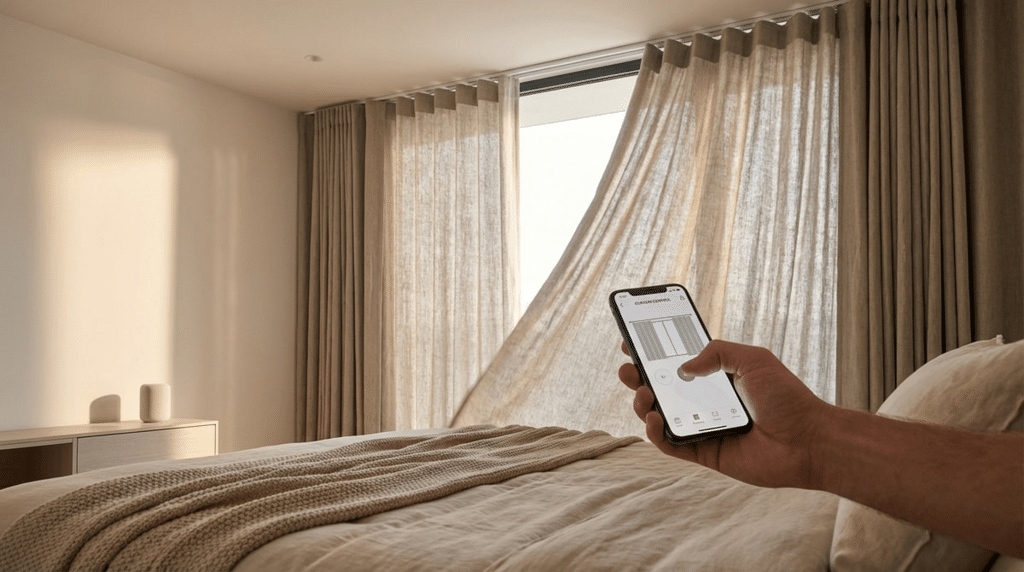
Person using a smartphone app to control motorized curtains in a bedroom
Conclusion
Choosing the right window blinds can improve comfort, privacy, and the overall look of a home. The best option depends on the room’s light needs, moisture levels, and how the space is used day to day. Roller, Roman, cellular, and vertical styles each solve different problems, and material choice plays a major role in durability and maintenance.
For homeowners considering motorized control or a more streamlined cordless setup, SmartView Homes offers options across blinds, shades, and drapery that fit modern interiors. Taking time to match style and performance to each room leads to window treatments that look right and work well for years.