

Danielle Kurin is a bioarchaeologist and former assistant professor at the University of California, Santa Barbara, where she taught courses in human evolution, osteology, forensics, and bioarchaeology. Danielle Kurin also serves as a visiting research professor at the Universidad Nacional de San Cristóbal de Huamanga in Peru and has conducted extensive fieldwork in the Andes, particularly in the Apurimac and Ayacucho regions. Her research focuses on societies that emerged after the collapse of the Wari civilization and before the rise of the Inka empire, drawing on excavated human remains to understand health, identity, migration, and medical practices. Through her academic work and leadership in laboratory and field settings, she engages with the professional standards and ethical frameworks that guide site protection, including those promoted by the Society for American Archaeology.
Understanding How the Society for American Archaeology Protects Sites
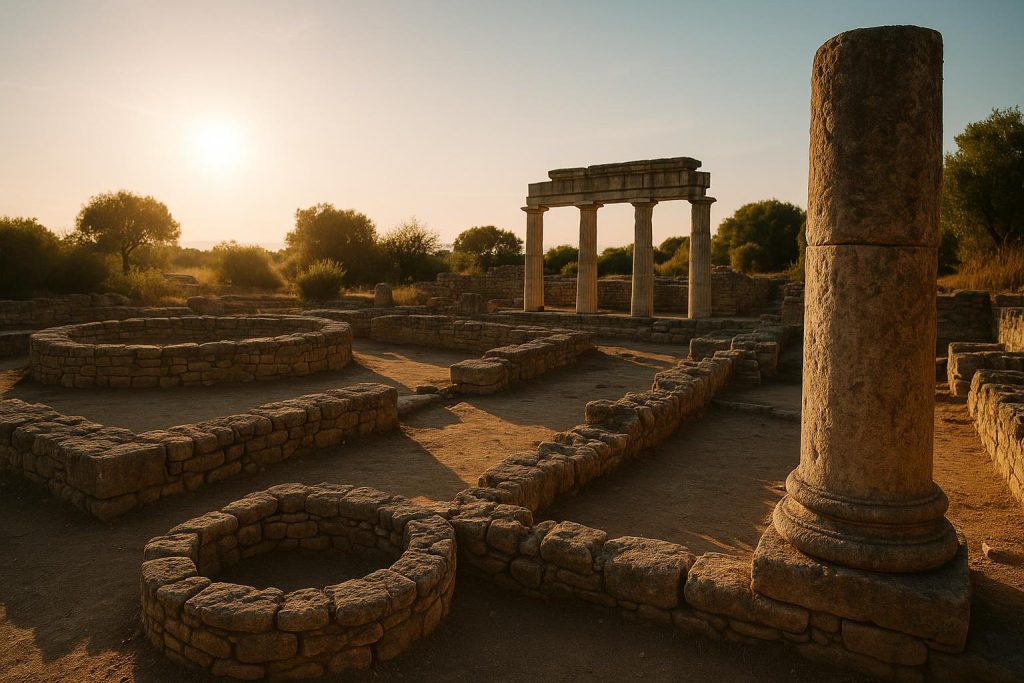
Archaeological sites are places where evidence of past human life remains in the ground, such as building foundations, tools, pottery fragments, or burial areas. They are not limited to famous ruins or remote landscapes. Construction, land clearing, and outdoor recreation can disturb the ground in ways that erase evidence before anyone studies it, so professional standards and public guidance help limit damage before archaeologists document what is there.
The Society for American Archaeology (SAA) is a professional organization that supports archaeologists working across the Americas. SAA does not enforce laws or police job sites, but it influences how archaeologists work and how they explain discoveries to others. The organization publishes ethics principles, supports research sharing, and promotes public education. Those tools give archaeologists a baseline for excavation decisions, reporting, and conduct.
Site protection begins with a basic constraint: disturbance cannot be undone. Archaeologists focus on how objects sit within soil layers and nearby features because digging can erase patterns that show how people used a location. SAA’s Principles of Archaeological Ethics respond by framing stewardship, accurate reporting, and responsible treatment of archaeological resources as core duties, not optional preferences.
SAA supports practical problem-solving through its annual meeting and related events. Archaeologists use these gatherings to present findings, compare project experiences, and discuss how new conditions affect fieldwork. Case discussions and training sessions help field crews and project directors refine methods when real-world conditions do not match textbook scenarios.
Publishing strengthens site protection in a different way by improving the reliability of archaeological claims. SAA supports journals and other publications that require qualified reviewers to evaluate research before it enters the professional record. Peer review reduces the chance that later reports, museum exhibits, or educational materials repeat weak interpretations as fact.
Even strong research practices cannot protect a site if people disturb it before archaeologists document it. SAA addresses that risk by providing outreach guidance for archaeologists who work with local communities, schools, and visitors. Outreach helps archaeologists explain why sites matter, why actions like digging, moving stones, or collecting artifacts can destroy evidence, and why visitors should report discoveries instead of taking objects home.
Some threats are intentional, so legal tools work alongside professional expectations. Looting and vandalism remain problems at archaeological sites, which is why federal law, including the Archaeological Resources Protection Act (ARPA), sets penalties for illegally excavating, damaging, or trafficking in archaeological resources. Section 106 review under the National Historic Preservation Act likewise requires federal agencies to consider effects on historic properties, including archaeological sites. This review occurs before federally connected projects move forward, making archaeology part of planning rather than an afterthought.
For developers and landowners, the practical value of professional archaeology is predictability. When archaeologists follow recognizable documentation practices and agencies follow standard review procedures, project teams can better anticipate what happens if crews uncover a site. SAA does not issue permits or approve construction plans, but it influences the norms that shape how archaeologists report findings and communicate next steps. That makes archaeology easier for non-specialists to navigate during high-pressure project timelines.
SAA functions as an infrastructure layer that helps archaeology operate consistently across many settings. Its work supports a shared professional baseline that museums, agencies, and consulting teams recognize when they review findings and documentation. That continuity matters because archaeological evidence often moves from the field into archives and collections that stay in use for decades. In that way, SAA strengthens site protection by making archaeological work more legible and accountable long after a discovery.
About Danielle Kurin
Danielle Kurin is a bioarchaeologist with a PhD from Vanderbilt University and a background in anthropology and Hispanic studies. She has taught at the University of California, Santa Barbara, and conducts research in Peru focused on transitional Andean societies between 800 A.D. and 1400 A.D. As founding director of the Walker Bioarchaeology and Forensic Bone Lab, she has supervised students in the analysis of human remains and has applied archaeological methods in both academic and forensic contexts.