

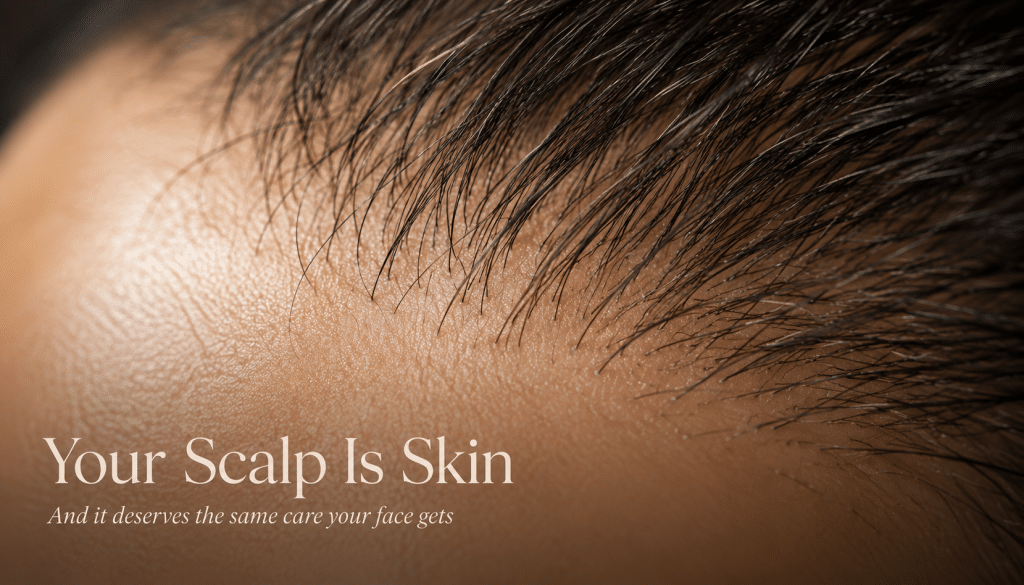
Skincare has become a daily ritual for a generation that researches ingredients, layers products in deliberate sequences, and tracks results with photographic care. Scalp care, by comparison, remains a blind spot. The hair shaft gets attention. The skin underneath it, which actually grows the hair, is usually left to whatever shampoo runs through it twice a week.
That gap is not harmless. The scalp is dermatologically active tissue, vulnerable to many of the same conditions that affect the rest of the body’s skin, and arguably more sensitive to neglect because it is hidden under hair and rarely examined.
What The Scalp Actually Is
The scalp is highly vascularised, densely populated with sebaceous glands, and home to a follicular ecosystem that is unusually metabolically active. It produces more sebum than most facial skin, hosts a distinct microbiome, and reacts quickly to changes in diet, hormones, stress, and environmental exposure.
When this dermatological reality is ignored, problems develop quietly. Mild inflammation persists undetected. Sebaceous balance drifts. The microbiome shifts in ways that affect follicle health. By the time the patient notices visible thinning or scalp discomfort, the underlying condition has often been progressing for a long time.
The Conditions That Hide Under Hair
Seborrheic dermatitis is among the most underdiagnosed scalp conditions. It presents as flaking, itching, and inflammation, and it both contributes to and accelerates pattern hair loss when left untreated. Patients usually mistake it for ordinary dandruff and treat it with over-the-counter products that mask the surface signs without addressing the inflammation underneath.
Scalp psoriasis behaves differently from psoriasis elsewhere on the body, because the dense follicular environment makes topical treatment harder to deliver. Folliculitis, low-grade chronic inflammation from product residue, and traction stress on the follicles all fall into the same category. Visible to a trained clinician, invisible to the patient.
Why The Scalp Examination Belongs Earlier
Hair-restoration practices that take scalp dermatology seriously, including Mumbai-based Kibo Clinics, note that the first dermatological visit for hair concerns almost always happens too late. Patients typically arrive only after visible thinning has become undeniable, by which point the scalp itself has often been quietly unhealthy for some time. A dermatologically trained eye can identify many of these conditions in minutes during a routine examination.
For someone searching online for a dermatologist near me, the priority is not just location. It is finding a clinician whose practice includes routine scalp examination, who looks under the hair rather than only at it, and who treats the scalp as skin that happens to have hair on it rather than as hair that happens to grow on skin.
What Daily Scalp Care Actually Looks Like
The basics are unspectacular. Regular but not excessive washing, matched to the scalp’s sebaceous activity. Gentle removal of product buildup to prevent follicular blockage. Avoidance of high-tension hairstyles, harsh chemical treatments, and aggressive towel-drying. Sun exposure on a thinning scalp treated with the same caution as sun exposure on facial skin.
None of this is dramatic, and none of it produces instant change. What it does is prevent the slow accumulation of low-grade damage that, over years, makes both scalp health and hair retention noticeably worse.
Expert Tip
If your scalp itches, flakes, or feels tight on a regular basis, do not assume it is a haircare problem. It is more likely a dermatological condition that deserves the same diagnostic care you would give a recurring problem anywhere else on your skin. Treat the cause, not the symptom.
The Honest Takeaway
The scalp is skin. It responds to attention the same way the rest of the body’s skin does, and it suffers from neglect in the same way too. The patients who treat scalp health as part of their wider dermatological care keep their hair longer, encounter fewer surprises, and need less intervention later.