

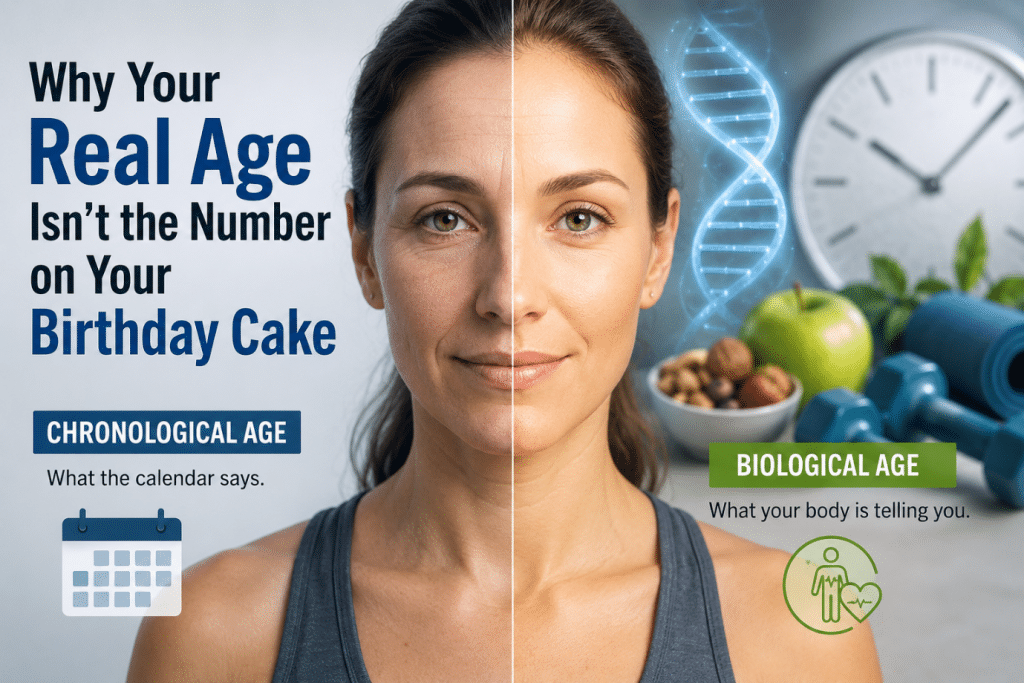
We celebrate our birthday every year with a cake, candles, and maybe a little bit of dread as the number gets bigger, because we know our age and we have been counting the years since the day we were born. But what if that number is not actually telling you the truth about your body? What if two people celebrate their 50th birthday on the same day, yet one feels energetic and healthy while the other struggles with everyday activities? This happens more often than you might think. The reason comes down to the difference between your chronological age and your biological age.
In this article, we will break down what your real age actually is and what it means, how scientists measure it, what is increasing it up without you knowing, and exactly what you can do to turn the clock back at a cellular level.
Your Chronological Age: What the Calendar Says
Your chronological age is the easiest age to understand, it is just the total time that has passed since the day you were born, expressed in years, months & days. Every birthday adds another year, no matter how healthy you are, how much you exercise, or what you eat, your chronological age keeps moving forward at the same pace.
It’s the number you see on your passport, driver’s license, medical records, insurance forms, and countless other documents in everyday life.
Chronological Age Example:
Birth date: April 10, 1984
Today’s date: June 23, 2026
Chronological age: 42 years, 2 months, 13 days
Why Your Chronological Age Still Matters
Chronological age isn’t just the number of candles on your birthday cake. It plays an important role in many everyday decisions and systems. It’s commonly used to determine:
- Retirement eligibility and pension benefits
- Recommended health screenings
- Insurance premiums
- Age-based medication guidelines
- School enrollment and legal age requirements
- Healthcare providers also use chronological age as a starting point for routine checkups, vaccinations, and preventive care.
But here’s the catch: chronological age only tells you how long you’ve been alive. It doesn’t tell you how well your body is functioning. Think about the people you know, you’ve probably met someone in their 60s who is active, energetic, and healthier than people years younger. At the same time, you’ve likely seen someone in their 40s or 50s who struggles with fatigue or ongoing health problems. That’s the difference between calendar age and how your body has actually aged, and that’s exactly what biological age is.Before comparing your biological age, it’s helpful to know your exact chronological age. You can use this free chronological age calculator to calculate your age in years, months, and days and get an accurate baseline before comparing biological age.
Your Biological Age: What Your Body Is Actually Saying
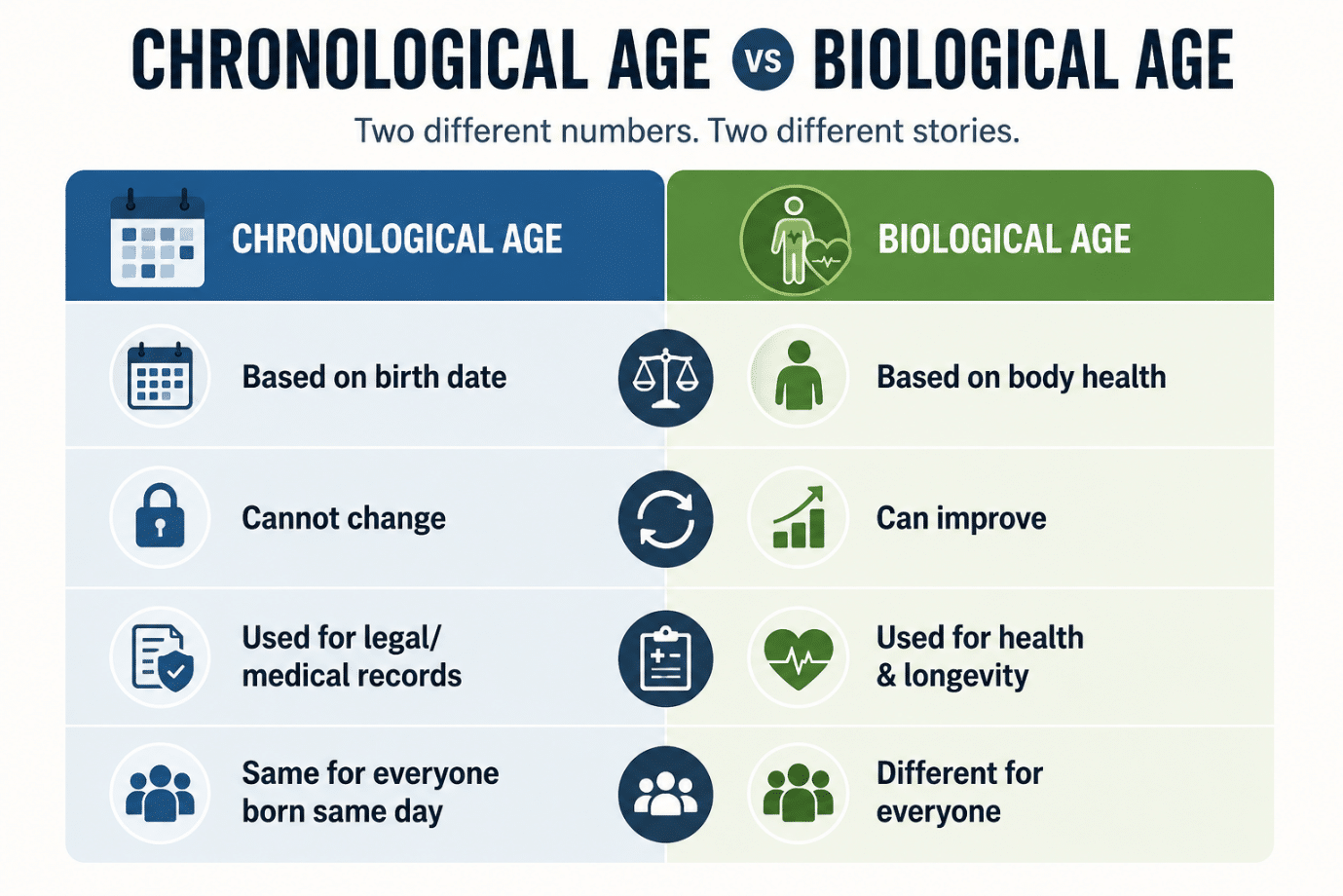
Biological age, which is also known as your body age or physiological age, shows how well your body is functioning, compared to how many birthdays you’ve celebrated. Instead of counting the years since you were born, biological age looks at how those years have affected your body over time. Think about two people who are both 50 years old. One enjoys hiking, sleeps well, has plenty of energy, and rarely gets sick. The other struggles with fatigue, high blood pressure, and everyday activities.
On paper, they’re the same age, but their bodies are telling two very different stories. That’s the difference between chronological age and biological age. While chronological age is based on your birth date, biological age reflects the condition of your cells, organs, and overall health. Unlike your chronological age, your biological age can change. Healthy habits like regular exercise, quality sleep, a balanced diet, and managing stress can all help your body age more slowly and stay healthier for longer.
3 Ways Scientists Measure Biological Age
Biological age isn’t based on guess work, researchers use several methods to estimate how well your body is aging. Here are three of the most common:
1. Epigenetic Clock (DNA Methylation)
One of the most accurate ways to measure biological age is the epigenetic clock, developed by researcher Steve Horvath. Instead of looking at your birth date, it analyzes tiny chemical changes in your DNA, known as DNA methylation, to estimate whether your body is aging faster or slower than expected.
2. Blood Biomarkers
Your blood can reveal a surprising amount about how your body is aging. Doctors and researchers look at several blood biomarkers to calculate biological age, including:
- CRP (C-reactive protein): Higher levels may indicate ongoing inflammation, which has been linked to faster aging.
- HbA1c: Shows your average blood sugar over the past few months. Consistently high levels can increase the risk of age-related health problems.
- Cholesterol and triglycerides: Help assess heart and blood vessel health.
- Telomere length: Shorter telomeres are commonly associated with older biological age.
- IGF-1 and DHEA-S: Hormones that naturally change with age and can provide additional clues about healthy aging.
While no single blood test can tell you your exact biological age, looking at these markers together gives doctors a much clearer picture of how your body is aging on the inside.
3. Physical Fitness Tests
Simple fitness assessments can also provide valuable clues about how well your body is aging and you don’t always need a lab test to learn about your biological age. Some of the most commonly used include:
- Grip strength: Often linked to overall muscle health and healthy aging.
- Heart rate recovery: Measures how quickly your heart rate returns to normal after exercise, giving insight into cardiovascular fitness.
- VO₂ max: Shows how efficiently your body uses oxygen during exercise and is considered one of the best measures of aerobic fitness.
- Sit-to-stand test: Assesses lower-body strength, balance, and mobility.
- Flexibility and balance: These naturally change with age and can reflect your overall physical function.
While none of these tests can determine your biological age on their own, together they offer valuable insight into your overall health and how well your body is aging.
Key Insight:
Unlike chronological age, all three of these biological age measurement methods are sensitive to lifestyle changes. That means they can show you when your habits are working, and when they are not. Your birthday cannot do that.
What Science Says About Slowing Your Biological Clock
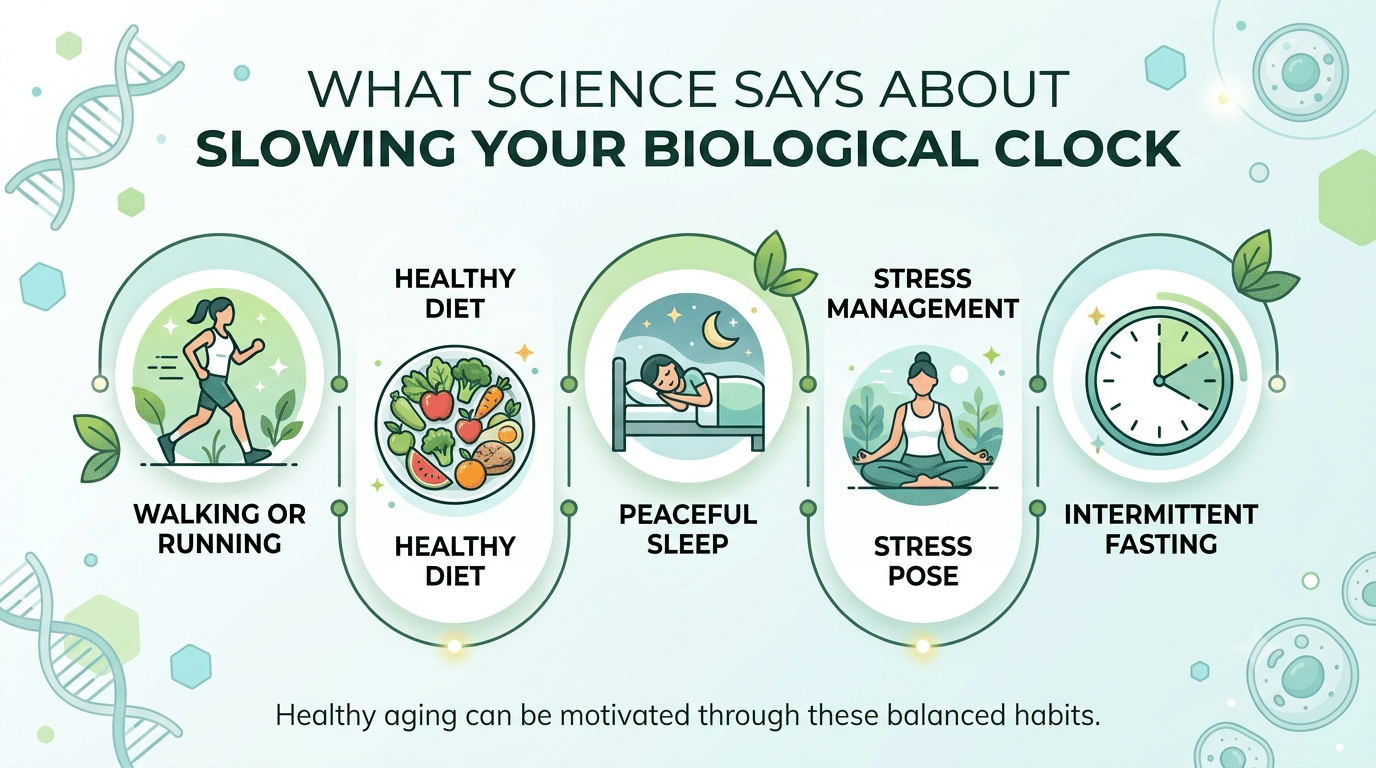
You can’t stop the calendar, but you can influence how your body ages. Research suggests that simple lifestyle habits can help keep your biological age younger than your chronological age. Below are some ways to slow down your biological age;
Calorie Restriction and Intermittent Fasting
Among the lifestyle habits studied for healthy aging, calorie restriction and intermittent fasting have received significant scientific attention. Research suggests they may activate autophagy; a natural process in which the body removes and recycles damaged cells. While more research is ongoing, simple habits like avoiding overeating or following a balanced fasting schedule may support healthier aging for some people.
Regular Exercise Supports Healthy Aging
Regular exercise is one of the most effective ways to support healthy aging. Research shows that people who stay physically active often have healthier biological age markers than those who are inactive. Exercise can improve heart health, reduce inflammation, and support overall cellular function. Even 30 minutes of brisk walking or other moderate exercise, five days a week, can make a meaningful difference over time.
Key Takeaway
Your biological age may say more about your overall health than the number of candles on your birthday cake. Research suggests that healthy habits like regular exercise, good nutrition, quality sleep, and stress management can help support a younger biological age and reduce the risk of age-related diseases.
Why Your Chronological Age Still Matters
Although biological age gives you a better picture of how your body is aging, chronological age is still the starting point. Most biological age tests compare your results with people in the same age group, so knowing your exact chronological age provides the right base. For example, a VO2 max, grip strength, or heart rate recovery score is interpreted differently for a 30-year-old than for a 60-year-old.
Frequently Asked Questions
Q1: Can you actually reduce your biological age below your chronological age?
Yes, it may be possible. Research suggests that healthy lifestyle habits such as regular exercise, a nutritious diet, quality sleep, and stress management can improve biological age markers. While you can’t change your chronological age, your biological age may improve over time as your overall health improves. Results vary from person to person, and no single habit guarantees a younger biological age.
Q2: What is the difference between chronological age and real age?
Your chronological age is the time or years that have been passed since the day you were born, written in Year-month-date format. It is calculated from your birth date and increases every year. Biological age reflects how well your body is functioning based on factors like your lifestyle, environment, and overall health. This is why two people of the same chronological age can have very different levels of fitness and health.
Q3: Can I test my biological age at home?
Yes. Some at-home DNA methylation tests estimate biological age using a saliva sample. You can also get a general idea of your overall fitness through simple measures like grip strength, heart rate recovery, balance, and endurance. While these don’t provide an official biological age score, they can offer useful insights into your overall health and fitness.
Q4: Does intermittent fasting really slow aging?
Intermittent fasting is being actively studied for its potential role in healthy aging. Research suggests it may support autophagy; the body’s natural process of removing damaged cellular components, and may help improve some markers associated with healthy aging. However, results vary from person to person, and more long-term human studies are needed. If you’re considering intermittent fasting, it’s a good idea to discuss it with your healthcare provider, especially if you have an underlying medical condition.
Q5: Can exercise help lower your biological age?
Yes. Regular physical activity is associated with healthier biological age markers and better overall health. Research suggests that aerobic exercise can improve heart health, reduce inflammation, and support healthy aging. The good news is that you don’t have to be an athlete, even 30 minutes of brisk walking or other moderate exercise, five days a week, can have meaningful health benefits over time.
Q6: What is the fastest way to lower biological age?
Research suggests that a combination of regular physical activity, 7–9 hours of quality sleep, a nutritious diet, and, for some people, intermittent fasting may support healthier biological age markers. Rather than relying on one habit, consistent healthy choices over time have the greatest impact on healthy aging.
The Bottom Line
Your chronological age is simply the number of years that have passed since you were born. It provides an important baseline for health screenings, medical decisions, and understanding how your body changes over time. Your biological age offers a different perspective. It reflects how well your body is functioning and can be influenced by factors such as physical activity, nutrition, sleep, stress, and other lifestyle habits.
While you can’t change your chronological age, you can make choices that support healthier aging. Small, consistent habits often have a greater impact than quick fixes. If you’re still unsure how chronological age and biological age differ, this guide on chronological age vs biological age explains both in more detail with simple examples.