

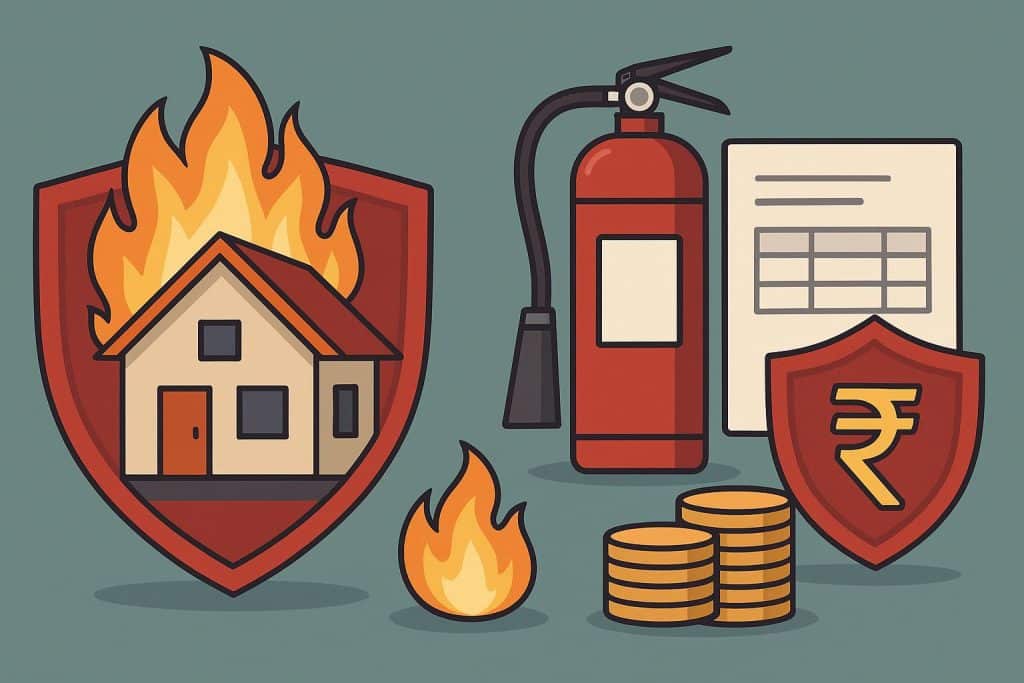
Fire insurance helps you protect your property and assets from damage caused by fire and related risks. While buying a policy, one of the key things to consider is the policy premium. However, the cost of fire insurance is not the same for everyone. It depends on multiple factors related to the property and its usage.
In this article, we will discuss common factors that affect premiums of a fire insurance policy. Understanding these factors can help you choose the right coverage while managing your premium in a better and more efficient manner.
Top Factors Affecting Fire Insurance Premiums in India
Location of Property
The location of your property plays a key role in deciding your shop insurance premium cost. Properties situated in areas with higher risk, such as crowded markets or industrial zones, may attract higher premiums.
On the other hand, properties in safer areas with better access to fire services may have lower premiums. Note that the availability of fire stations and emergency response systems may also impact the premiums.
Building Characteristics
The type and condition of the building can also affect the fire insurance premium. For example, buildings that are made with fire-resistant materials are generally considered safe, hence attract lower premiums. On the other hand, older buildings or those with already damaged structures may carry a higher risk, which can increase the premium cost.
Moreover, factors like the number of floors, construction quality and maintenance routine can also affect the premiums.
Fire Prevention Systems
Having proper safety measures against fire can help you reduce the premiums of your fire insurance policy. Generally, systems like fire, alarms, extinguishers, and sprinklers lower the risk of major damage. Insurers may offer a better premium rate for properties that follow safety guidelines and install fire prevention systems.
Usage and Occupancy
How the property is used is another key factor that impacts the premiums of a fire insurance policy. Residential properties usually have a lower risk than factories or warehouses.
If the property is used for storing flammable goods or running high-risk operations, the premium may be higher. Further, the number of people using the space can also impact the risk level.
Claims Record
Your past claims history can influence the fire insurance premium cost. If you have made frequent claims in the past, insurance companies may see it as a higher risk.
On the other hand, a clean claims record can help you get better premium rates. Hence, avoid small or unnecessary claims to maintain a good claim record over time.
Deductibles
A deductible is the amount you agree to pay out of your pocket before the insurer covers the rest of the loss. Choosing a higher deductible can lower your premium and vice versa. However, it is important to choose a deductible that you can afford easily if needed. This helps balance your premium as well as out-of-pocket expenses.
Final Words
Fire insurance premiums are calculated based on multiple factors related to risk, safety and usage. Understanding these factors helps you make better decisions when choosing a fire insurance plan.
With a reliable insurer like TATA AIG, you can get flexible coverage options and transparent policy terms. Besides, taking simple steps like improving safety measures and maintaining a clear claims record can also help you manage your premium cost over time.