

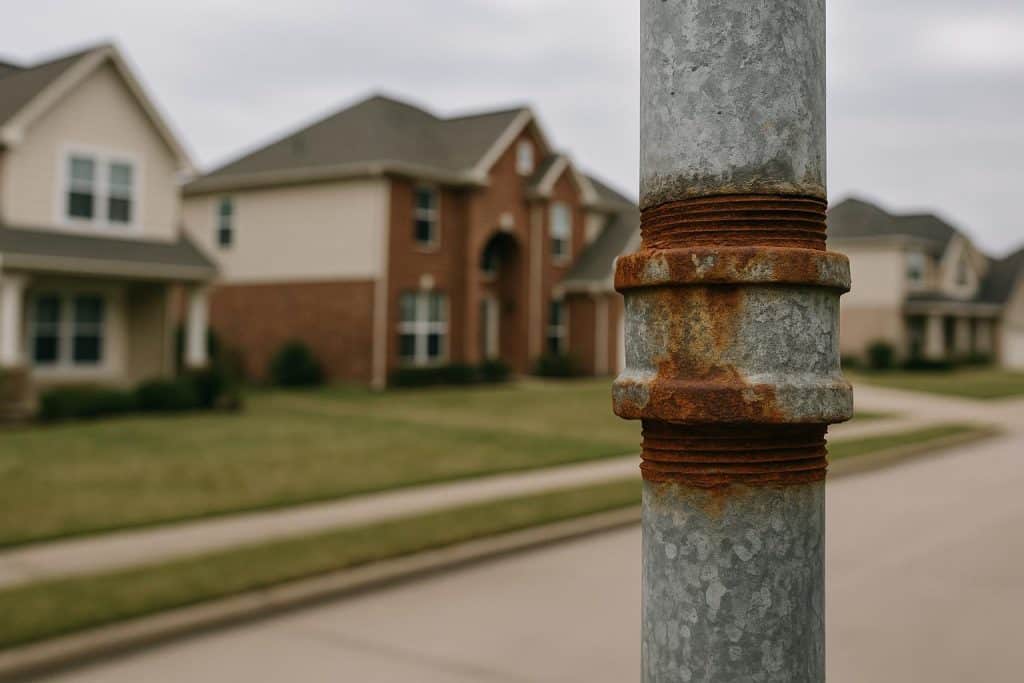
Walk through almost any established neighborhood in Houston and you will find the same story playing out behind the walls. Brown water at the tap. A shower that trickles instead of flows. A plumber patching the same stretch of pipe for the third time in four years. These are not isolated incidents. They follow a distinct geographic and generational pattern that connects original construction eras, subdivision development timelines, and the chemistry of local water supply.
Understanding that pattern is what separates a smart homeowner decision from an expensive cycle of reactive repairs.
The Galvanized Steel Era and Why It Still Haunts Houston
Galvanized steel pipe was the standard residential water line material from roughly the 1930s through the late 1970s. It was durable by the standards of its time, widely available, and cheap to install at scale. Developers building out entire subdivisions during the postwar boom and the suburban expansion of the 1960s and 70s used it without hesitation.
The problem is chemistry. Galvanized steel is coated with a layer of zinc to resist corrosion. That zinc layer degrades over time, and once it does, the steel underneath begins oxidizing from the inside out. The result is a pipe that slowly fills with rust and mineral deposits, narrowing the internal diameter, restricting flow, and eventually developing pinhole leaks or outright failures.
A galvanized pipe installed in 1965 has now been in service for roughly 60 years. Most manufacturers rated these pipes for 40 to 70 years under ideal conditions. Houston’s conditions are rarely ideal.
How Local Water Chemistry Accelerates the Damage
Houston draws water from a mix of surface water sources, primarily the Trinity and San Jacinto river systems, managed through the Harris County area by the City of Houston and various municipal utility districts. That water, while treated to safe drinking standards, carries a mineral profile that is not kind to aging metal pipes.
The region’s water tends to run moderately hard to hard, with elevated levels of calcium and magnesium that leave scale buildup inside pipes over time. Chlorine and chloramine disinfection treatments, while necessary for public health, are mildly corrosive to older metal and can accelerate the oxidation process inside galvanized lines.
The result is a compounding effect. A galvanized pipe in a dry, temperate climate might last 60 years before showing serious symptoms. That same pipe in a Houston home, running water with a higher mineral content and disinfectant load, can begin failing significantly in under 50 years.
Kingwood: Built in a Hurry, Now Paying the Price
Kingwood was developed starting in 1971 by the Friendswood Development Company, a subsidiary of Exxon. The ambition was enormous: a master-planned community of 14,000 acres in northeast Harris County, marketed as “The Livable Forest.” Thousands of homes were constructed through the 1970s and early 1980s to meet demand.
The construction pace mattered. Homes built across a compressed development window means an entire community’s plumbing infrastructure ages in a tight band together. Kingwood homes built between 1972 and 1982 are now over 40 to 50 years old. Many were plumbed with galvanized steel supply lines, and those systems are well into or past their expected service life.
Homeowners in older Kingwood sections like Forest Cove, Kings Forest, and Trailwood Village frequently report the classic symptom cluster: orange-tinted water in the morning before lines flush out, low pressure in upstairs bathrooms, and a long history of small repairs that never quite solved the underlying issue.
Bellaire: The Inner Loop’s Aging Plumbing Concentration
Bellaire is a different kind of story. Incorporated in 1949 and largely built out through the 1950s and 1960s, it is one of the oldest fully developed communities in the Houston metro area. Many Bellaire homes were constructed before galvanized pipe began to be phased out, meaning a significant portion of the housing stock was plumbed with steel lines that are now pushing 60 to 70 years of age.
The remodeling boom Bellaire experienced in the 2000s and 2010s complicates things further. When a home is renovated but the original plumbing is left in place, the new fixtures, appliances, and water-using systems create demand that aging pipes simply cannot meet reliably. Homeowners who spent six figures on a kitchen renovation have discovered, sometimes not long afterward, that their water lines could not keep pace.
Bellaire’s compact lot sizes and dense development also mean that when a pipe fails, the water has less distance to travel before it creates structural damage. Slab construction, common in mid-century Houston homes, turns a pinhole leak into a significant repair if it is not caught early.
Sugar Land: Phased Expansion, Layered Risk
Sugar Land’s development history is more layered than Kingwood’s or Bellaire’s. The city expanded in distinct waves, with early residential construction in the 1970s, a major growth phase through the 1980s and into the 1990s, and continued suburban expansion since. That means the galvanized pipe risk is concentrated in specific older subdivisions rather than across the entire city.
Neighborhoods like First Colony (developed from the early 1980s onward), New Territory, and older sections closer to the historic town center each carry different levels of pipe aging risk depending on when individual streets and subdivisions were platted and built.
What ties these communities together is Fort Bend County’s water supply profile, which mirrors Harris County’s in terms of mineral content and treatment chemistry. Homeowners in Sugar Land’s older sections are dealing with the same accelerating corrosion dynamic as their counterparts in Kingwood and Bellaire, just on a slightly shifted timeline.
Why Patch Repairs Keep Failing
There is a tempting logic to patching a single failing section of galvanized pipe. The leak is in one spot. Fix that spot, problem solved. Except that is not how corrosion works in a whole-house system.
When galvanized pipes corrode, the degradation is not localized. The entire system ages together. Zinc depletion and internal oxidation happen along every run of pipe, not just at the visible failure point. Fixing one section while leaving 200 feet of equally deteriorated pipe behind the walls only delays the next failure by months, not years.
This is why homeowners in aging Houston neighborhoods often describe a cycle: they call a plumber, get a section replaced, and then six to eighteen months later they are dealing with a new leak somewhere else in the same system. Each repair adds cost without addressing the root cause.
The more cost-effective path, once a home’s supply lines have reached this stage of deterioration, is full replacement. Consulting Houston repipe specialists who understand the aging pipe patterns specific to established Houston communities can help homeowners assess whether their system has crossed that threshold.
PEX-A: Why It Has Become the Standard for Replacements
When homes in Kingwood, Bellaire, Sugar Land, and similar communities do get repiped, the overwhelming preference among plumbing specialists today is cross-linked polyethylene, specifically PEX-A.
PEX-A (manufactured using the Engel peroxide method, with Uponor being the most recognized brand in the residential market) offers a set of properties that make it particularly well suited to Houston’s environment and construction styles.
- Flexibility: PEX-A can navigate tight bends and existing wall cavities without the rigid fitting requirements of copper, which reduces the number of access holes needed.
- Freeze resistance: Houston does not get many hard freezes, but when it does (February 2021 being the most recent and painful example), PEX-A’s flexibility allows it to expand under freezing conditions rather than burst.
- Mineral resistance: Unlike galvanized steel or even copper in high-mineral water environments, PEX-A does not corrode or accumulate scale on its interior walls in the same way.
- Longevity: PEX-A is rated for 50-plus years under normal residential use, meaning a repipe completed today should outlast the homeowner’s likely tenure and then some.
Copper remains a legitimate option and is still preferred in some applications, but for whole-house replacement of failing galvanized lines in established Houston neighborhoods, PEX-A has become the practical standard.
Working with a trusted houston repipe company means getting clarity on which material and approach suits the specific layout and condition of the existing system, not just a generic recommendation.
The Real Estate Dimension: Pipe Age as a Transaction Issue
Galvanized pipe has become a transactional problem in Houston’s resale market. Home inspectors routinely flag aging galvanized supply lines in inspection reports, and this has consequences.
Buyers request repairs or price reductions. Insurance carriers in Texas have become more selective about writing policies on homes with galvanized pipe systems. Some lenders flag inspection reports with noted plumbing deficiencies and require resolution before closing.
Sellers in Kingwood, Bellaire, Sugar Land, Katy, Pearland, and other established communities are increasingly having to address plumbing before or during the sale process rather than leaving it for the next owner. Pre-listing repiping has become a real conversation between homeowners, real estate agents, and plumbing contractors.
The upside is that a whole-house repipe can be a strong selling point. A home with documented, permitted, warranted new plumbing throughout removes a significant buyer objection and can support a stronger asking price.
Key Takeaways
- Homes built in Houston between the 1950s and late 1970s were typically plumbed with galvanized steel supply lines that are now at or past their expected service life.
- Houston’s moderately hard water and disinfectant treatment chemistry accelerate corrosion in aging metal pipes, shortening their functional lifespan compared to drier or lower-mineral markets.
- Neighborhoods like Kingwood, Bellaire, and Sugar Land each have distinct development timelines that concentrate pipe aging risk in specific subdivisions and construction eras.
- Repeated patch repairs on a corroded galvanized system address symptoms rather than the cause. Once a system reaches advanced deterioration, full replacement is the more reliable and cost-effective path.
- PEX-A (such as Uponor) has become the preferred replacement material for whole-house repiping in established Houston neighborhoods due to its flexibility, mineral resistance, and long service life.
FAQ
How do I know if my Houston-area home has galvanized steel pipes? Galvanized pipes have a dull grey appearance and feel heavy and rigid. If you can access the pipes under a sink or where the main line enters the house, a magnet will stick to galvanized steel (it will not stick to copper or PEX). Rust-colored water, especially first thing in the morning, and chronically low pressure throughout the home are strong indicators that galvanized corrosion is underway.
Is whole-house repiping disruptive? Will I need to move out? Most whole-house repipes in a standard single-family home are completed in one to two days. Water is typically shut off only during active work and restored at the end of each day, so disruption is measured in hours rather than days. Homeowners rarely need to vacate during a repipe, particularly with experienced crews who work efficiently through existing wall access points.
What happens to the walls after pipes are replaced? Any repipe requires cutting access holes in drywall to reach the pipe runs. Some contractors leave the patch work to the homeowner. Others include drywall repair and paint matching as part of the scope. It is worth clarifying this before signing any contract, as coordinating and paying a separate contractor after the fact can add significant cost and time.
Does repiping add value to a home before selling in Houston? It can. Buyers, their agents, and inspectors in Houston’s market are well aware of galvanized pipe risk in older homes. A documented, permitted, and warranted whole-house repipe removes a major contingency from the inspection report and can make a meaningful difference in how a listing is received, particularly in high-competition neighborhoods like Bellaire and Sugar Land.
Which is better for Houston homes: PEX-A or copper? Both are significant upgrades over failing galvanized. PEX-A (particularly the Uponor Engel-method product) is generally preferred for full whole-house replacements because it is easier to route through existing wall cavities, handles Houston’s mineral-rich water without scaling, and performs better in freeze events. Copper remains a solid choice for isolated repairs or in specific applications where a rigid line is preferred. A qualified specialist can advise based on the home’s specific layout and existing conditions.
Conclusion
The galvanized pipe problem in Houston’s established neighborhoods is not random. It follows the lines of subdivision maps, development timelines, and water chemistry. Homeowners in Kingwood, Bellaire, Sugar Land, and dozens of similar communities are dealing with the logical outcome of infrastructure installed 40 to 60 years ago reaching the end of its working life, all at roughly the same time.
Knowing the pattern is the first step toward making a clear-headed decision, whether that means getting a proper assessment, understanding what replacement actually involves, or evaluating the timing relative to a planned sale or renovation. The repair cycle eventually stops being cost-effective. Understanding why it happens is what helps homeowners recognize that point before the damage compounds